Experimental Therapeutics Laboratory, Hanson Institute, and Sansom Institute for Health Research, School of Pharmacy and Medical Science, University of South Australia, Adelaide, SA, Australia.
Intensive Care Unit, Royal Adelaide Hospital, Adelaide, SA, Australia.
Sci Rep. 2017 Jul 19;7(1):5850. doi: 10.1038/s41598-017-06205-z.
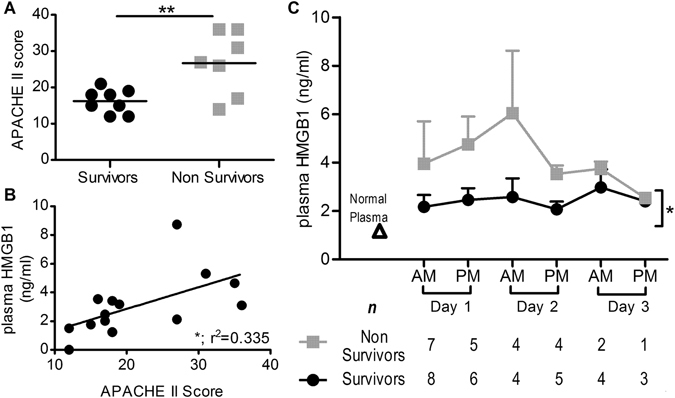
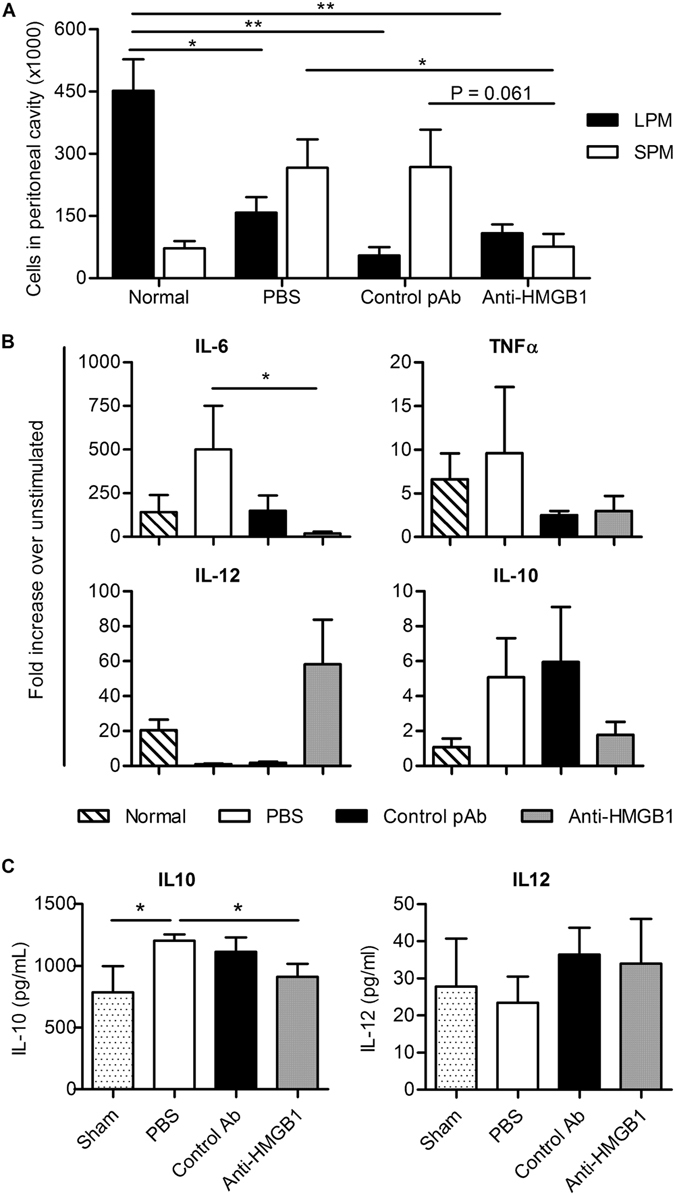
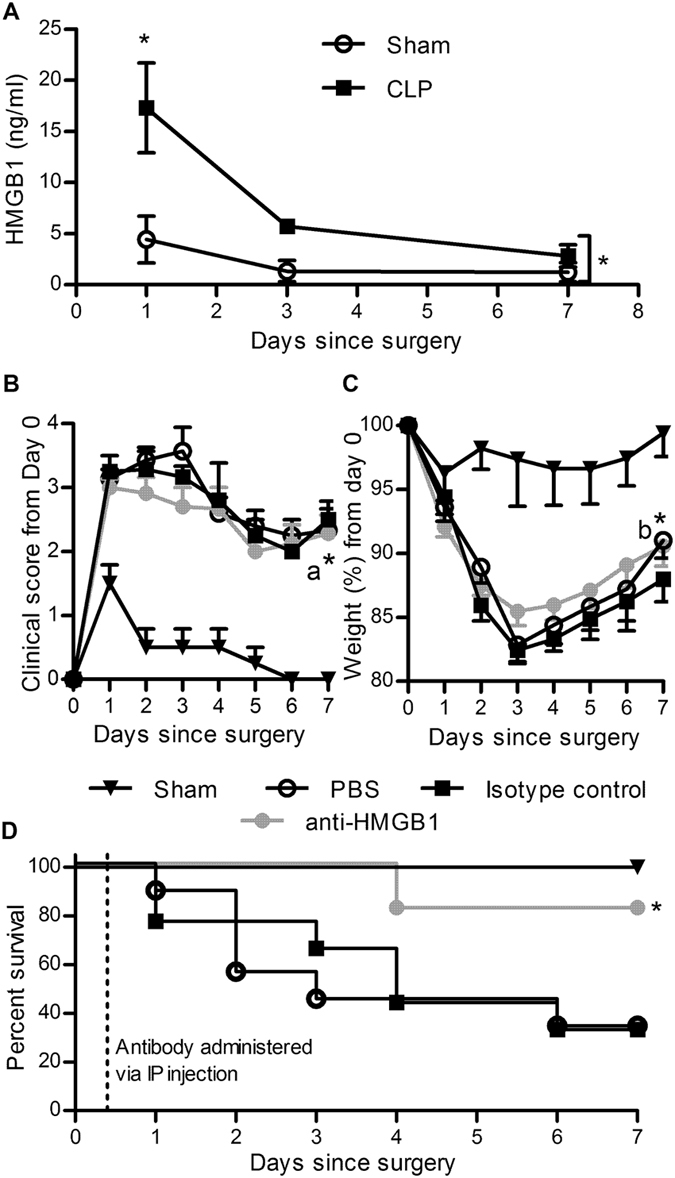
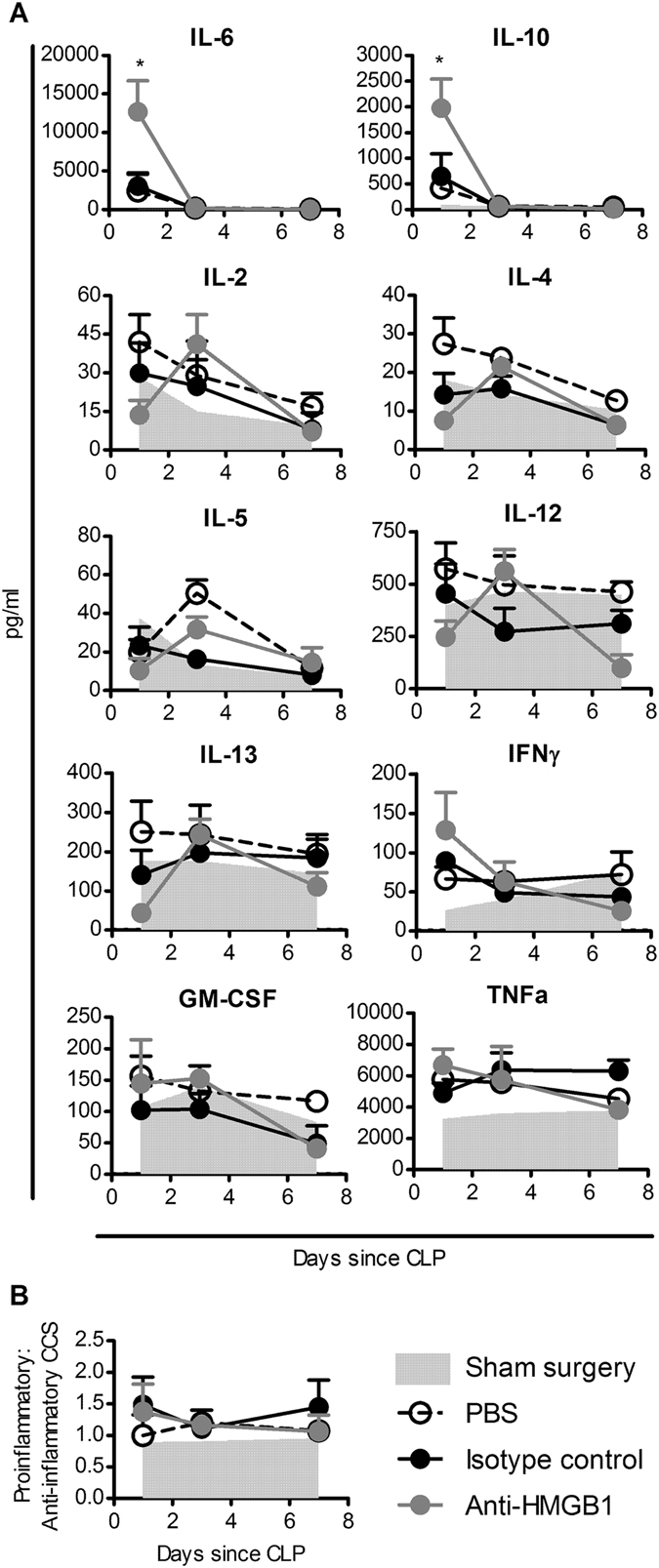
Sepsis remains a significant health burden and a major clinical need exists for therapeutics to dampen the excessive and uncontrolled immune activation. Nuclear protein high mobility group box protein 1 (HMGB1) is released following cell death and is a late mediator in sepsis pathogenesis. While approaches targeting HMGB1 have demonstrated reduced mortality in pre-clinical models of sepsis, the impact of HMGB1 blockade on the complex septic inflammatory milieu and the development of subsequent immunosuppression remain enigmatic. Analysis of plasma samples obtained from septic shock patients established an association between increased HMGB1 and non-survival, higher APACHE II scores, and increased pro-inflammatory cytokine responses. Pre-clinically, administration of neutralising ovine anti-HMGB1 polyclonal antibodies improved survival in murine endotoxaemia and caecal ligation and puncture-induced sepsis models, and altered early cytokine profiles to one which corresponded to patterns observed in the surviving patient cohort. Additionally, anti-HMGB1 treated murine sepsis survivors were significantly more resistant to secondary bacterial infection and exhibited altered innate immune cell phenotypes and cytokine responses. These findings demonstrate that anti-HMGB1 antibodies alter inflammation in murine sepsis models and reduce sepsis mortality without potentiating immunosuppression.
脓毒症仍然是一个重大的健康负担,临床上迫切需要治疗方法来抑制过度和失控的免疫激活。核蛋白高迁移率族蛋白 1(HMGB1)在细胞死亡后释放,是脓毒症发病机制中的晚期介质。虽然针对 HMGB1 的方法已在脓毒症的临床前模型中证明可降低死亡率,但 HMGB1 阻断对复杂脓毒性炎症环境的影响以及随后发生的免疫抑制的发展仍然是个谜。对脓毒性休克患者的血浆样本进行分析,确定了 HMGB1 增加与非生存、更高的 APACHE II 评分和促炎细胞因子反应增加之间的关联。在临床前,给予中和性绵羊抗 HMGB1 多克隆抗体可改善内毒素血症和盲肠结扎和穿刺诱导的脓毒症模型中小鼠的存活率,并改变早期细胞因子谱,使其与存活患者队列中观察到的模式相对应。此外,抗 HMGB1 治疗的脓毒症幸存小鼠对二次细菌感染的抵抗力显著增强,并且表现出固有免疫细胞表型和细胞因子反应的改变。这些发现表明,抗 HMGB1 抗体可改变小鼠脓毒症模型中的炎症反应,并降低脓毒症的死亡率,而不会增强免疫抑制。