Shen Lulu, Yang Yan, Ou Tiantong, Key Chia-Chi C, Tong Sarah H, Sequeira Russel C, Nelson Jonathan M, Nie Yan, Wang Zhan, Boudyguina Elena, Shewale Swapnil V, Zhu Xuewei
Department of Internal Medicine, Section on Molecular Medicine, Wake Forest School of Medicine, Winston-Salem, NC.
Prestige Department of Poultry Science, North Carolina State University, Raleigh, NC.
J Lipid Res. 2017 Sep;58(9):1808-1821. doi: 10.1194/jlr.M075879. Epub 2017 Jul 20.
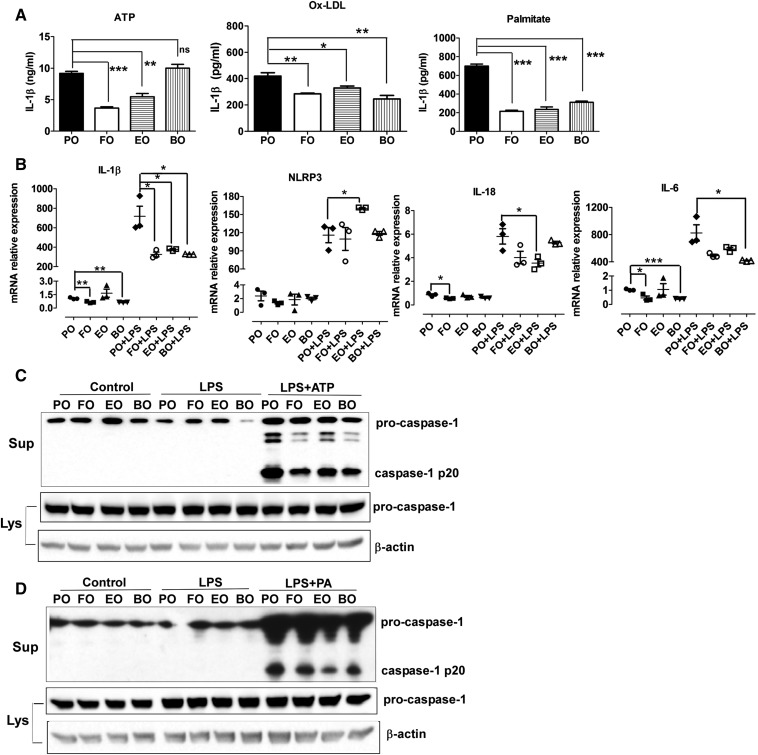
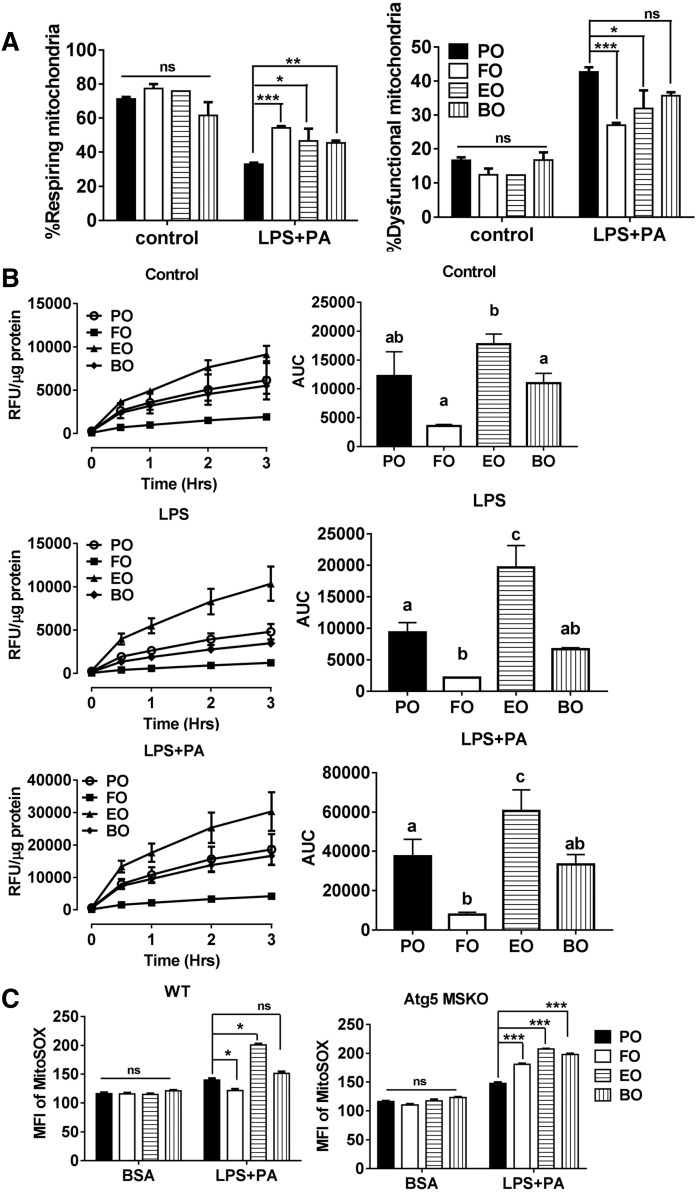
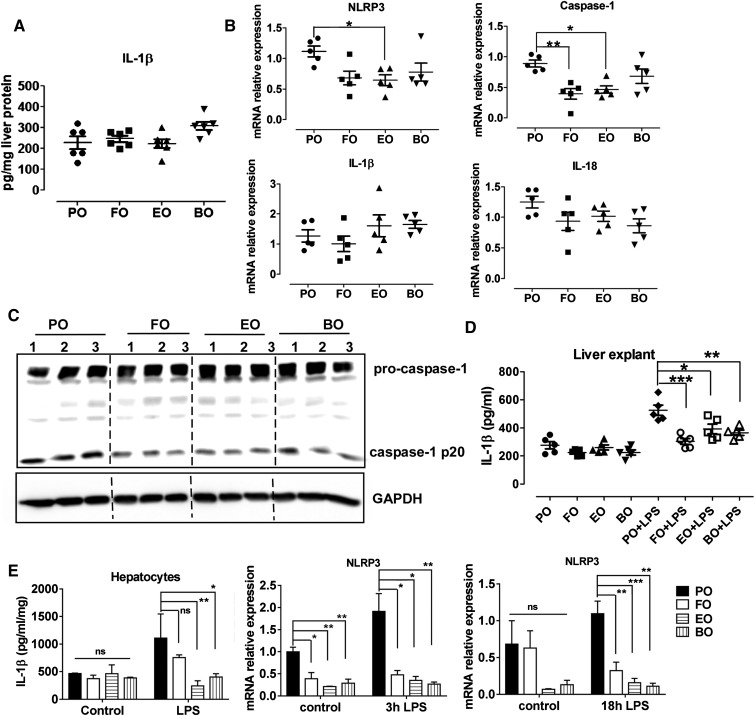
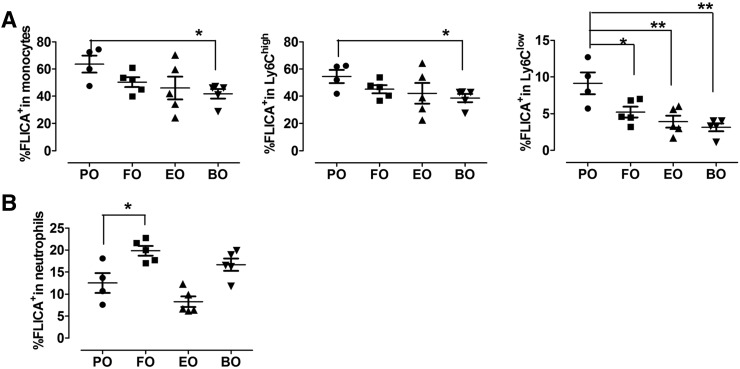
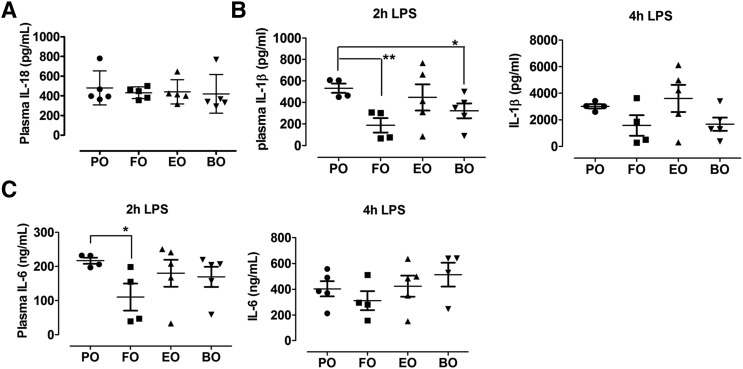
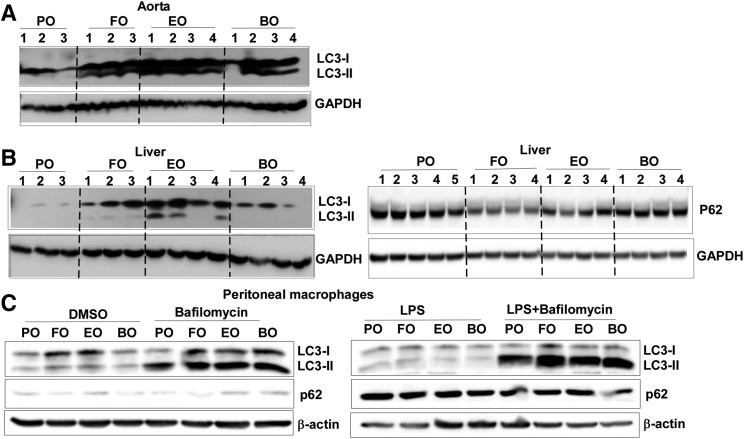
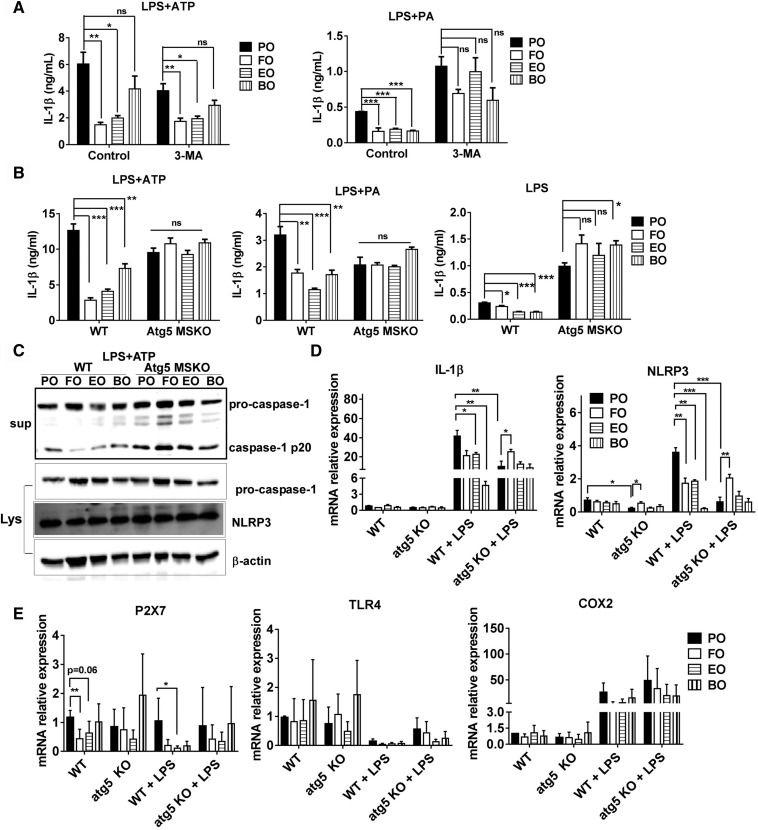
Dietary PUFAs reduce atherosclerosis and macrophage inflammation, but how nucleotide-binding oligomerization domain leucine-rich repeat-containing receptor protein (NLRP3) inflammasome activation and autophagy influence PUFA-mediated atheroprotection is poorly understood. We fed Ldlr mice diets containing 10% (calories) palm oil (PO) and 0.2% cholesterol, supplemented with an additional 10% of calories as PO, fish oil (FO), echium oil (EO, containing 18:4 n-3), or borage oil (BO, containing 18:3 n-6). Inflammasome activation, autophagic flux, and mitochondrial function were measured in peritoneal macrophages, blood monocytes, or liver from diet-fed mice. Compared with PO, dietary PUFAs (FO, EO, or BO) markedly inhibited inflammasome activation, shown by ) less macrophage IL-1β secretion and caspase-1 cleavage in response to NLRP3 inflammasome activators, ) less IL-1β secretion and caspase-1 cleavage from liver or hepatocytes in response to lipopolysaccharide (LPS), and ) attenuated caspase-1 activity in blood monocytes. Furthermore, PUFA-enriched diets increased LC3-II expression in macrophage, aorta, and liver samples and reduced numbers of dysfunctional mitochondria in macrophages in response to LPS and palmitate, suggesting enhanced autophagic activation. Dietary PUFAs did not attenuate NLRP3 inflammasome activation in atg5-deficient macrophages, indicating that autophagic activation is critical for the PUFA-mediated inflammasome inactivation. In conclusion, dietary PUFAs reduce atherosclerosis, in part, by activation of macrophage autophagy and attenuation of NLRP3 inflammasome activation.
膳食多不饱和脂肪酸(PUFAs)可减轻动脉粥样硬化和巨噬细胞炎症,但目前对于核苷酸结合寡聚化结构域富含亮氨酸重复序列的受体蛋白(NLRP3)炎性小体激活和自噬如何影响PUFA介导的动脉粥样硬化保护作用知之甚少。我们给低密度脂蛋白受体(Ldlr)基因敲除小鼠喂食含10%(热量)棕榈油(PO)和0.2%胆固醇的饲料,并分别额外添加10%热量的PO、鱼油(FO)、紫锥菊油(EO,含18:4 n-3)或琉璃苣油(BO,含18:3 n-6)。检测了喂食不同饲料小鼠的腹膜巨噬细胞、血液单核细胞或肝脏中的炎性小体激活、自噬通量和线粒体功能。与PO组相比,膳食PUFAs(FO、EO或BO)显著抑制炎性小体激活,表现为:)对NLRP3炎性小体激活剂反应时,巨噬细胞白细胞介素-1β(IL-1β)分泌减少和半胱天冬酶-1裂解减少;)对脂多糖(LPS)反应时,肝脏或肝细胞中IL-1β分泌减少和半胱天冬酶-1裂解减少;)血液单核细胞中半胱天冬酶-1活性减弱。此外,富含PUFA的饲料增加了巨噬细胞、主动脉和肝脏样本中微管相关蛋白1轻链3-II(LC3-II)的表达,并减少了巨噬细胞中对LPS和棕榈酸反应时功能失调线粒体的数量,提示自噬激活增强。膳食PUFAs在自噬相关基因5(atg5)缺陷的巨噬细胞中并未减弱NLRP3炎性小体激活,表明自噬激活对于PUFA介导的炎性小体失活至关重要。总之,膳食PUFAs部分通过激活巨噬细胞自噬和减弱NLRP3炎性小体激活来减轻动脉粥样硬化。