Neuroscience Laboratories, Graduate School of Frontier Biosciences, Osaka University, 1-3 Yamadaoka, Suita, Osaka, 565-0871, Japan.
Montreal Neurological Institute, McGill University, Montreal, Quebec, H3A 2B4, Canada.
Sci Rep. 2017 Jul 20;7(1):6024. doi: 10.1038/s41598-017-06243-7.
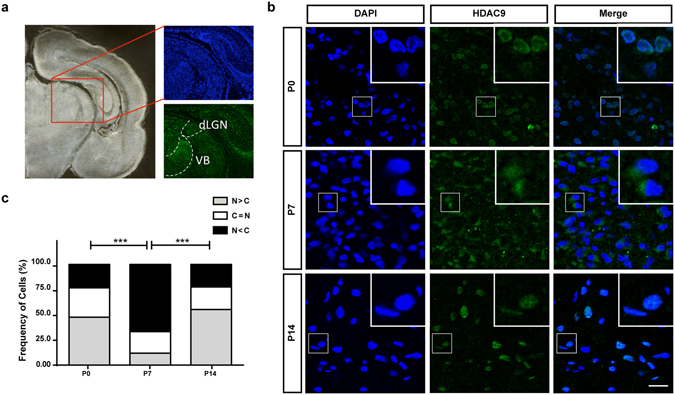
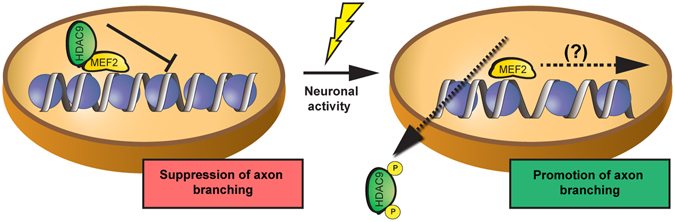
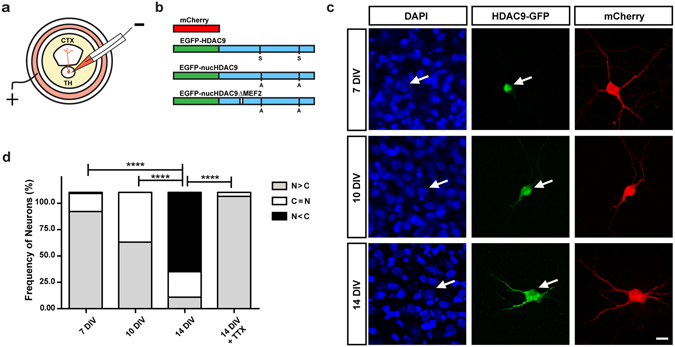
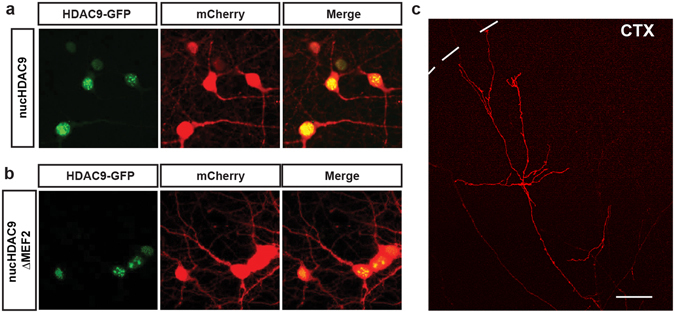
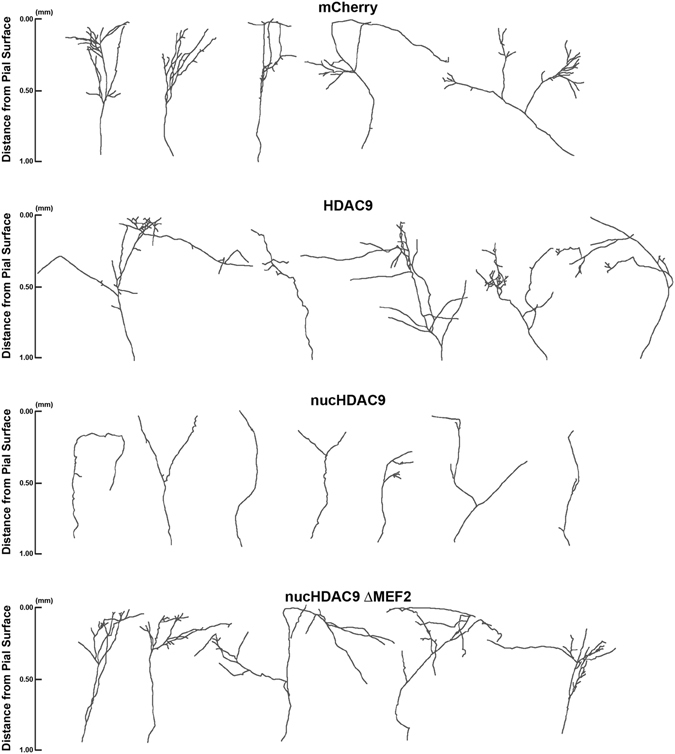
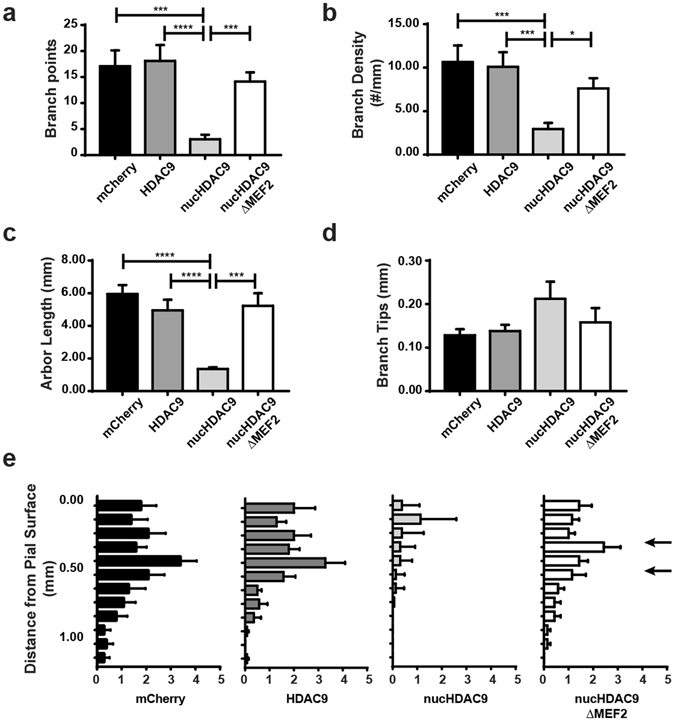
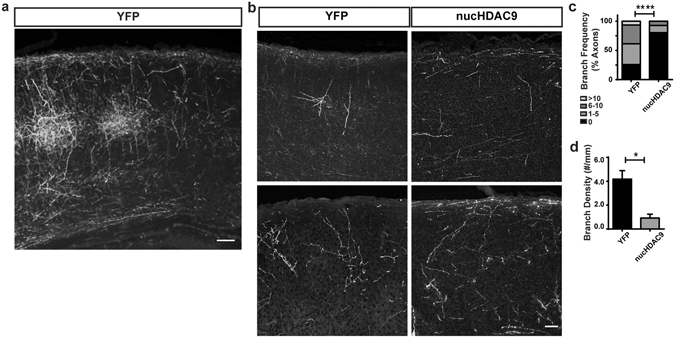
During development, thalamocortical (TC) axons form branches in an activity-dependent fashion. Here we investigated how neuronal activity is converted to molecular signals, focusing on an epigenetic mechanism involving histone deacetylases (HDACs). Immunohistochemistry demonstrated that HDAC9 was translocated from the nucleus to the cytoplasm of thalamic cells during the first postnatal week in rats. In organotypic co-cultures of the thalamus and cortex, fluorescent protein-tagged HDAC9 also exhibited nuclueocytoplasmic translocation in thalamic cells during culturing, which was reversed by tetrodotoxin treatment. Transfection with a mutant HDAC9 that interferes with the translocation markedly decreased TC axon branching in the culture. Similarly, TC axon branching was significantly decreased by the mutant HDAC9 gene transfer in vivo. However, axonal branching was restored by disrupting the interaction between HDAC9 and myocyte-specific enhancer factor 2 (MEF2). Taken together, the present results demonstrate that the nucleocytoplasmic translocation of HDAC9 plays a critical role in activity-dependent TC axon branching by affecting transcriptional regulation and downstream signaling pathways.
在发育过程中,丘脑皮质(TC)轴突以活动依赖的方式形成分支。在这里,我们研究了神经元活动如何转化为分子信号,重点关注涉及组蛋白去乙酰化酶(HDACs)的表观遗传机制。免疫组织化学显示,在大鼠出生后的第一周,HDAC9 从细胞核易位到丘脑细胞的细胞质中。在丘脑和皮质的器官型共培养物中,荧光蛋白标记的 HDAC9 在培养过程中也表现出核质易位,河豚毒素处理可逆转这一过程。转染干扰易位的突变型 HDAC9 可显著减少培养物中 TC 轴突分支。同样,体内突变型 HDAC9 基因转移也显著降低了 TC 轴突分支。然而,通过破坏 HDAC9 和肌细胞特异性增强因子 2(MEF2)之间的相互作用,轴突分支得到了恢复。综上所述,这些结果表明,HDAC9 的核质易位通过影响转录调控和下游信号通路,在活动依赖性 TC 轴突分支中发挥关键作用。