Experimental and Translational Ophthalmology Mainz, Department of Ophthalmology, Medical Center of the Johannes Gutenberg University Mainz; Langenbeckstrasse 1, 55101 Mainz, Germany.
Curr Neuropharmacol. 2018;16(7):942-958. doi: 10.2174/1570159X15666170720094529.
At present intraocular pressure (IOP) lowering therapies are the only approach to treat glaucoma. Neuroprotective strategies to protect the retinal ganglion cells (RGC) from apoptosis are lacking to date. Substantial amount of research concerning the role of the immune system in glaucoma has been performed in the recent years. This review aims to analyse changes found in the peripheral immune system, as well as selected local changes of retina immune cells in the glaucomatous retina.
By dividing the immune system into the innate and the adaptive immune system, a systematic literature research was performed to find recent approaches concerning the modulation of the immune system in the context of glaucoma. Also ClinicalTrials.gov was assessed to identify studies with a translational context.
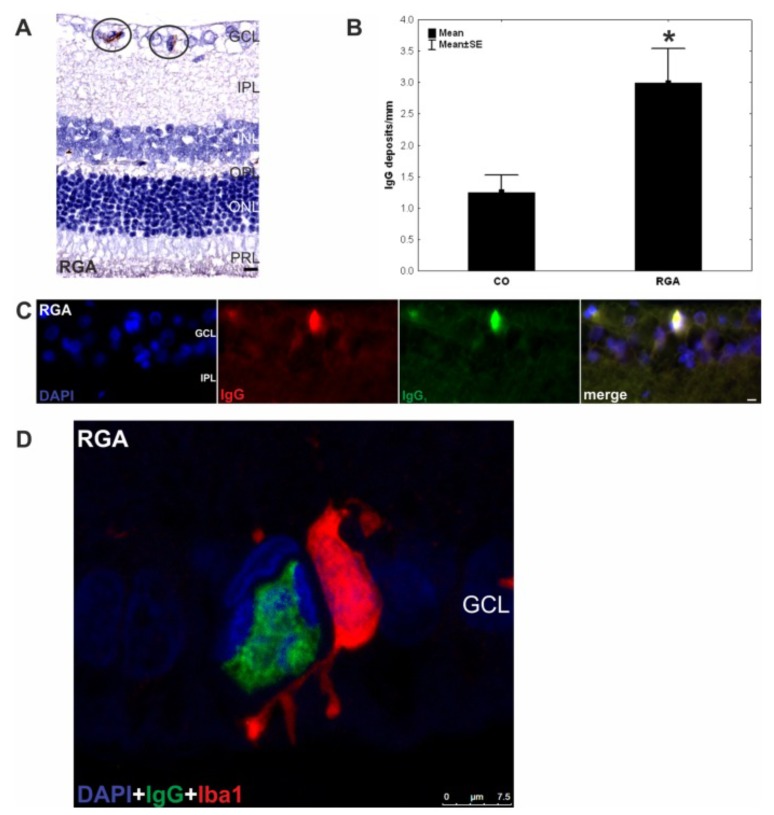
We found that some aspects of the immune system, such as changes in antibody levels, changes in toll like receptor signalling, T cells and retinal microglial cells, experience more research activity than other areas such as changes in dendritic cells or macrophages. Briefly, results from clinical studies revealed altered immunoreactivities against retinal and optic nerve antigens in sera and aqueous humor of glaucoma patients and point toward an autoimmune involvement in glaucomatous neurodegeneration and RGC death. IgG accumulations along with plasma cells were found localised in human glaucomatous retinae in a pro-inflammatory environment possibly maintained by microglia. Animal studies show that antibodies (e.g. anti- heat shock protein 60 and anti-myelin basic protein) elevated in glaucoma patients provoke autoaggressive RGC loss and are associated with IgG depositions and increased microglial cells. Also, studies addressing changes in T lymphocytes, macrophages but also local immune responses in the retina have been performed and also hold promising results.
This recapitulation of recent literature demonstrates that the immune system definitely plays a role in the pathogenesis of glaucoma. Multiple changes in the peripheral innate as well as adaptive immune system have been detected and give room for further research concerning valuable therapeutic targets. We conclude that there still is a great need to bring together the results derived from basic research analysing different aspects of the immune system in glaucoma to understand the immune context of the disease. Furthermore local immune changes in the retina of glaucoma patients still leave room for further therapeutic targets.
目前,降低眼内压(IOP)的疗法是治疗青光眼的唯一方法。迄今为止,还没有针对保护视网膜神经节细胞(RGC)免于凋亡的神经保护策略。近年来,大量研究探讨了免疫系统在青光眼发病机制中的作用。本综述旨在分析青光眼患者外周免疫系统以及视网膜固有免疫细胞的局部变化。
通过将免疫系统分为固有免疫系统和适应性免疫系统,我们对近年来有关在青光眼背景下调节免疫系统的研究进行了系统的文献检索。还评估了 ClinicalTrials.gov 以识别具有转化意义的研究。
我们发现,免疫系统的某些方面,如抗体水平的变化、Toll 样受体信号转导、T 细胞和视网膜小胶质细胞的变化等,比其他方面,如树突状细胞或巨噬细胞的变化,受到更多的研究关注。简要地说,临床研究的结果表明,在青光眼患者的血清和房水中,针对视网膜和视神经抗原的免疫反应发生了改变,并指向在青光眼神经退行性变和 RGC 死亡中存在自身免疫的参与。在促炎环境中,在人类青光眼视网膜中发现 IgG 积聚伴随着浆细胞,可能由小胶质细胞维持。动物研究表明,在青光眼患者中升高的抗体(例如抗热休克蛋白 60 和抗髓鞘碱性蛋白)引发自身攻击性的 RGC 损失,并与 IgG 沉积和增加的小胶质细胞有关。此外,还进行了关于 T 淋巴细胞、巨噬细胞以及视网膜局部免疫反应变化的研究,这些研究也取得了有前景的结果。
对近期文献的综述表明,免疫系统肯定在青光眼的发病机制中发挥作用。已检测到外周固有和适应性免疫系统的多种变化,为进一步研究有价值的治疗靶点提供了空间。我们得出结论,仍然需要将分析青光眼免疫系统不同方面的基础研究结果结合起来,以了解疾病的免疫背景。此外,青光眼患者视网膜的局部免疫变化仍然存在进一步的治疗靶点。