Tan Jing, Jiang Xianzhen, Yin Guangming, He Leye, Liu Jianye, Long Zhi, Jiang Zhiqiang, Yao Kun
Department of Urology, The Third Xiangya Hospital of Central South University; Institute of Prostate Disease, Central South University, Changsha, Hunan 410013, P.R. China.
Oncol Rep. 2017 Sep;38(3):1373-1382. doi: 10.3892/or.2017.5841. Epub 2017 Jul 20.
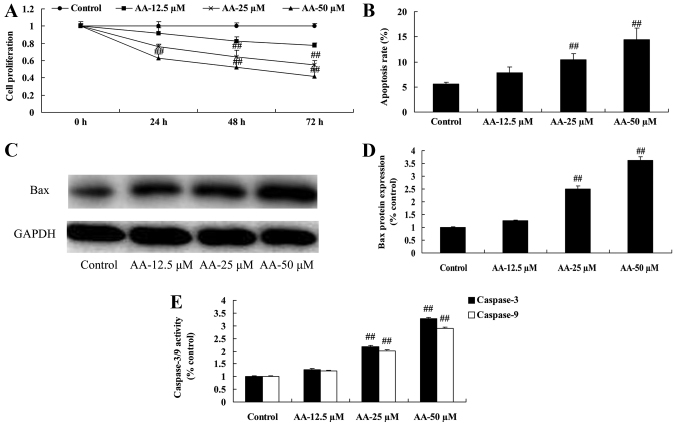
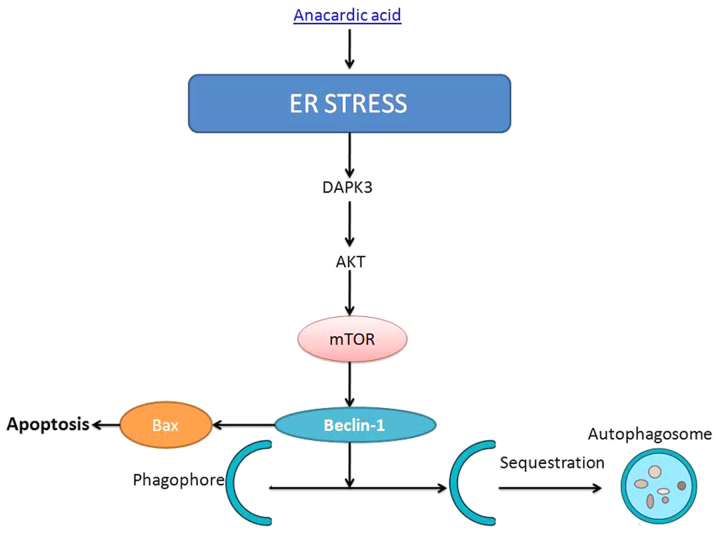
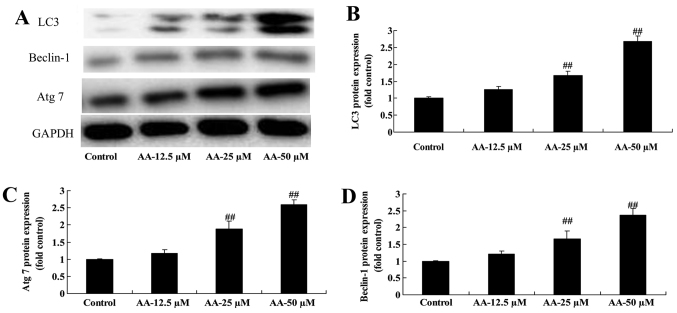
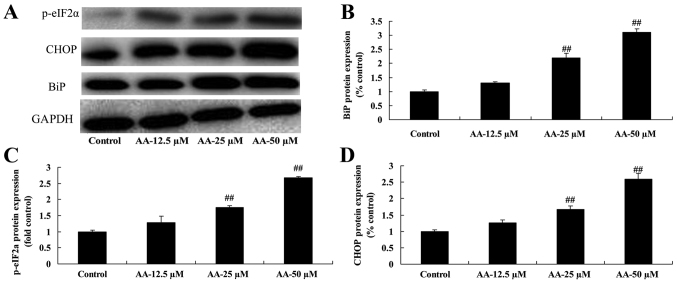
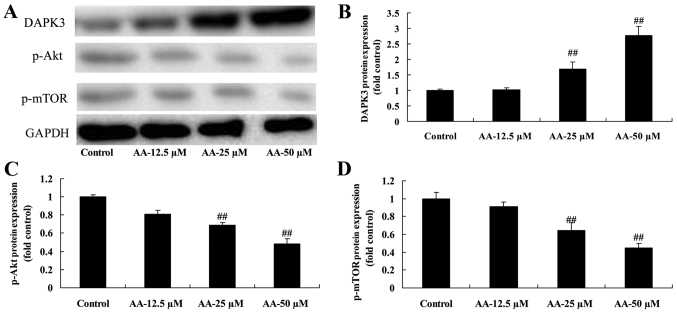
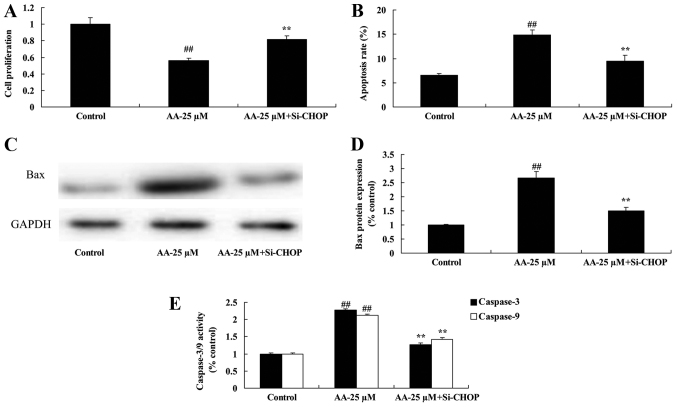
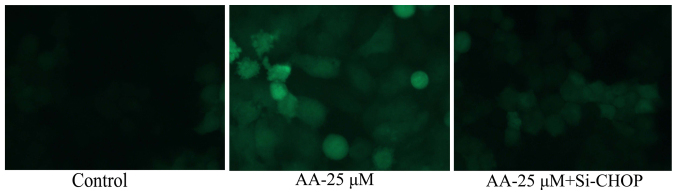
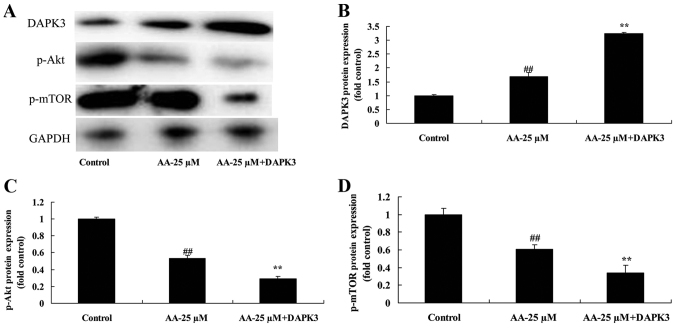
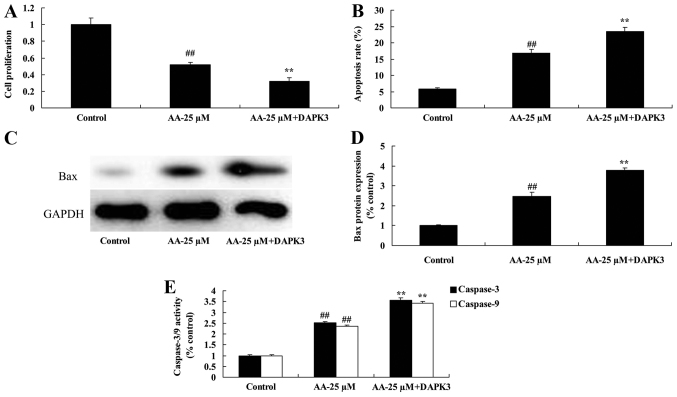
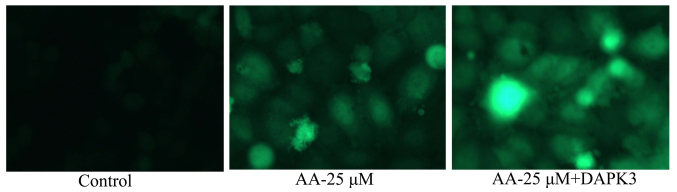
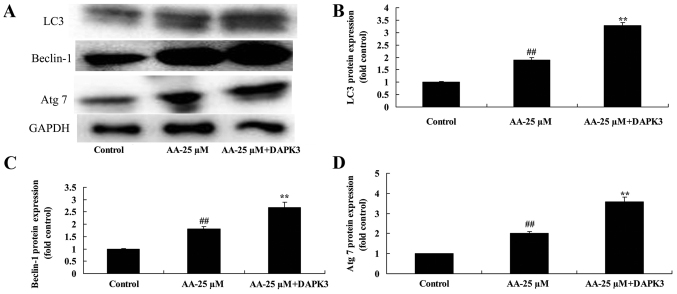
Anacardic acid, which is commonly seen in plants of Anacardiaceae, is an important composition of cashew, ginkgo leaf and fruit, and it has been suggested in previous research to show antitumor activity. The main aim of the present study was to evaluate the anticancer effects of anacardic acid on cell apoptosis of prostatic cancer and molecular mechanisms of this phenomenon. In this study we found that anacardic acid inhibited cell proliferation, induced apoptosis and caspase-3/9 activities and Bax protein expression of prostatic cancer. Anacardic acid induced the ER stress inducing factors (BiP, CHOP, p-eIF2α), autophagy, LC3, Beclin-1, Atg 7 and DAPK3 protein expression, and suppressed p-Akt and p-mTOR protein expression of prostatic cancer. Si-CHOP was used to inhibit ER stress in prostatic cancer by anacardic acid, which showed that the cell proliferation was increased, apoptosis, and caspase-3/9 activities and Bax protein expression was suppressed, autophagy, LC3, Beclin-1, Atg 7 and DAPK3 protein expression was reduced, and p-Akt and p-mTOR protein expression was promoted. DAPK3 inhibited p-Akt and p-mTOR protein expression, enhanced the anticancer effects of anacardic acid on prostatic cancer through autophagy. For the first time, the present study showed that anacardic acid induces cell apoptosis of prostatic cancer through autophagy by ER stress/DAPK3/Akt signaling pathway.
漆树酸常见于漆树科植物中,是腰果、银杏叶和果实的重要成分,先前的研究表明其具有抗肿瘤活性。本研究的主要目的是评估漆树酸对前列腺癌细胞凋亡的抗癌作用及其分子机制。在本研究中,我们发现漆树酸抑制前列腺癌细胞增殖,诱导细胞凋亡、半胱天冬酶-3/9活性及Bax蛋白表达。漆树酸诱导内质网应激诱导因子(BiP、CHOP、p-eIF2α)、自噬、LC3、Beclin-1、Atg 7和DAPK3蛋白表达,并抑制前列腺癌的p-Akt和p-mTOR蛋白表达。使用Si-CHOP抑制漆树酸诱导的前列腺癌内质网应激,结果显示细胞增殖增加,细胞凋亡、半胱天冬酶-3/9活性及Bax蛋白表达受到抑制,自噬、LC3、Beclin-1、Atg 7和DAPK3蛋白表达减少,p-Akt和p-mTOR蛋白表达增加。DAPK3抑制p-Akt和p-mTOR蛋白表达,通过自噬增强漆树酸对前列腺癌的抗癌作用。本研究首次表明,漆树酸通过内质网应激/DAPK3/Akt信号通路诱导自噬,从而诱导前列腺癌细胞凋亡。