Quas Jodi A, Dickerson Kelli L, Matthew Richard, Harron Connor, Quas Catherine M
Department of Psychology and Social Behavior, University of California Irvine, Irvine, California, United States of America.
Department of Planning, Policy, and Design, University of California Irvine, Irvine, California, United States of America.
PLoS One. 2017 Jul 24;12(7):e0181606. doi: 10.1371/journal.pone.0181606. eCollection 2017.
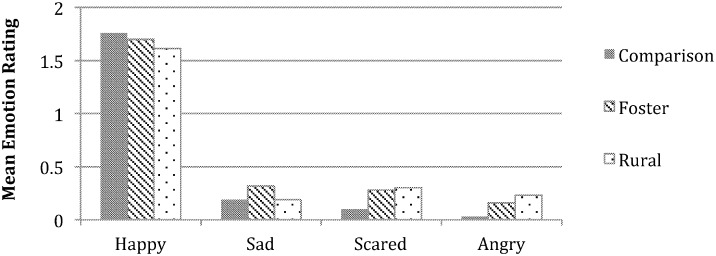
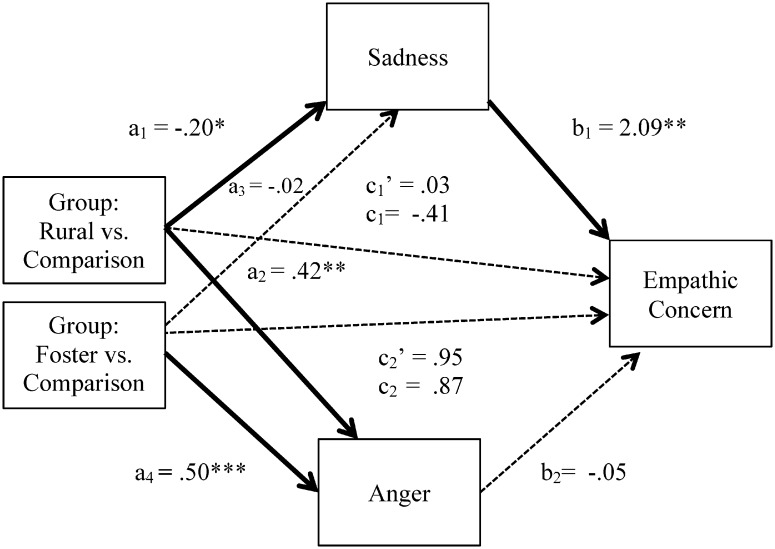
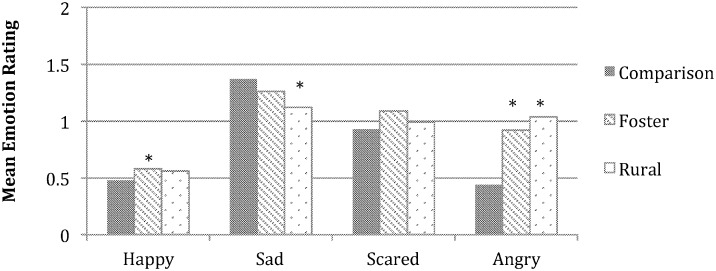
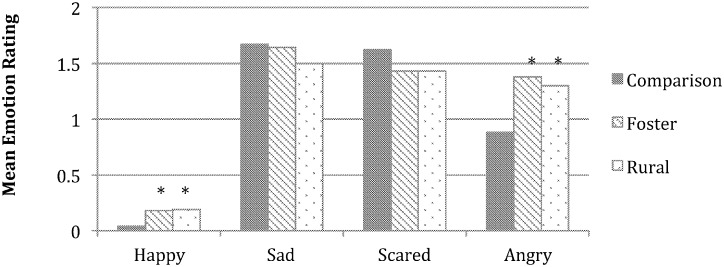
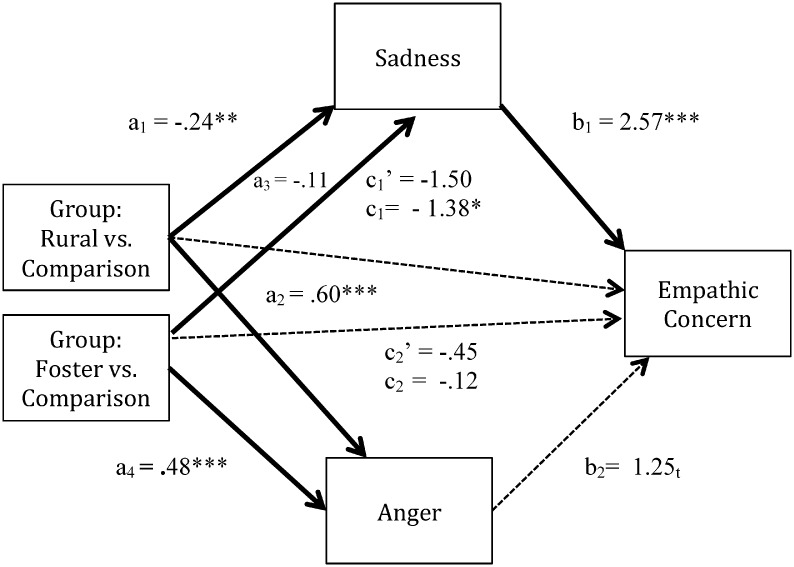
Little is known about how emotion recognition and empathy jointly operate in youth growing up in contexts defined by persistent adversity. We investigated whether adversity exposure in two groups of youth was associated with reduced empathy and whether deficits in emotion recognition mediated this association. Foster, rural poor, and comparison youth from Swaziland, Africa identified emotional expressions and rated their empathic concern for characters depicted in images showing positive, ambiguous, and negative scenes. Rural and foster youth perceived greater anger and happiness in the main characters in ambiguous and negative images than did comparison youth. Rural children also perceived less sadness. Youth's perceptions of sadness in the negative and ambiguous expressions mediated the relation between adversity and empathic concern, but only for the rural youth, who perceived less sadness, which then predicted less empathy. Findings provide new insight into processes that underlie empathic tendencies in adversity-exposed youth and highlight potential directions for interventions to increase empathy.
对于在持续逆境环境中成长的青少年,情绪识别和同理心如何共同发挥作用,我们知之甚少。我们调查了两组青少年所经历的逆境是否与同理心降低有关,以及情绪识别缺陷是否介导了这种关联。来自非洲斯威士兰的寄养儿童、农村贫困儿童以及对照儿童识别情绪表达,并对展示积极、模糊和消极场景的图片中人物的共情关注程度进行评分。农村和寄养儿童在模糊和消极图片中对主要人物所感受到的愤怒和快乐比对照儿童更多。农村儿童感受到的悲伤也更少。青少年对消极和模糊表情中悲伤情绪的感知介导了逆境与共情关注之间的关系,但仅适用于农村儿童,他们感受到的悲伤较少,进而预测出较低的同理心。研究结果为逆境中青少年共情倾向的潜在过程提供了新的见解,并突出了增强同理心干预措施的潜在方向。