Mukherjee Mishtu, Vajpai Manu, Sankararamakrishnan Ramasubbu
Department of Biological Sciences and Bioengineering, Indian Institute of Technology Kanpur, Kanpur, -208016, India.
BMC Genomics. 2017 Jul 24;18(1):560. doi: 10.1186/s12864-017-3947-4.
The monovalent anions formate, nitrite and hydrosulphide are main metabolites of bacterial respiration during anaerobic mixed-acid fermentation. When accumulated in the cytoplasm, these anions become cytotoxic. Membrane proteins that selectively transport these monovalent anions across the membrane have been identified and they belong to the family of Formate/Nitrite Transporters (FNTs). Individual members that selectively transport formate, nitrite and hydrosulphide have been investigated. Experimentally determined structures of FNTs indicate that they share the same hourglass helical fold with aquaporins and aquaglyceroporins and have two constriction regions, namely, cytoplasmic slit and central constriction. Members of FNTs are found in bacteria, archaea, fungi and protists. However, no FNT homolog has been identified in mammals. With FNTs as potential drug targets for many bacterial diseases, it is important to understand the mechanism of selectivity and transport across these transporters.
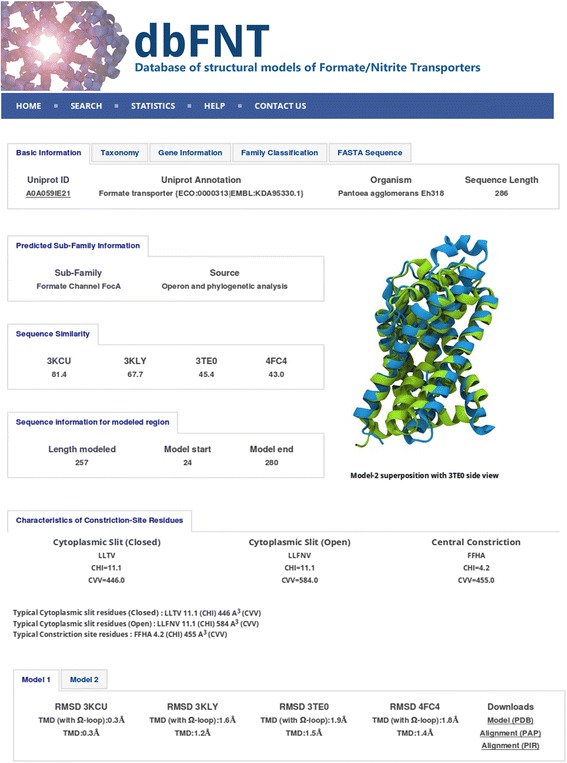
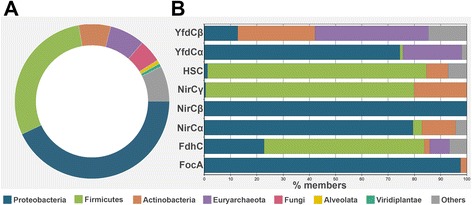
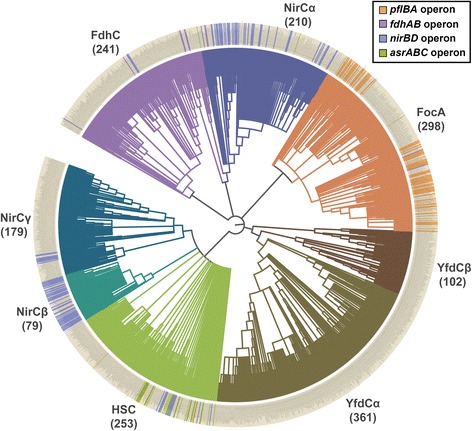
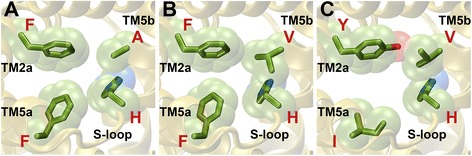
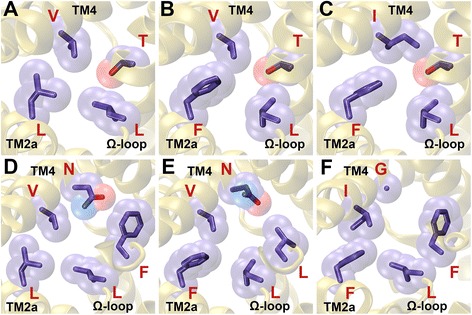
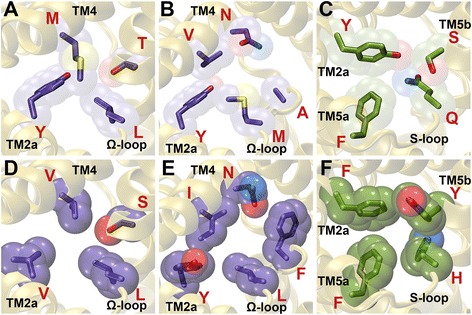
We have systematically searched the sequence databases and identified 2206 FNT sequences from bacteria, archaea and eukaryotes. Although FNT sequences are very diverse, homology modeling followed by structure-based sequence alignment revealed that nearly one third of all the positions within the transmembrane region exhibit high conservation either as a group or at the level of individual residues across all three kingdoms. Phylogenetic analysis of prokaryotic FNT sequences revealed eight different subgroups. Formate, nitrite and hydrosulphide transporters respectively are clustered into two (FocA and FdhC), three (NirC-α, NirC-β and NirC-γ) and one (HSC) subfamilies. We have also recognized two FNT subgroups (YfdC-α and YfdC-β) with unassigned function. Analysis of taxonomic distribution indicates that each subfamily prefers specific taxonomic groups. Structure-based sequence alignment of individual subfamily members revealed that certain positions in the two constriction regions and some residues facing the interior show subfamily-specific conservation. We have also identified examples of FNTs with the two constriction regions formed by residues that are less frequently observed. We have developed dbFNT, a database of FNT models and associated details. dbFNT is freely available to scientific community.
Taxonomic distribution and sequence conservation of FNTs exhibit subfamily-specific features. The conservation pattern in the central constriction and cytoplasmic slit in the open and closed states are distinct for YfdC and NirC subfamilies. The same is true for some residues facing the interior of the transporters. The specific residues in these positions can exert influence on the type of solutes that are transported by these proteins. With FNTs found in many disease-causing bacteria, the knowledge gained in this study can be used in the development and design of anti-bacterial drugs.
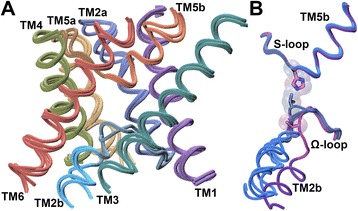
一价阴离子甲酸根、亚硝酸根和硫化氢是厌氧混合酸发酵过程中细菌呼吸的主要代谢产物。当这些阴离子在细胞质中积累时,会产生细胞毒性。已鉴定出能选择性地将这些一价阴离子转运穿过细胞膜的膜蛋白,它们属于甲酸根/亚硝酸根转运蛋白(FNT)家族。对选择性转运甲酸根、亚硝酸根和硫化氢的单个成员进行了研究。FNT的实验测定结构表明,它们与水通道蛋白和水甘油通道蛋白具有相同的沙漏状螺旋折叠结构,并有两个收缩区域,即细胞质裂隙和中央收缩区。FNT成员存在于细菌、古菌、真菌和原生生物中。然而,在哺乳动物中尚未鉴定出FNT同源物。鉴于FNT作为许多细菌疾病的潜在药物靶点,了解这些转运蛋白的选择性和转运机制非常重要。
我们系统地搜索了序列数据库,从细菌、古菌和真核生物中鉴定出2206个FNT序列。尽管FNT序列非常多样,但通过同源建模和基于结构的序列比对发现,跨膜区域内近三分之一的位置在所有三个界中作为一个整体或在单个残基水平上表现出高度保守性。对原核生物FNT序列的系统发育分析揭示了八个不同的亚组。甲酸根、亚硝酸根和硫化氢转运蛋白分别聚集在两个(FocA和FdhC)、三个(NirC-α、NirC-β和NirC-γ)和一个(HSC)亚家族中。我们还识别出两个功能未明确的FNT亚组(YfdC-α和YfdC-β)。分类分布分析表明,每个亚家族偏好特定的分类群。对单个亚家族成员进行基于结构的序列比对发现,两个收缩区域中的某些位置以及一些面向内部的残基表现出亚家族特异性保守性。我们还鉴定出了由较少出现的残基形成两个收缩区域的FNT实例。我们开发了dbFNT,一个FNT模型及相关细节的数据库。dbFNT可供科学界免费使用。
FNT的分类分布和序列保守性表现出亚家族特异性特征。YfdC和NirC亚家族在开放和关闭状态下中央收缩区和细胞质裂隙中的保守模式不同。转运蛋白内部的一些残基也是如此。这些位置的特定残基会影响这些蛋白转运的溶质类型。鉴于在许多致病细菌中发现了FNT,本研究获得的知识可用于抗菌药物的开发和设计。