University of California, San Diego, Department of Infectious Disease, 9500 Gilman Drive #0711, La Jolla, CA, 92093-0711, USA.
Sci Rep. 2017 Jul 24;7(1):6218. doi: 10.1038/s41598-017-05980-z.
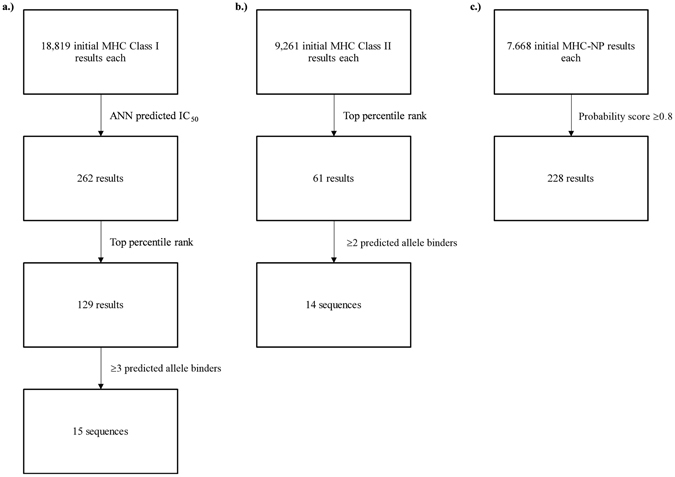
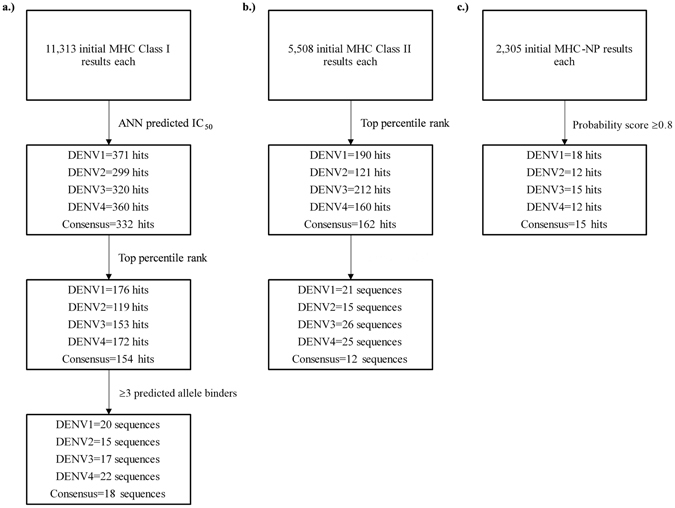
Since the re-emergence of Zika virus in 2014 and subsequent association with microcephaly, much work has focused on the development of a vaccine to halt its spread throughout the world. The mosquito vector that transmits this virus is widespread and responsible for the spread of other arboviridae including Dengue. Current diagnostic methods rely on serologic testing that are complicated by cross reactivity and therefore unable to distinguish Zika from Dengue infection in the absence of virus isolation. We performed an in silico analysis to identify potential epitopes that may stimulate a unique T-lymphocyte response to distinguish prior infection with Zika or Dengue. From this analysis, we not only identified epitopes unique to Zika and Dengue, but also identified epitopes unique to each Dengue serotype. These peptides contribute to a pool of peptides identified for vaccine development that can be tested in vitro to confirm immunogenicity, absence of homology and global population coverage. The current lack of accurate diagnostic testing hampers our ability to understand the scope of the epidemic, implications for vaccine implementation and complications related to monoinfection and co-infection with these two closely related viruses.
自 2014 年寨卡病毒重新出现并随后与小头症相关以来,人们已经做了大量工作来开发疫苗以阻止其在全球范围内传播。传播这种病毒的蚊子媒介分布广泛,是其他虫媒病毒(包括登革热)传播的原因。目前的诊断方法依赖于血清学检测,但由于交叉反应,因此在没有病毒分离的情况下,无法区分寨卡病毒感染和登革热感染。我们进行了计算机分析,以鉴定可能刺激独特 T 淋巴细胞反应的潜在表位,从而区分先前感染的寨卡病毒或登革热。通过这项分析,我们不仅鉴定出了寨卡病毒和登革热各自特有的表位,还鉴定出了每个登革热血清型特有的表位。这些肽有助于确定一组用于疫苗开发的肽,这些肽可以在体外进行测试,以确认其免疫原性、无同源性和全球人群覆盖率。目前缺乏准确的诊断检测,这限制了我们了解疫情范围、疫苗实施的影响以及与这两种密切相关的病毒的单一感染和混合感染相关并发症的能力。