Nakada-Tsukui Kumiko, Nozaki Tomoyoshi
School of Life Sciences, Jawaharlal Nehru University, New Delhi, 110067, India.
Department of Parasitology, National Institute of Infectious Diseases, 1-23-1 Toyama, Shinjuku-ku, Tokyo, 162-8640, Japan.
Nat Commun. 2017 Jul 17;8(1):101. doi: 10.1038/s41467-017-00199-y.
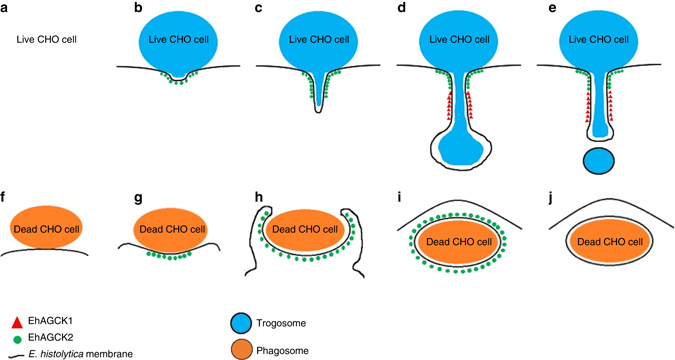
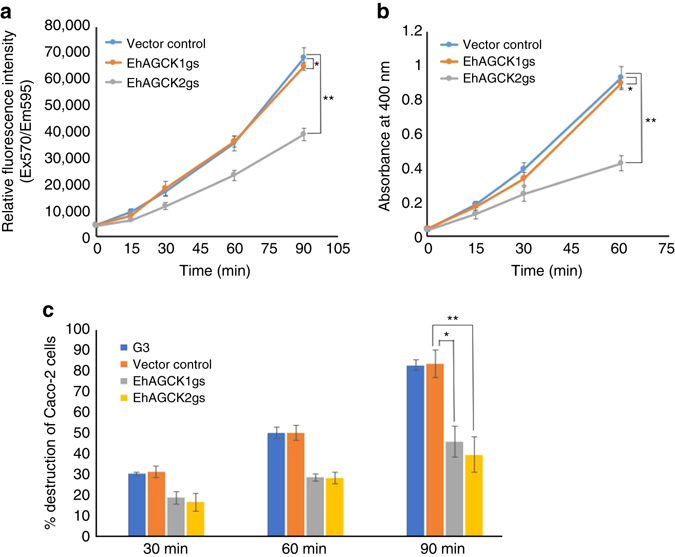
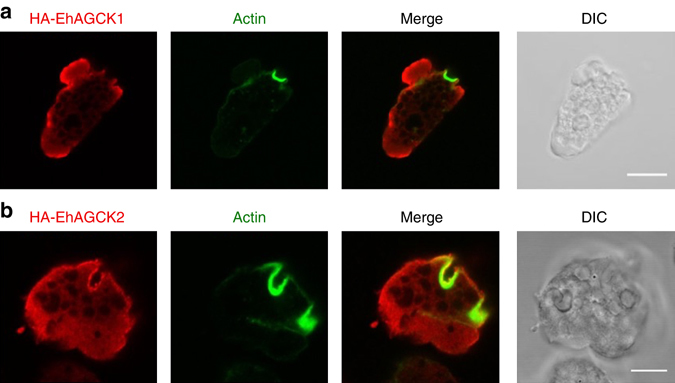
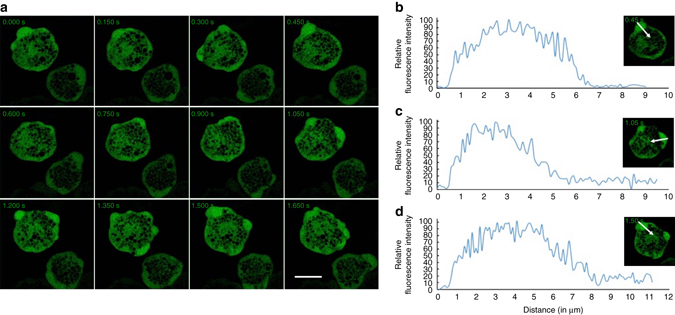
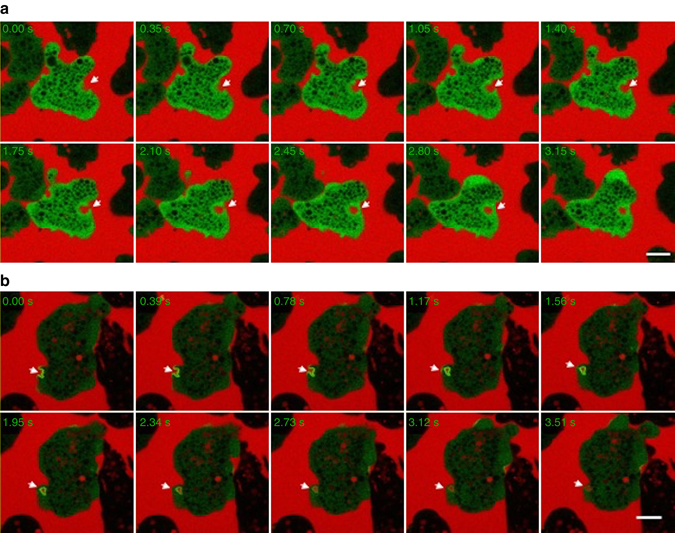
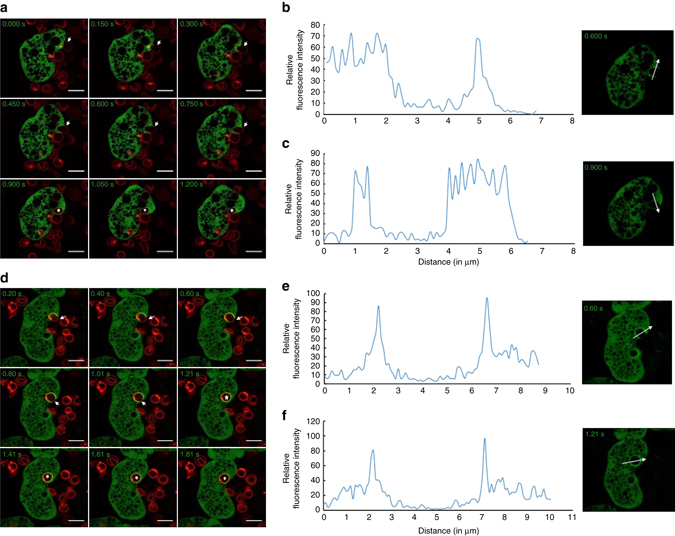
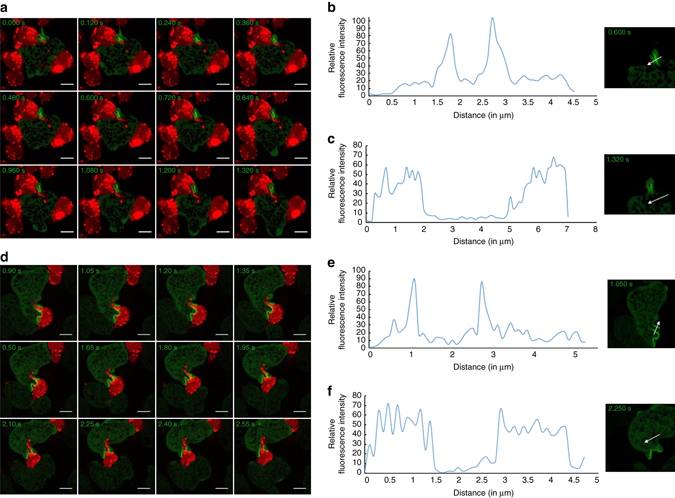
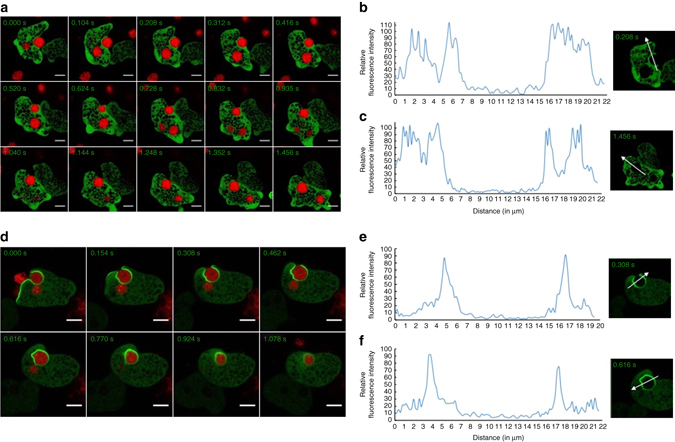
The protozoan parasite Entamoeba histolytica is the aetiologic agent of amoebiasis, an endemic infection in developing countries with considerable morbidity and mortality. Recently, trogocytosis has been recognized as the key step in amoebic cytolysis and invasion, a paradigm shift in understanding pathogenicity of this organism. Here we report that AGC family kinase 1 is specifically involved in trogocytosis of live human cells and does not participate in phagocytosis of dead cells. Live imaging reveals localization of this kinase in the long and thin tunnels formed during trogocytosis but not in the trogosomes (endosomes formed after trogocytosis). Silencing of the specific gene leads to a defect in CHO cell destruction and trogocytosis while other endocytic processes remain unaffected. The results suggest that the trogocytic pathway is likely to be different from phagocytosis though many of the steps and molecules involved may be common. Entamoeba histolytica can kill host cells by trogocytosis, while it ingests dead cells by phagocytosis. Here, Somlata et al. show that EhAGCK1, an AGC family kinase, is specifically involved in trogocytosis, shedding light on the molecular differences between trogocytosis and phagocytosis.
原生动物寄生虫溶组织内阿米巴是阿米巴病的病原体,在发展中国家是一种具有相当高发病率和死亡率的地方性感染。最近,细胞咬食已被认为是阿米巴细胞溶解和侵袭的关键步骤,这是对该生物体致病性理解上的范式转变。在此,我们报告AGC家族激酶1特异性参与活的人类细胞的细胞咬食,而不参与死细胞的吞噬作用。实时成像显示该激酶定位于细胞咬食过程中形成的细长隧道中,而不是定位于吞噬小体(细胞咬食后形成的内体)中。特定基因的沉默导致CHO细胞破坏和细胞咬食缺陷,而其他内吞过程不受影响。结果表明,尽管许多涉及的步骤和分子可能是共同的,但细胞咬食途径可能与吞噬作用不同。溶组织内阿米巴可通过细胞咬食杀死宿主细胞,而通过吞噬作用摄取死细胞。在此,索姆拉塔等人表明,AGC家族激酶EhAGCK1特异性参与细胞咬食,揭示了细胞咬食与吞噬作用之间的分子差异。