Woitok Mira, Klose Diana, Di Fiore Stefano, Richter Wolfgang, Stein Christoph, Gresch Gerrit, Grieger Elena, Barth Stefan, Fischer Rainer, Kolberg Katharina, Niesen Judith
Fraunhofer Institute for Molecular Biology and Applied Ecology (IME), Aachen, Germany.
Institute of Molecular Biotechnology (Biology VII), RWTH Aachen University, Aachen, Germany.
Onco Targets Ther. 2017 Jul 6;10:3313-3327. doi: 10.2147/OTT.S140492. eCollection 2017.
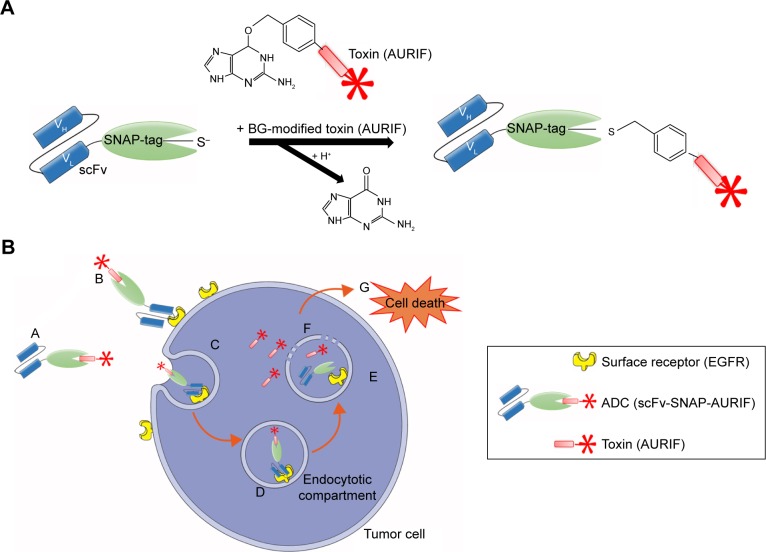
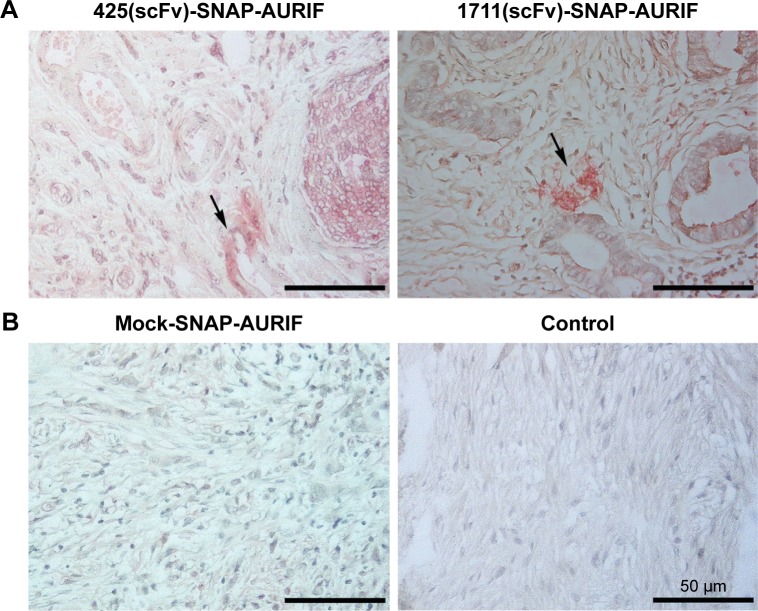
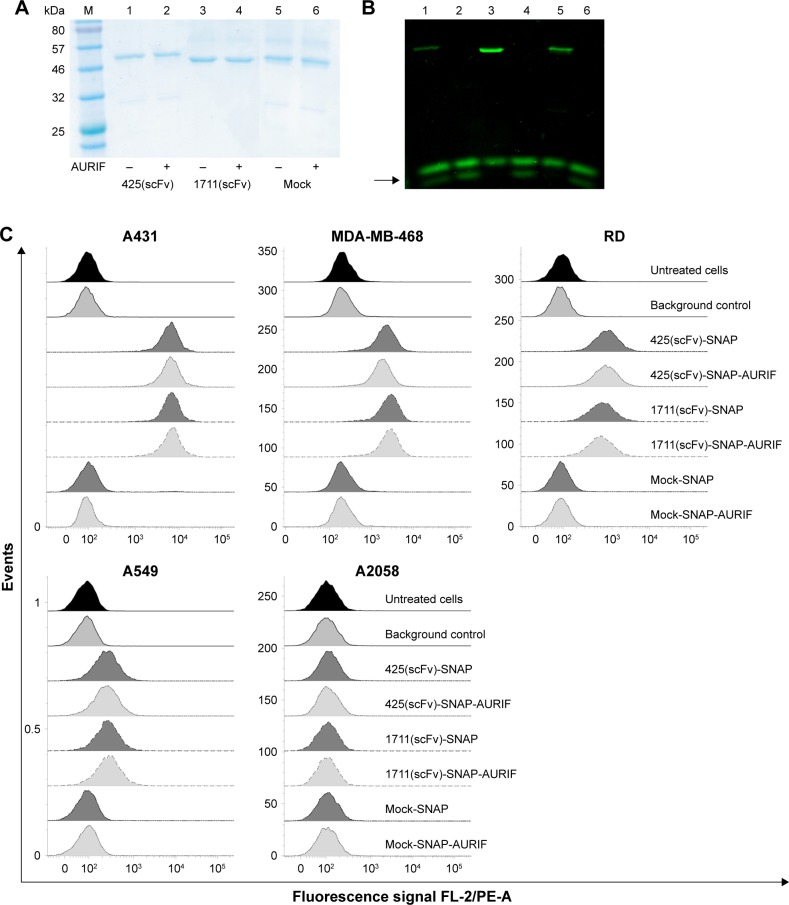
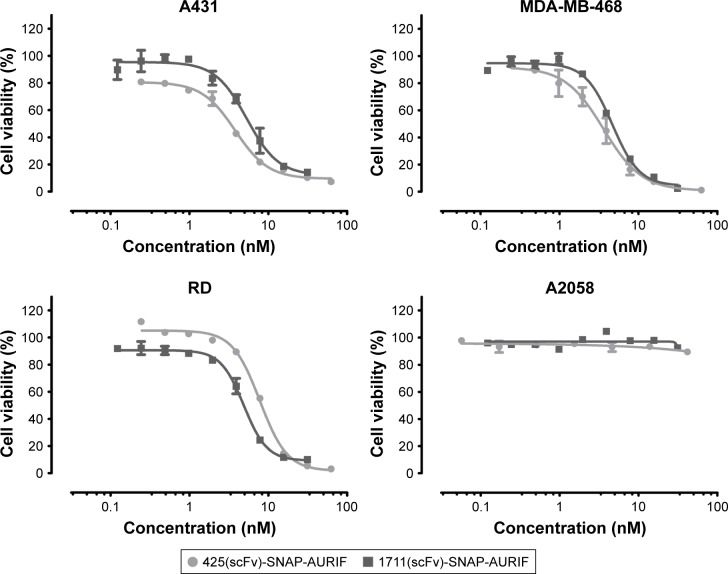
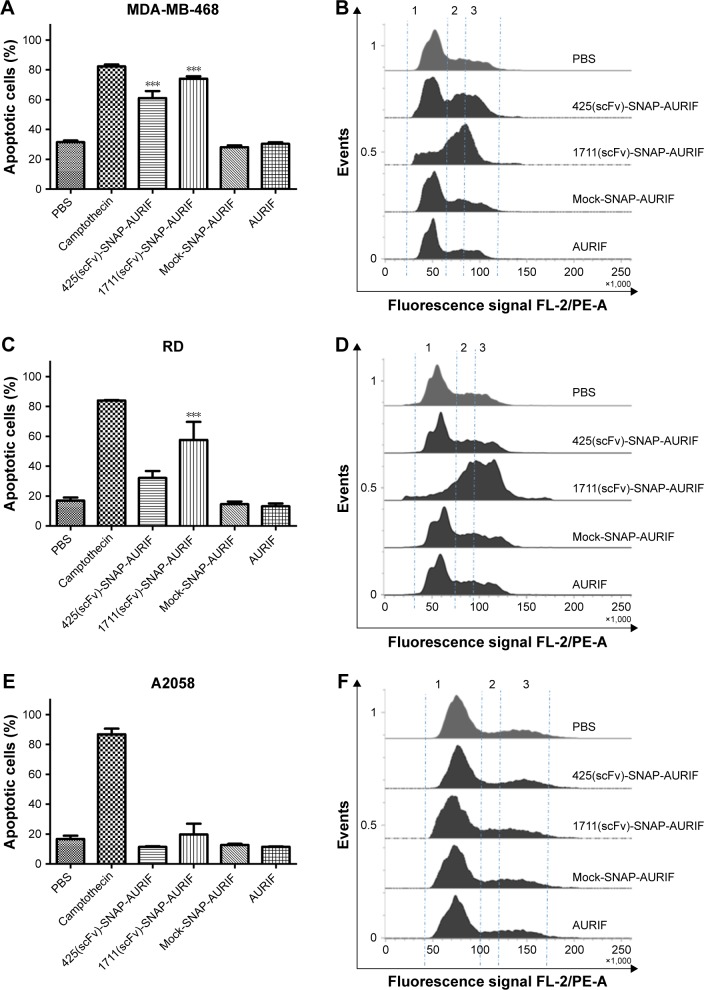
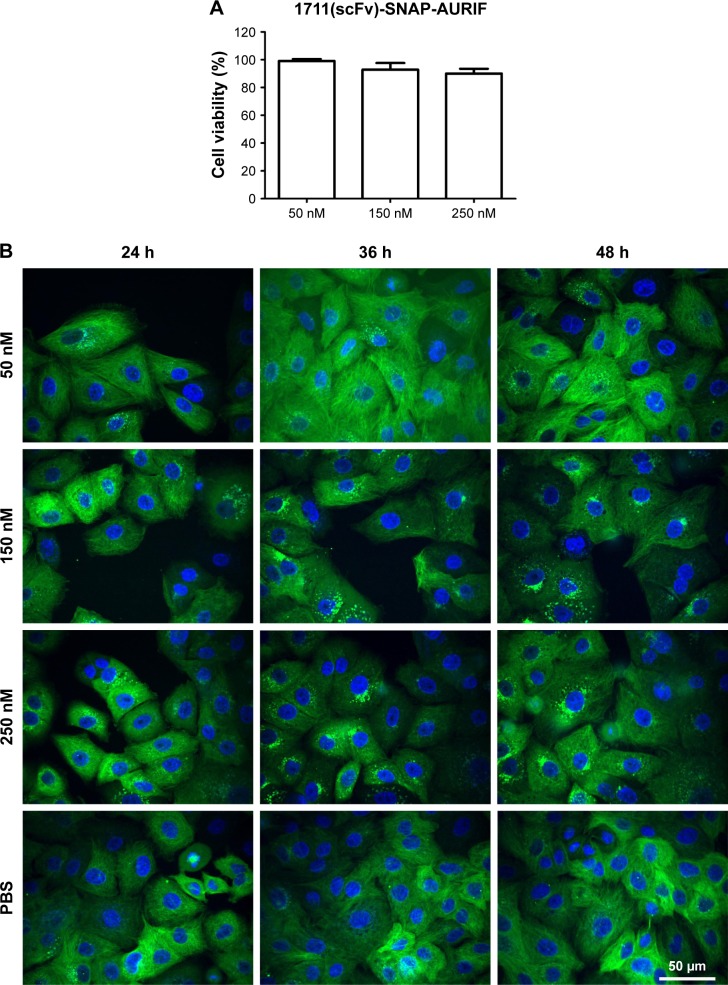
Antibody-drug conjugates (ADCs) can deliver toxins to specific targets such as tumor cells. They have shown promise in preclinical/clinical development but feature stoichiometrically undefined chemical linkages, and those based on full-size antibodies achieve only limited tumor penetration. SNAP-tag technology can overcome these challenges by conjugating benzylguanine-modified toxins to single-chain fragment variables (scFvs) with 1:1 stoichiometry while preserving antigen binding. Two (human and mouse) scFv-SNAP fusion proteins recognizing the epidermal growth factor receptor (EGFR) were expressed in HEK 293T cells. The purified fusion proteins were conjugated to auristatin F (AURIF). Binding activity was confirmed by flow cytometry/immunohistochemistry, and cytotoxic activity was confirmed by cell viability/apoptosis and cell cycle arrest assays, and a novel microtubule dynamics disassembly assay was performed. Both ADCs bound specifically to their target cells in vitro and ex vivo, indicating that the binding activity of the scFv-SNAP fusions was unaffected by conjugation to AURIF. Cytotoxic assays confirmed that the ADCs induced apoptosis and cell cycle arrest at nanomolar concentrations and microtubule disassembly. The SNAP-tag technology provides a platform for the development of novel ADCs with defined conjugation sites and stoichiometry. We achieved the stable and efficient linkage of AURIF to human or murine scFvs using the SNAP-tag technology, offering a strategy to improve the development of personalized medicines.
抗体药物偶联物(ADCs)能够将毒素递送至特定靶点,如肿瘤细胞。它们在临床前/临床开发中已展现出前景,但具有化学计量不确定的化学键,且基于完整抗体的ADCs仅能实现有限的肿瘤渗透。SNAP-tag技术可通过将苄基鸟嘌呤修饰的毒素以1:1化学计量与单链抗体可变区(scFvs)偶联,同时保留抗原结合能力来克服这些挑战。两种识别表皮生长因子受体(EGFR)的(人源和鼠源)scFv-SNAP融合蛋白在HEK 293T细胞中表达。纯化后的融合蛋白与奥瑞他汀F(AURIF)偶联。通过流式细胞术/免疫组织化学确认结合活性,通过细胞活力/凋亡和细胞周期阻滞试验确认细胞毒性活性,并进行了一项新型微管动力学拆解试验。两种ADCs在体外和体内均能特异性结合其靶细胞,表明scFv-SNAP融合蛋白的结合活性不受与AURIF偶联的影响。细胞毒性试验证实,ADCs在纳摩尔浓度下可诱导凋亡和细胞周期阻滞以及微管拆解。SNAP-tag技术为开发具有明确偶联位点和化学计量的新型ADCs提供了一个平台。我们利用SNAP-tag技术实现了AURIF与人源或鼠源scFvs的稳定高效偶联,为改进个性化药物的开发提供了一种策略。