Padayachee Eden Rebecca, Adeola Henry Ademola, Van Wyk Jennifer Catherine, Nsole Biteghe Fleury Augustine, Chetty Shivan, Khumalo Nonhlanhla Patience, Barth Stefan
Department of Integrative Biomedical Sciences, Institute of Infectious Disease and Molecular Medicine, Faculty of Health Sciences University of Cape Town Cape Town South Africa.
The Hair and Skin Research Lab, Division of Dermatology, Department of Medicine, Faculty of Health Sciences University of Cape Town and Groote Schuur Hospital Cape Town South Africa.
Health Sci Rep. 2019 Jan 8;2(2):e103. doi: 10.1002/hsr2.103. eCollection 2019 Feb.
Cancer treatment in the 21st century has seen immense advances in optical imaging and immunotherapy. Significant progress has been made in the bioengineering and production of immunoconjugates to achieve the goal of specifically targeting tumors.
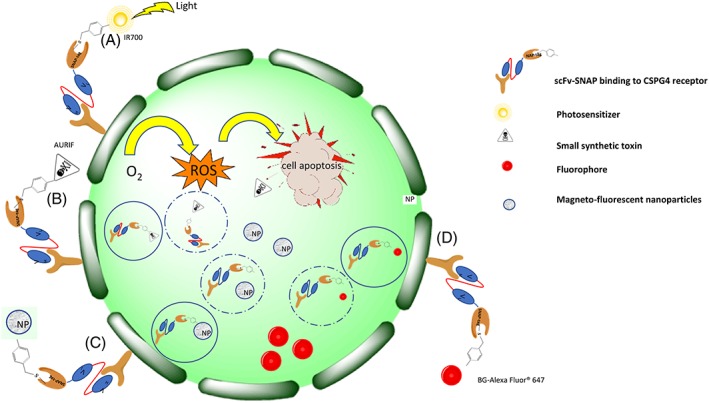
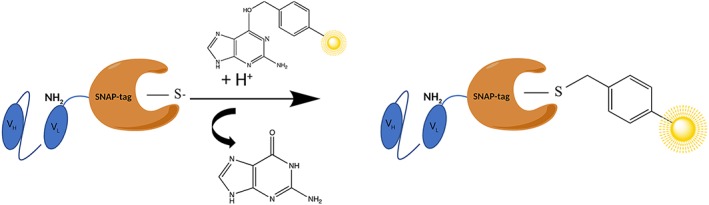
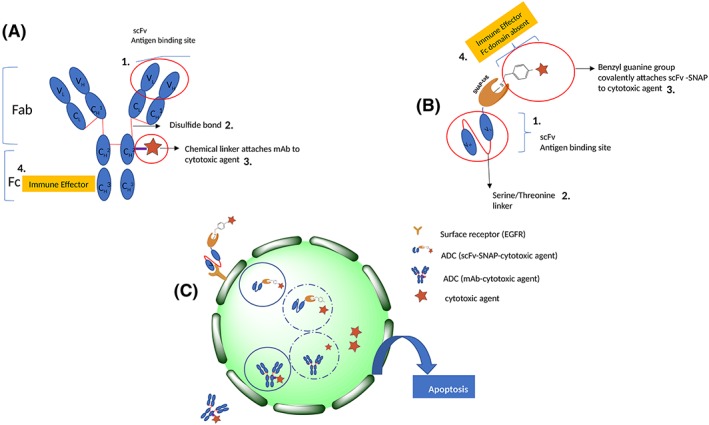
In the 21st century, antibody drug conjugates (ADCs) have been the focus of immunotherapeutic strategies in cancer. ADCs combine the unique targeting of monoclonal antibodies (mAbs) with the cancer killing ability of cytotoxic drugs. However, due to random conjugation methods of drug to antibody, ADCs are associated with poor antigen specificity and low cytotoxicity, resulting in a drug to antibody ratio (DAR) >1. This means that the cytotoxic drugs in ADCs are conjugated randomly to antibodies, by cysteine or lysine residues. This generates heterogeneous ADC populations with 0 to 8 drugs per an antibody, each with distinct pharmacokinetic, efficacy, and toxicity properties. Additionally, heterogeneity is created not only by different antibody to ligand ratios but also by different sites of conjugation. Hence, much effort has been made to find and establish antibody conjugation strategies that enable us to better control stoichiometry and site-specificity. This includes utilizing protein self-labeling tags as fusion partners to the original protein. Site-specific conjugation is a significant characteristic of these engineered proteins. SNAP-tag is one such engineered self-labeling protein tag shown to have promising potential in cancer treatment. The SNAP-tag is fused to an antibody of choice and covalently reacts specifically in a 1:1 ratio with benzylguanine (BG) substrates, eg, fluorophores or photosensitizers, to target skin cancer. This makes SNAP-tag a versatile technique in optical imaging and photoimmunotherapy of skin cancer.
SNAP-tag technology has the potential to contribute greatly to a broad range of molecular oncological applications because it combines efficacious tumor targeting, minimized local and systemic toxicity, and noninvasive assessment of diagnostic/prognostic molecular biomarkers of cancer.
21世纪的癌症治疗在光学成像和免疫疗法方面取得了巨大进展。在免疫缀合物的生物工程和生产方面取得了重大进展,以实现特异性靶向肿瘤的目标。
在21世纪,抗体药物偶联物(ADC)一直是癌症免疫治疗策略的重点。ADC将单克隆抗体(mAb)的独特靶向性与细胞毒性药物的抗癌能力结合起来。然而,由于药物与抗体的随机偶联方法,ADC具有抗原特异性差和细胞毒性低的问题,导致药物与抗体比率(DAR)>1。这意味着ADC中的细胞毒性药物通过半胱氨酸或赖氨酸残基随机偶联到抗体上。这产生了异质性的ADC群体,每个抗体上有0至8种药物,每种药物具有不同的药代动力学、疗效和毒性特性。此外,异质性不仅由不同的抗体与配体比率产生,还由不同的偶联位点产生。因此,人们付出了很多努力来寻找和建立能够使我们更好地控制化学计量和位点特异性的抗体偶联策略。这包括利用蛋白质自标记标签作为原始蛋白质的融合伙伴。位点特异性偶联是这些工程蛋白的一个重要特征。SNAP-tag就是这样一种工程化的自标记蛋白标签,已显示出在癌症治疗中具有广阔的应用前景。SNAP-tag与所选抗体融合,并以1:1的比例与苄基鸟嘌呤(BG)底物(如荧光团或光敏剂)特异性共价反应,以靶向皮肤癌。这使得SNAP-tag成为皮肤癌光学成像和光免疫治疗中的一种通用技术。
SNAP-tag技术有可能为广泛的分子肿瘤学应用做出巨大贡献,因为它结合了有效的肿瘤靶向、最小化的局部和全身毒性以及对癌症诊断/预后分子生物标志物的无创评估。