Del Boccio Piero, Perrotti Francesca, Rossi Claudia, Cicalini Ilaria, Di Santo Sara, Zucchelli Mirco, Sacchetta Paolo, Genovesi Domenico, Pieragostino Damiana
Department of Pharmacy, University "G. d'Annunzio" of Chieti-Pescara, Chieti, Italy.
Analitical Biochemistry and Proteomics Unit, Research Centre on Aging (Ce.S.I), University "G. d'Annunzio" of Chieti-Pescara, Chieti, Italy.
Adv Radiat Oncol. 2017 Jan 5;2(2):118-124. doi: 10.1016/j.adro.2016.12.005. eCollection 2017 Apr-Jun.
Prospective detection of patients with advanced rectal cancer (LARC) who have a higher probability of responding to preoperative chemoradiotherapy (CRT) may provide individualized therapy. Lipidomics is an emerging science dedicated to the characterization of lipid fingerprint involved in different pato-physiological conditions. The purpose of this study is to highlight a typical lipid signature able to predict the tumor response to CRT.
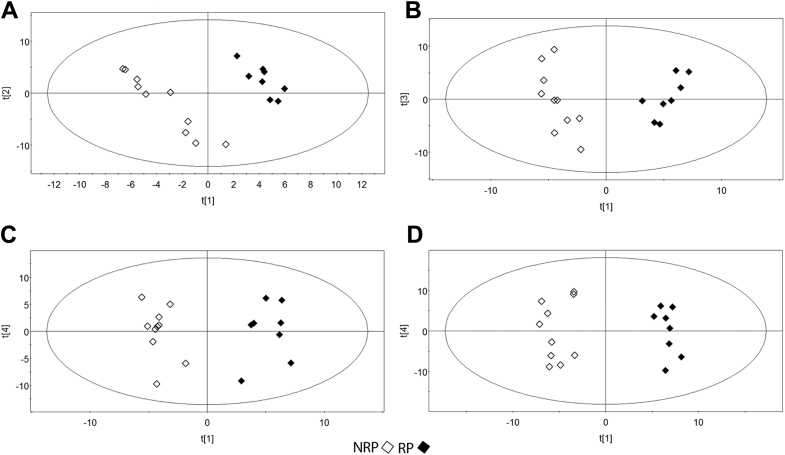
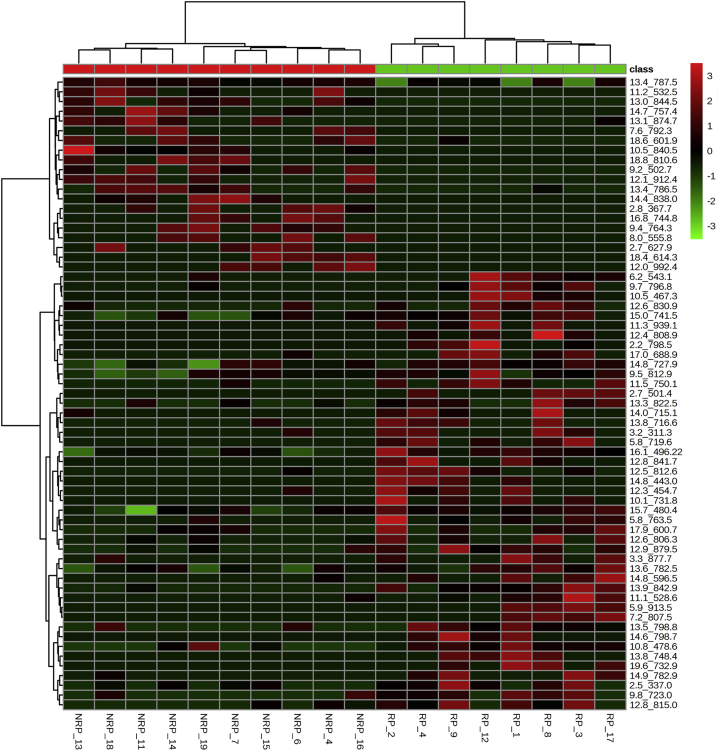
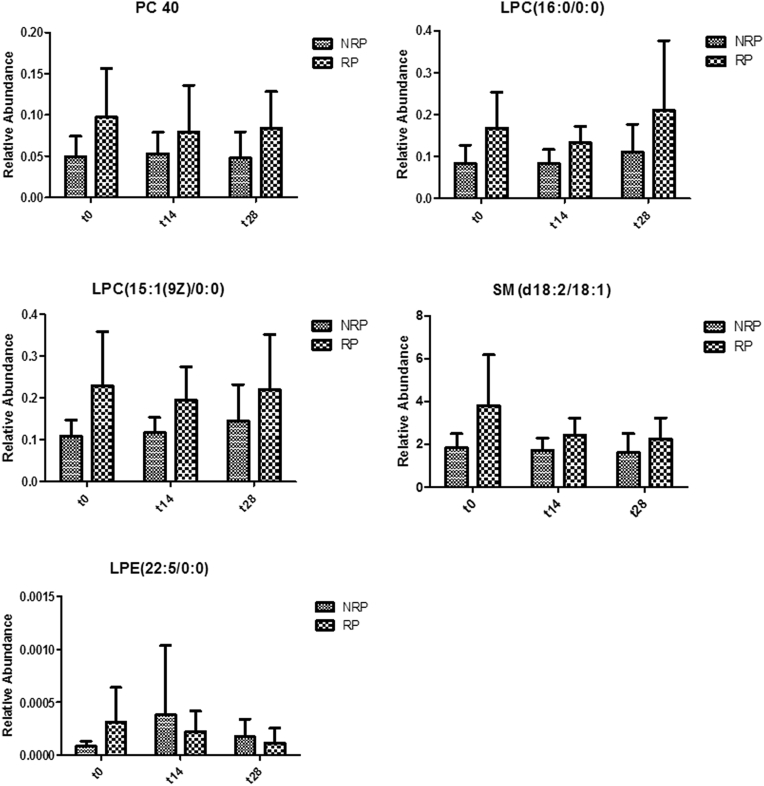
A prospective global analysis of lipids in 54 sera from 18 LARC patients treated with preoperative CRT was performed. Samples were collected at 3 time points: before (T0), at 14th day and at 28th day of CRT. An open LC-MS/MS analysis was performed to characterize lipid expression at T0. Differential lipids were validated by an independent approach and studied during treatment.
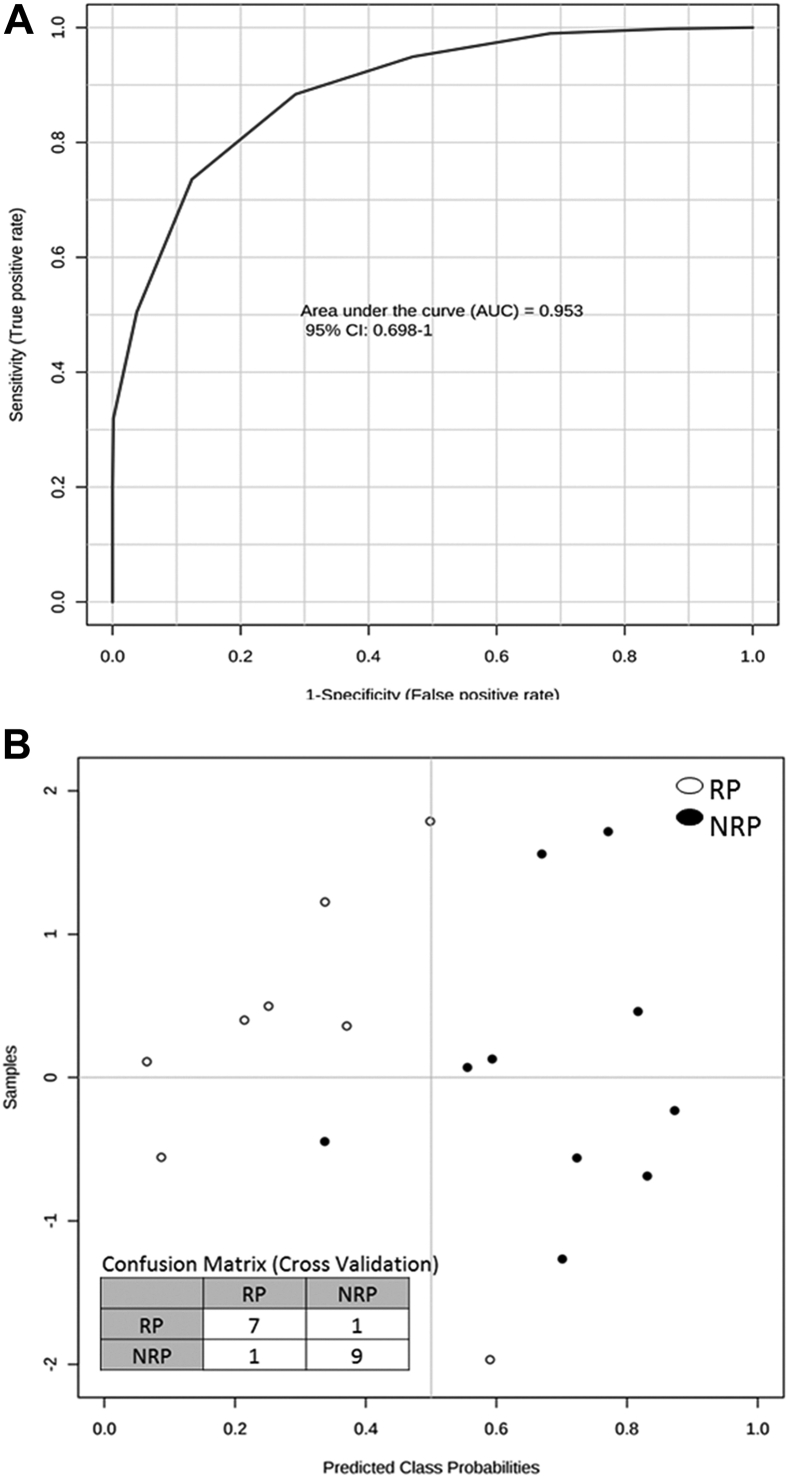
From 65 differential lipids highlighted between responder (RP) vs not responder (NRP) patients, five lipids were validated to predict response at T0: SM(d18:2/18:1), LysoPC (16:0/0:0), LysoPC (15:1(9z)/0:0), Lyso PE (22:5/0:0) and m/z= 842.90 corresponding to a PC containing 2 fatty acids of 40 carbons totally. The levels of these lipids were lower in NRP before treatment. The ROC curve obtained by combining these five lipid signals showed an AUC of 0.95, evidence of good sensitivity and specificity in discriminating groups.
Our results are in agreement with previous evidences about the role of lipids in determining the tumor response to therapy and suggest that the study of serum lipid could represent a useful tool in prediction of CRT response and in personalizing treatment.
前瞻性地检测晚期直肠癌(LARC)患者中对术前放化疗(CRT)有较高反应概率的患者,这可能会提供个体化治疗。脂质组学是一门新兴科学,致力于表征参与不同病理生理状况的脂质指纹图谱。本研究的目的是突出一种能够预测肿瘤对CRT反应的典型脂质特征。
对18例接受术前CRT治疗的LARC患者的54份血清进行脂质的前瞻性全面分析。在3个时间点采集样本:CRT前(T0)、第14天和第28天。进行开放式液相色谱-串联质谱(LC-MS/MS)分析以表征T0时的脂质表达。通过独立方法验证差异脂质,并在治疗期间进行研究。
在反应者(RP)与无反应者(NRP)患者之间突出显示的65种差异脂质中,有5种脂质经验证可在T0时预测反应:SM(d18:2/18:1)、溶血磷脂酰胆碱(16:0/0:0)、溶血磷脂酰胆碱(15:1(9z)/0:0)、溶血磷脂酰乙醇胺(22:5/0:0)以及对应于一种含有总共40个碳原子的2个脂肪酸的磷脂酰胆碱的m/z = 842.90。这些脂质在治疗前NRP中的水平较低。通过组合这五个脂质信号获得的ROC曲线显示曲线下面积(AUC)为0.95,证明在区分组时有良好的敏感性和特异性。
我们的结果与先前关于脂质在确定肿瘤对治疗反应中的作用的证据一致,并表明血清脂质研究可能是预测CRT反应和使治疗个体化的有用工具。