Center for Advanced Studies and Technology (CAST), University "G. d'Annunzio" of Chieti-Pescara, Chieti, Italy.
Department of Innovative Technologies in Medicine and Odontoiatry, "G. d'Annunzio" University, Chieti, Italy.
Radiol Med. 2024 May;129(5):712-726. doi: 10.1007/s11547-024-01811-0. Epub 2024 Mar 27.
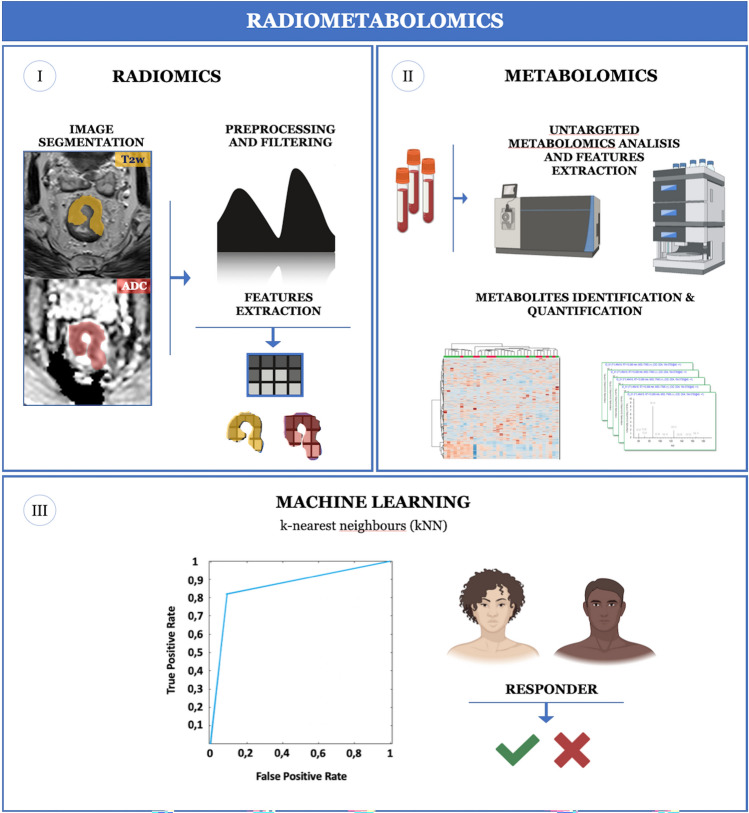
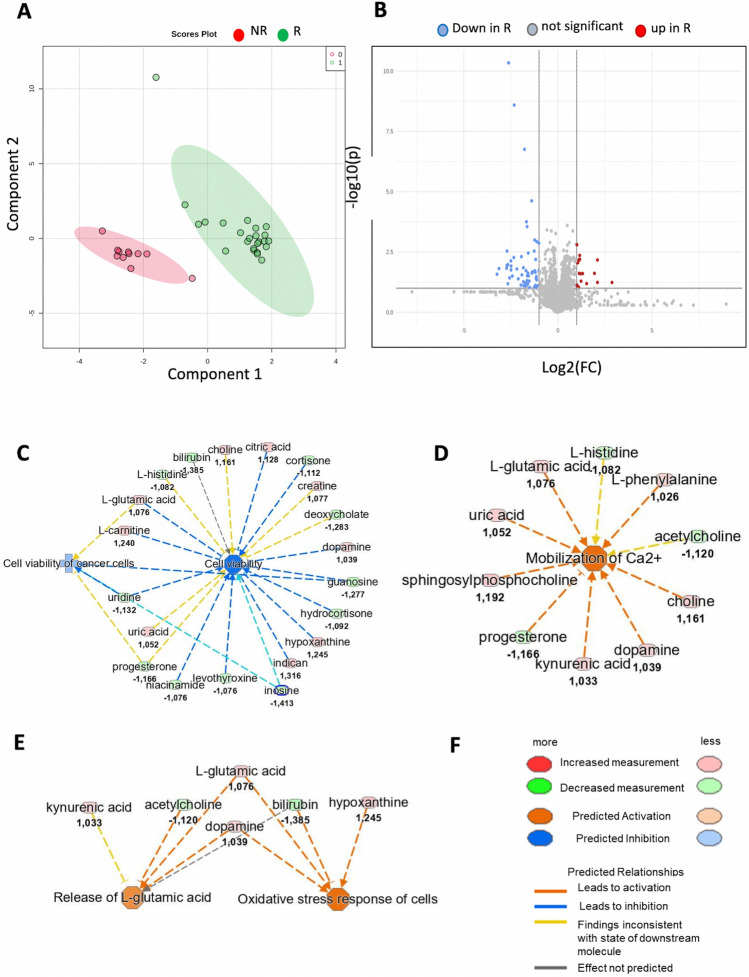
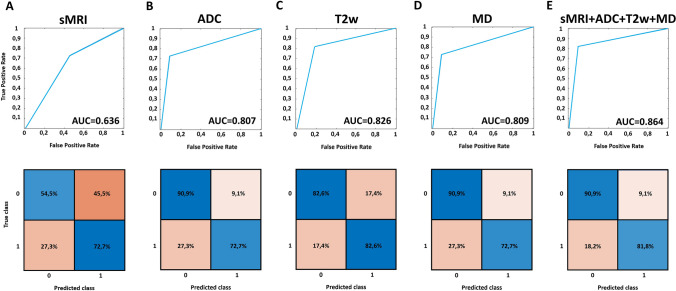
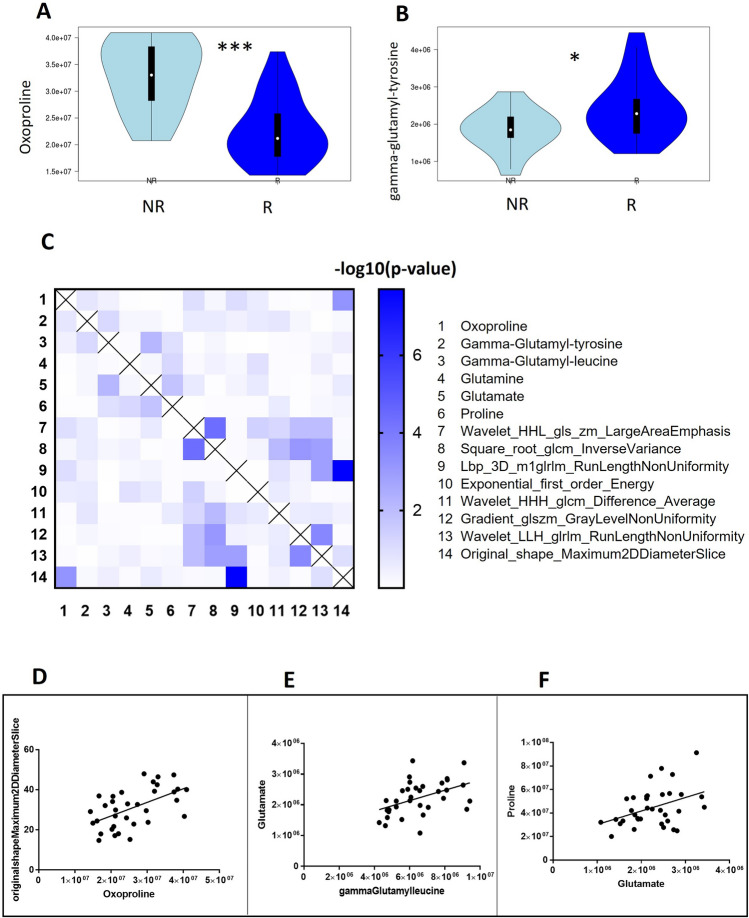
Treatment response assessment of rectal cancer patients is a critical component of personalized cancer care and it allows to identify suitable candidates for organ-preserving strategies. This pilot study employed a novel multi-omics approach combining MRI-based radiomic features and untargeted metabolomics to infer treatment response at staging. The metabolic signature highlighted how tumor cell viability is predictively down-regulated, while the response to oxidative stress was up-regulated in responder patients, showing significantly reduced oxoproline values at baseline compared to non-responder patients (p-value < 10). Tumors with a high degree of texture homogeneity, as assessed by radiomics, were more likely to achieve a major pathological response (p-value < 10). A machine learning classifier was implemented to summarize the multi-omics information and discriminate responders and non-responders. Combining all available radiomic and metabolomic features, the classifier delivered an AUC of 0.864 (± 0.083, p-value < 10) with a best-point sensitivity of 90.9% and a specificity of 81.8%. Our results suggest that a multi-omics approach, integrating radiomics and metabolomic data, can enhance the predictive value of standard MRI and could help to avoid unnecessary surgical treatments and their associated long-term complications.
直肠癌患者的治疗反应评估是个性化癌症治疗的关键组成部分,它可以确定适合保留器官策略的合适候选者。这项试点研究采用了一种新的多组学方法,将 MRI 基于的放射组学特征和非靶向代谢组学相结合,以推断分期时的治疗反应。代谢特征突出了肿瘤细胞活力如何被预测性地下调,而 responder 患者的氧化应激反应被上调,与 non-responder 患者相比,基线时 oxoproline 值显著降低(p 值 < 0.01)。通过放射组学评估,纹理均匀度高的肿瘤更有可能实现主要的病理反应(p 值 < 0.01)。实施了一种机器学习分类器来总结多组学信息并区分 responder 和 non-responder。结合所有可用的放射组学和代谢组学特征,分类器的 AUC 为 0.864(± 0.083,p 值 < 0.01),最佳点灵敏度为 90.9%,特异性为 81.8%。我们的结果表明,一种多组学方法,整合放射组学和代谢组学数据,可以提高标准 MRI 的预测价值,并有助于避免不必要的手术治疗及其相关的长期并发症。