Chakraborty Kasturi, Leung KaHo, Krishnan Yamuna
Department of Chemistry, University of Chicago, Chicago, United States.
Grossman Institute of Neuroscience, Quantitative Biology and Human Behavior, University of Chicago, Chicago, United States.
Elife. 2017 Jul 25;6:e28862. doi: 10.7554/eLife.28862.
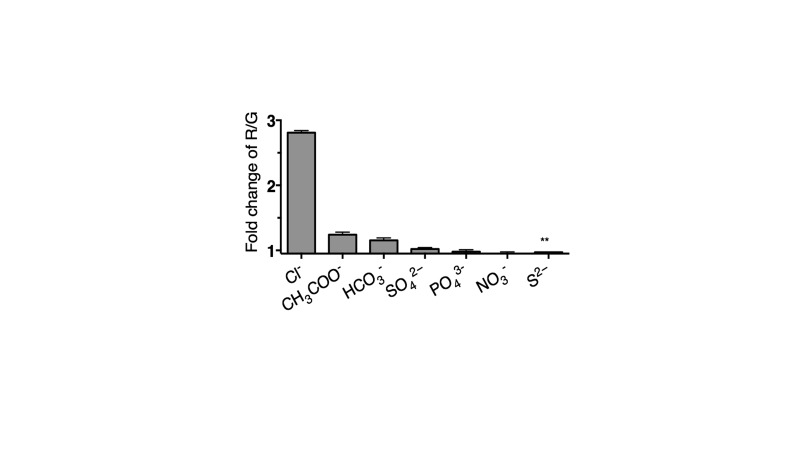
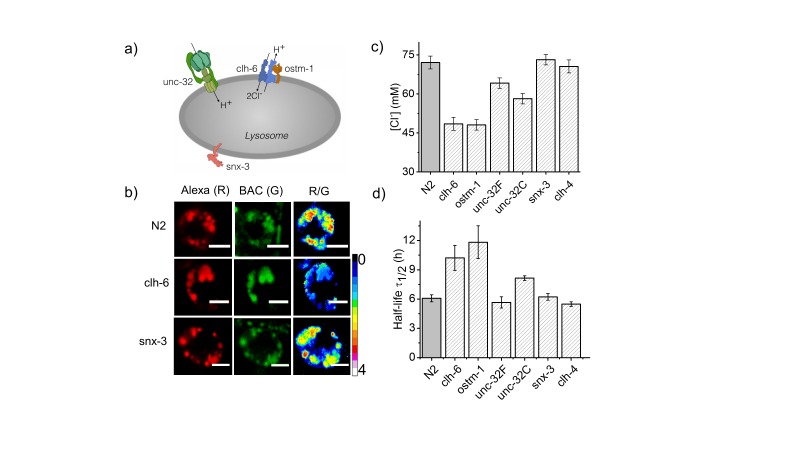
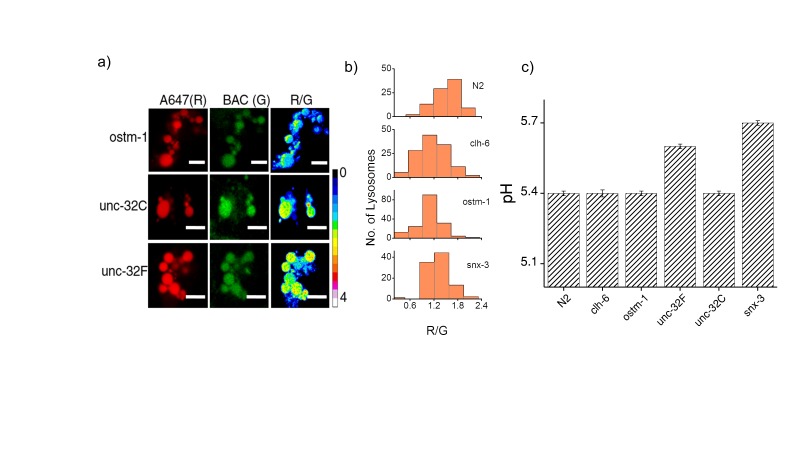
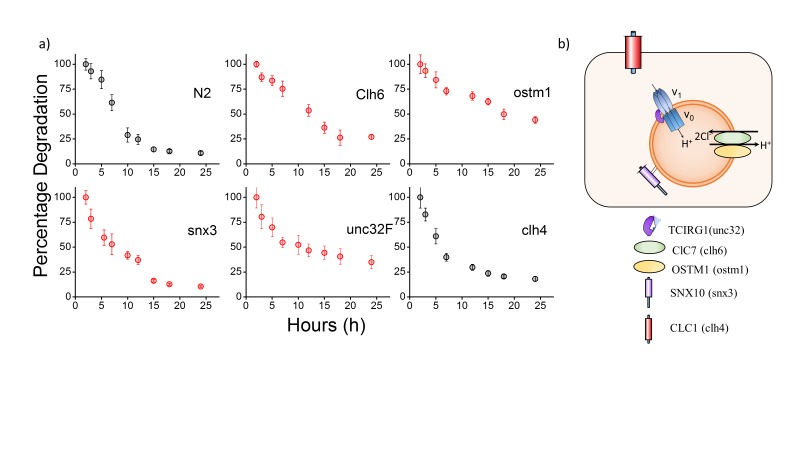
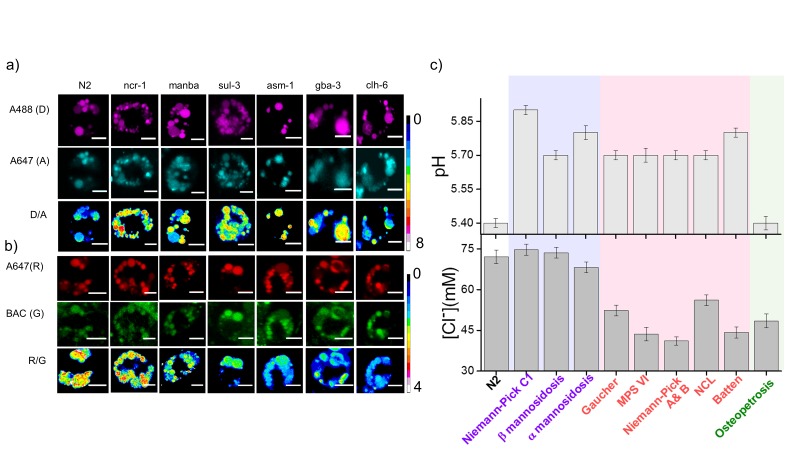
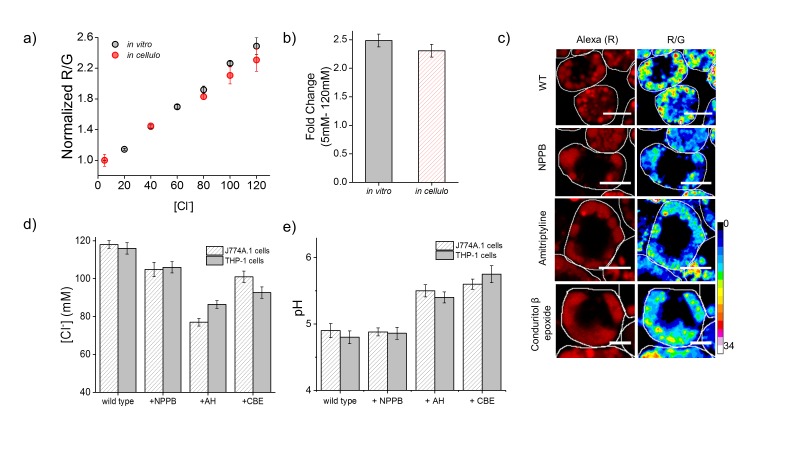
Lysosomes are organelles responsible for the breakdown and recycling of cellular machinery. Dysfunctional lysosomes give rise to lysosomal storage disorders as well as common neurodegenerative diseases. Here, we use a DNA-based, fluorescent chloride reporter to measure lysosomal chloride in as well as murine and human cell culture models of lysosomal diseases. We find that the lysosome is highly enriched in chloride, and that chloride reduction correlates directly with a loss in the degradative function of the lysosome. In nematodes and mammalian cell culture models of diverse lysosomal disorders, where previously only lysosomal pH dysregulation has been described, massive reduction of lumenal chloride is observed that is ~10 fold greater than the accompanying pH change. Reducing chloride within the lysosome impacts Ca release from the lysosome and impedes the activity of specific lysosomal enzymes indicating a broader role for chloride in lysosomal function.
溶酶体是负责细胞机器分解和循环利用的细胞器。功能失调的溶酶体会引发溶酶体贮积症以及常见的神经退行性疾病。在此,我们使用一种基于DNA的荧光氯报告基因来测量溶酶体疾病的小鼠和人类细胞培养模型中的溶酶体氯含量。我们发现溶酶体中氯高度富集,并且氯含量的降低与溶酶体降解功能的丧失直接相关。在各种溶酶体疾病的线虫和哺乳动物细胞培养模型中,此前仅描述了溶酶体pH失调,而现在观察到腔氯大量减少,其减少幅度比伴随的pH变化大10倍左右。降低溶酶体内的氯会影响溶酶体中钙的释放,并阻碍特定溶酶体酶的活性,这表明氯在溶酶体功能中具有更广泛的作用。