Shao R, Lee T M C
Laboratory of Neuropsychology, Department of Psychology, The University of Hong Kong, Hong Kong, Hong Kong.
Laboratory of Cognitive Affective Neuroscience, Department of Psychology, The University of Hong Kong, Hong Kong, Hong Kong.
Transl Psychiatry. 2017 Jul 25;7(7):e1175. doi: 10.1038/tp.2017.147.
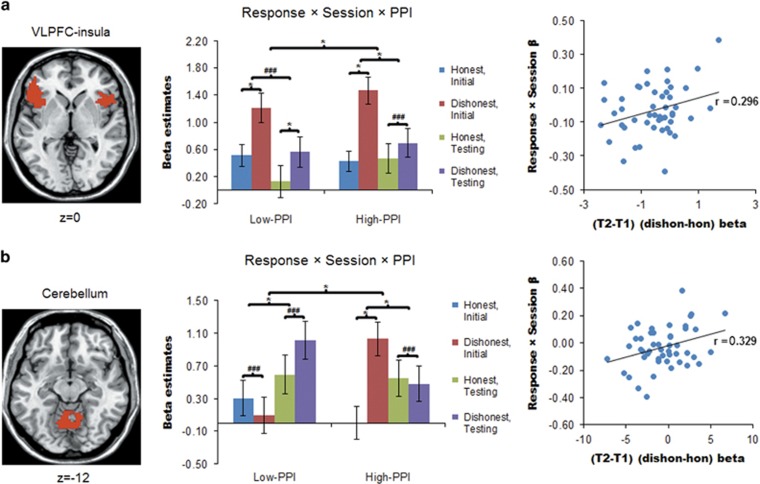
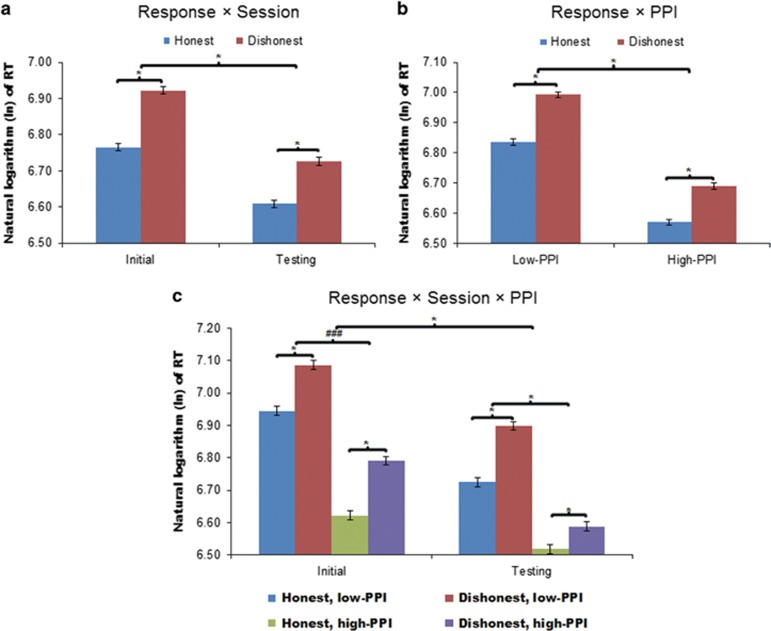
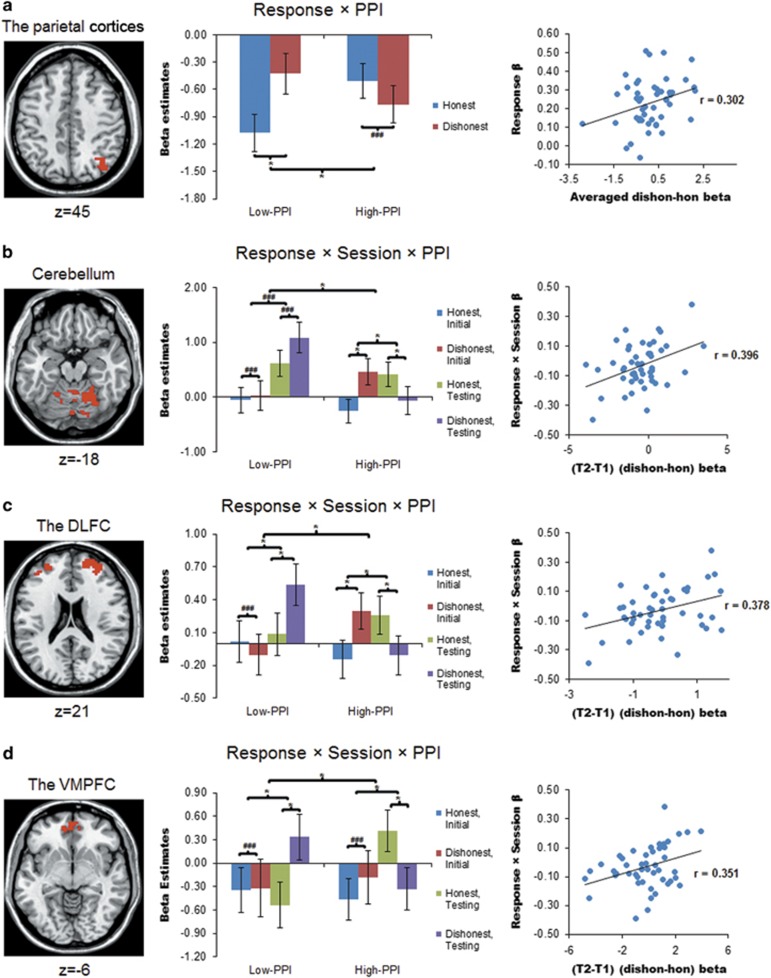
High psychopathy is characterized by untruthfulness and manipulativeness. However, existing evidence on higher propensity or capacity to lie among non-incarcerated high-psychopathic individuals is equivocal. Of particular importance, no research has investigated whether greater psychopathic tendency is associated with better 'trainability' of lying. An understanding of whether the neurobehavioral processes of lying are modifiable through practice offers significant theoretical and practical implications. By employing a longitudinal design involving university students with varying degrees of psychopathic traits, we successfully demonstrate that the performance speed of lying about face familiarity significantly improved following two sessions of practice, which occurred only among those with higher, but not lower, levels of psychopathic traits. Furthermore, this behavioural improvement associated with higher psychopathic tendency was predicted by a reduction in lying-related neural signals and by functional connectivity changes in the frontoparietal and cerebellum networks. Our findings provide novel and pivotal evidence suggesting that psychopathic traits are the key modulating factors of the plasticity of both behavioural and neural processes underpinning lying. These findings broadly support conceptualization of high-functioning individuals with higher psychopathic traits as having preserved, or arguably superior, functioning in neural networks implicated in cognitive executive processing, but deficiencies in affective neural processes, from a neuroplasticity perspective.
高精神病态的特征是不诚实和善于操纵。然而,关于未被监禁的高精神病态个体说谎倾向或能力更强的现有证据并不明确。特别重要的是,没有研究调查过更高的精神病态倾向是否与更好的说谎“可训练性”相关。了解说谎的神经行为过程是否可以通过练习来改变具有重要的理论和实践意义。通过采用纵向设计,研究对象为具有不同程度精神病态特征的大学生,我们成功证明,在进行了两阶段练习后,关于面孔熟悉度说谎的表现速度显著提高,且这种情况只发生在精神病态特征水平较高而非较低的学生中。此外,与较高精神病态倾向相关的这种行为改善是由说谎相关神经信号的减少以及额顶叶和小脑网络的功能连接变化所预测的。我们的研究结果提供了新颖且关键的证据,表明精神病态特征是支撑说谎的行为和神经过程可塑性的关键调节因素。从神经可塑性的角度来看,这些发现广泛支持了将具有较高精神病态特征的高功能个体概念化为在涉及认知执行处理的神经网络中具有保留的、或者可以说是优越的功能,但在情感神经过程方面存在缺陷。