Slon Campos Jose L, Poggianella Monica, Marchese Sara, Mossenta Monica, Rana Jyoti, Arnoldi Francesca, Bestagno Marco, Burrone Oscar R
Molecular Immunology Group, International Centre for Genetic Engineering and Biotechnology, Trieste, Italy.
Department of Medicine, Surgery and Health Sciences, University of Trieste, Trieste, Italy.
PLoS One. 2017 Jul 25;12(7):e0181734. doi: 10.1371/journal.pone.0181734. eCollection 2017.
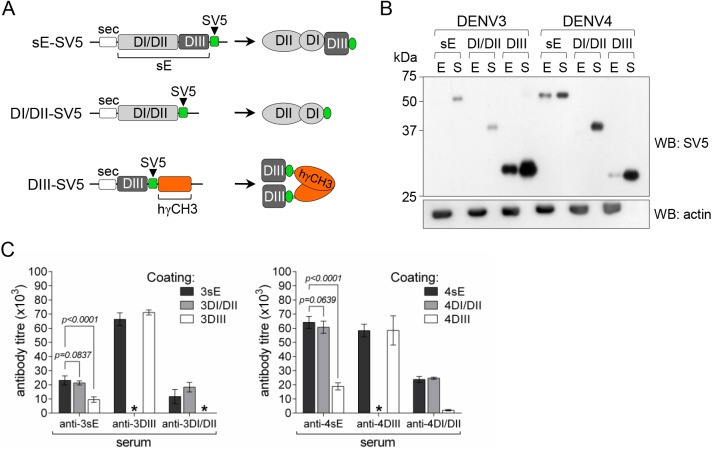
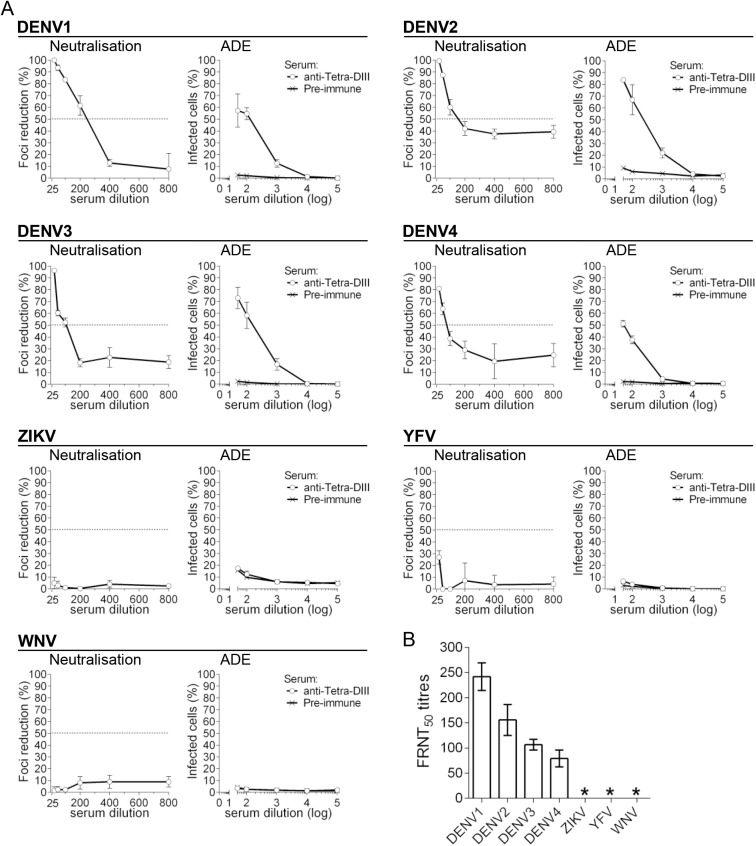
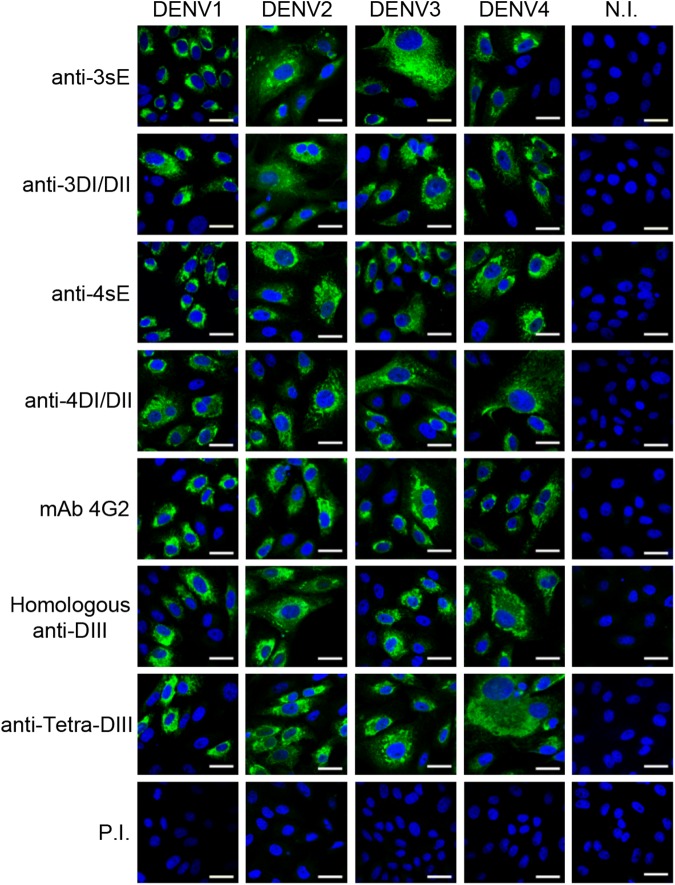
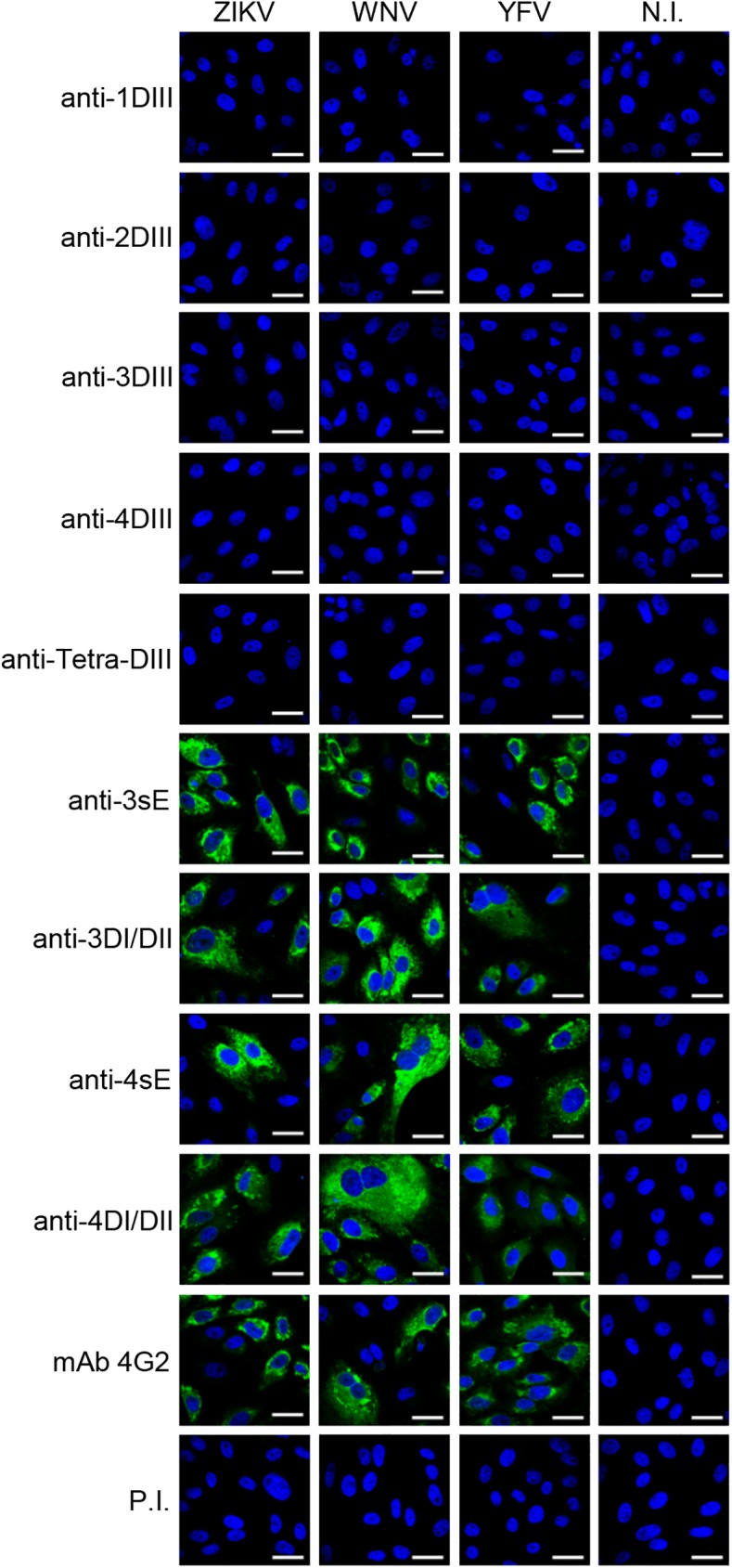
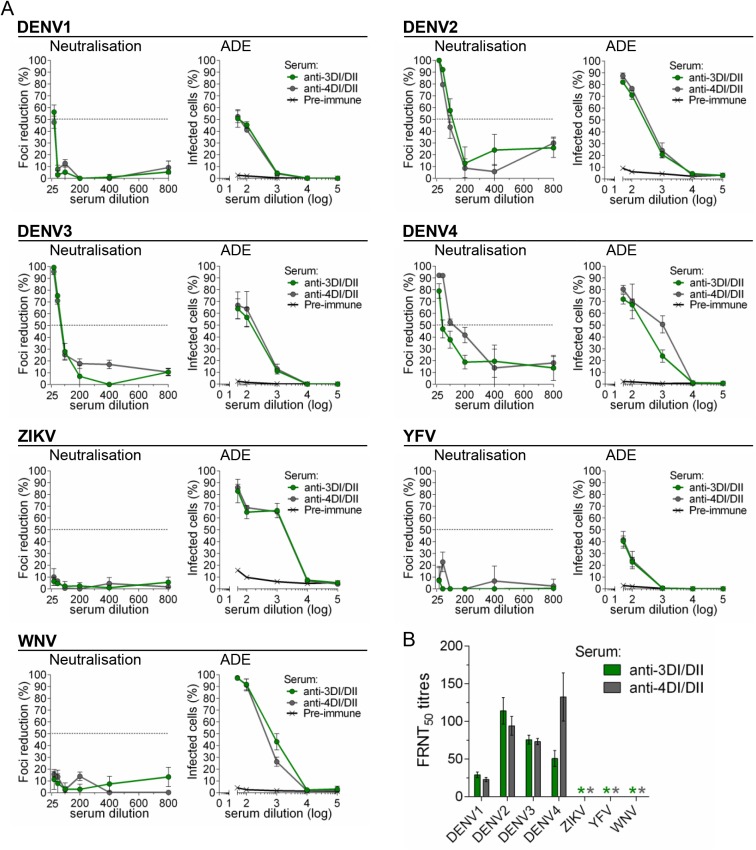
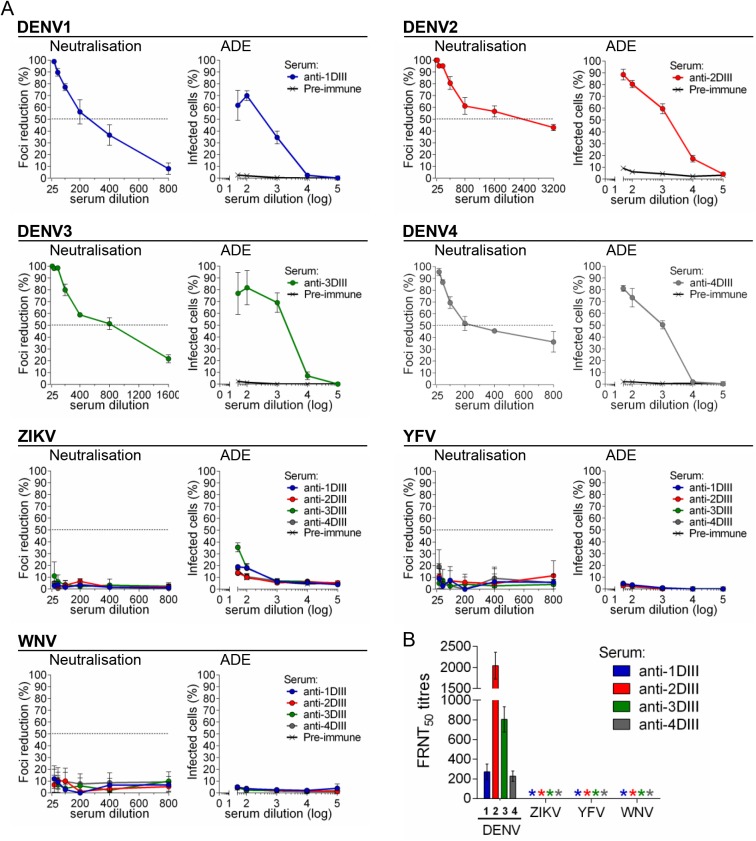
Dengue virus (DENV), the causative agent of dengue disease, is among the most important mosquito-borne pathogens worldwide. DENV is composed of four closely related serotypes and belongs to the Flaviviridae family alongside other important arthropod-borne viral pathogens such as Zika virus (ZIKV), West Nile virus (WNV) and Yellow Fever virus (YFV). After infection, the antibody response is mostly directed to the viral E glycoprotein which is composed of three structural domains named DI, DII and DIII that share variable degrees of homology among different viruses. Recent evidence supports a close serological interaction between ZIKV and DENV. The possibility of worse clinical outcomes as a consequence of antibody-dependent enhancement of infection (ADE) due to cross-reactive antibodies with poor neutralisation activity is a matter of concern. We tested polyclonal sera from groups of female Balb/C mice vaccinated with DNA constructs expressing DI/DII, DIII or the whole sE from different DENV serotypes and compared their activity in terms of cross-reactivity, neutralisation of virus infection and ADE. Our results indicate that the polyclonal antibody responses against the whole sE protein are highly cross-reactive with strong ADE and poor neutralisation activities due to DI/DII immunodominance. Conversely, anti-DIII polyclonal antibodies are type-specific, with no ADE towards ZIKV, WNV and YFV, and strong neutralisation activity restricted only to DENV.
登革病毒(DENV)是登革热疾病的病原体,是全球最重要的蚊媒病原体之一。DENV由四种密切相关的血清型组成,与其他重要的节肢动物传播病毒病原体,如寨卡病毒(ZIKV)、西尼罗河病毒(WNV)和黄热病病毒(YFV)同属黄病毒科。感染后,抗体反应主要针对病毒E糖蛋白,该蛋白由三个结构域DI、DII和DIII组成,不同病毒之间这些结构域具有不同程度的同源性。最近的证据支持ZIKV和DENV之间存在密切的血清学相互作用。由于具有不良中和活性的交叉反应抗体导致感染的抗体依赖性增强(ADE),从而产生更差临床结果的可能性令人担忧。我们检测了用表达不同DENV血清型的DI/DII、DIII或全长sE的DNA构建体免疫的雌性Balb/C小鼠组的多克隆血清,并比较了它们在交叉反应性、病毒感染中和及ADE方面的活性。我们的结果表明,针对全长sE蛋白的多克隆抗体反应具有高度交叉反应性,由于DI/DII免疫显性,具有强烈的ADE和不良的中和活性。相反,抗DIII多克隆抗体具有型特异性,对ZIKV、WNV和YFV无ADE,且强烈的中和活性仅局限于DENV。