Institute of Inflammation and Diseases, the First Affiliated Hospital of Wenzhou Medical University, Wenzhou, China.
Guangdong-Hong Kong-Macau Institute of CNS Regeneration (GHMICR), Joint International Research Laboratory of CNS Regeneration Ministry of Education, Guangdong Medical Key Laboratory of Brain Function and Diseases, Jinan University, Guangzhou, China.
Sci Rep. 2017 Jul 25;7(1):6455. doi: 10.1038/s41598-017-06927-0.
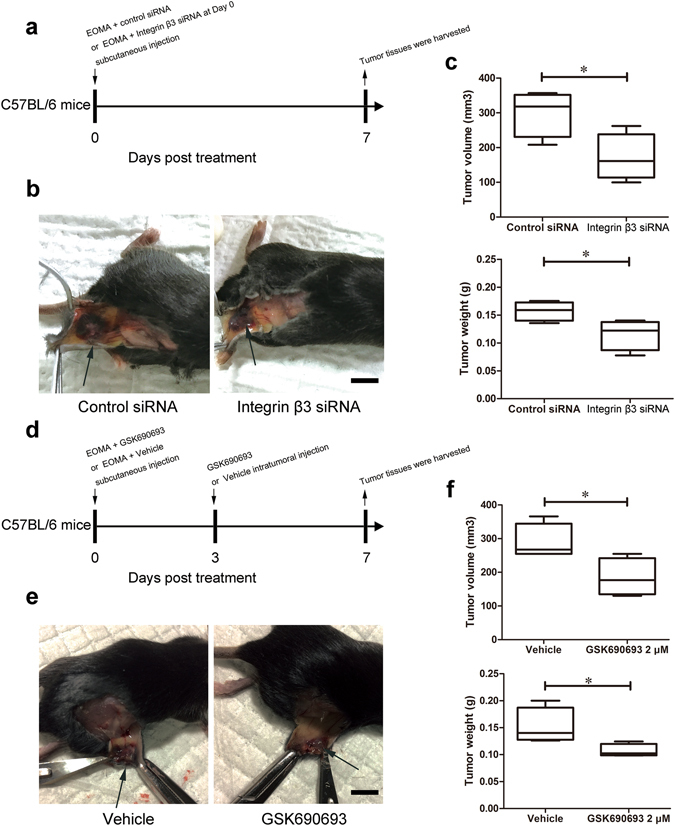
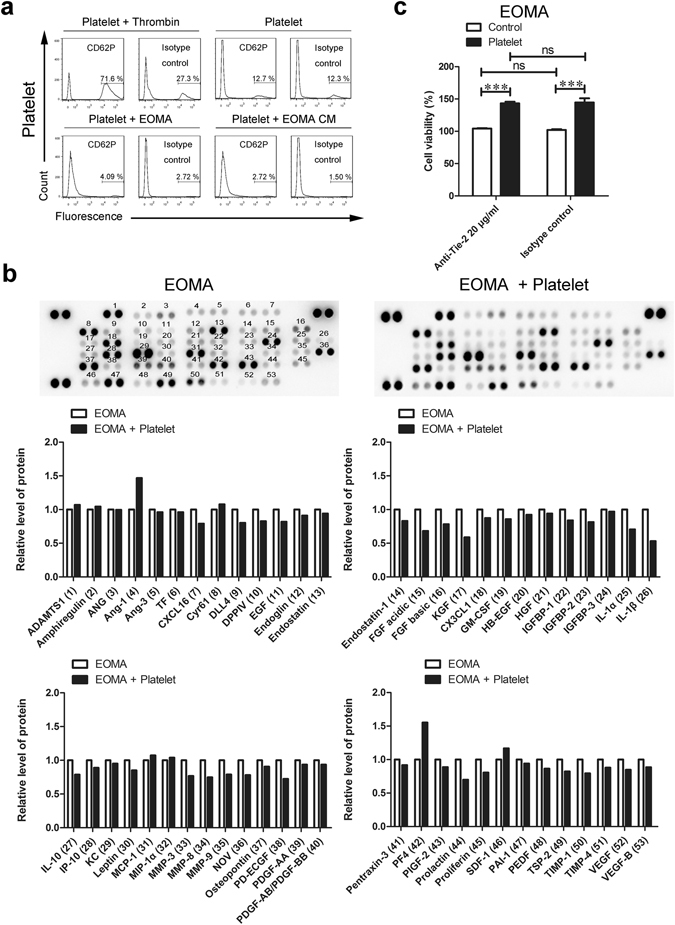
Hemangioendothelioma (HE) is a type of angiomatous lesions that features endothelial cell proliferation. Understanding the mechanisms orchestrating HE angiogenesis can provide therapeutic insights. It has been shown that platelets can support normal and malignant endothelial cells during angiogenesis. Using the mouse endothelial-derived EOMA cell line as a model of HE, we explored the regulatory effect of platelets. We found that platelets stimulated EOMA proliferation but did not mitigate apoptosis. Furthermore, direct platelet-EOMA cell contact was required and the proliferation was mediated via integrin β3/Akt signaling in EOMA cells. SiRNA knockdown of integrin β3 and inhibition of Akt activity significantly abolished platelet-induced EOMA cell proliferation in vitro and tumor development in vivo. These results provide a new mechanism by which platelets support HE progression and suggest integrin β3 as a potential target to treat HE.
血管内皮细胞瘤(HE)是一种以内皮细胞增殖为特征的血管性病变。了解调控 HE 血管生成的机制可以提供治疗的见解。已经表明,血小板在血管生成过程中可以支持正常和恶性内皮细胞。我们使用小鼠内皮衍生的 EOMA 细胞系作为 HE 的模型,探索了血小板的调节作用。我们发现,血小板刺激 EOMA 增殖,但不能减轻细胞凋亡。此外,需要直接的血小板-EOMA 细胞接触,并且增殖是通过 EOMA 细胞中的整合素 β3/Akt 信号转导介导的。整合素 β3 的 siRNA 敲低和 Akt 活性的抑制显著消除了血小板诱导的 EOMA 细胞在体外的增殖和体内的肿瘤发展。这些结果提供了血小板支持 HE 进展的新机制,并表明整合素 β3 可能是治疗 HE 的潜在靶点。