Chen Haojun, Tong Xiao, Lang Lixin, Jacobson Orit, Yung Bryant C, Yang Xiangyu, Bai Ruiliang, Kiesewetter Dale O, Ma Ying, Wu Hua, Niu Gang, Chen Xiaoyuan
Department of Nuclear Medicine and Minnan PET Center, Xiamen Cancer Hospital, the First Affiliated Hospital of Xiamen University, Xiamen, China.
Laboratory of Molecular Imaging and Nanomedicine, National Institute of Biomedical Imaging and Bioengineering, National Institutes of Health, Bethesda, Maryland.
Theranostics. 2017 Jun 14;7(9):2363-2376. doi: 10.7150/thno.19898. eCollection 2017.
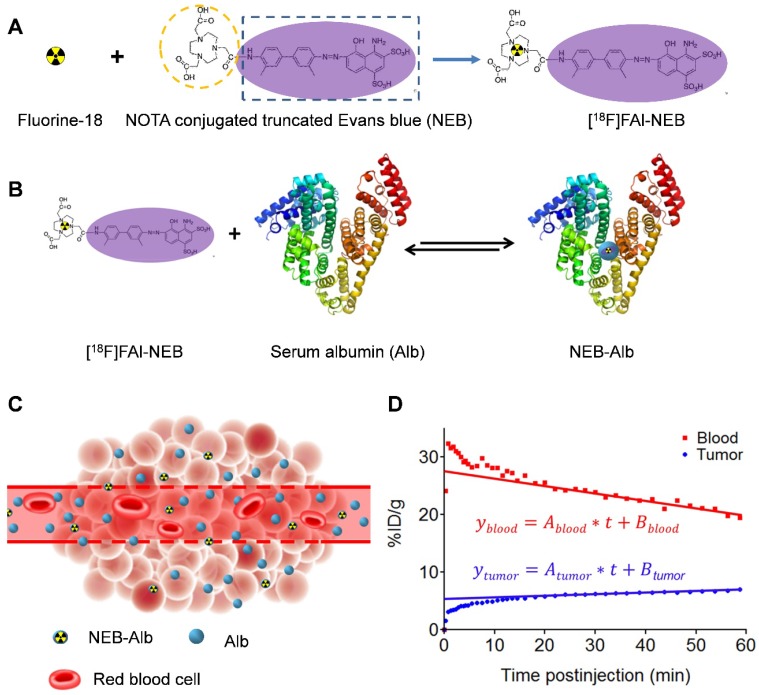
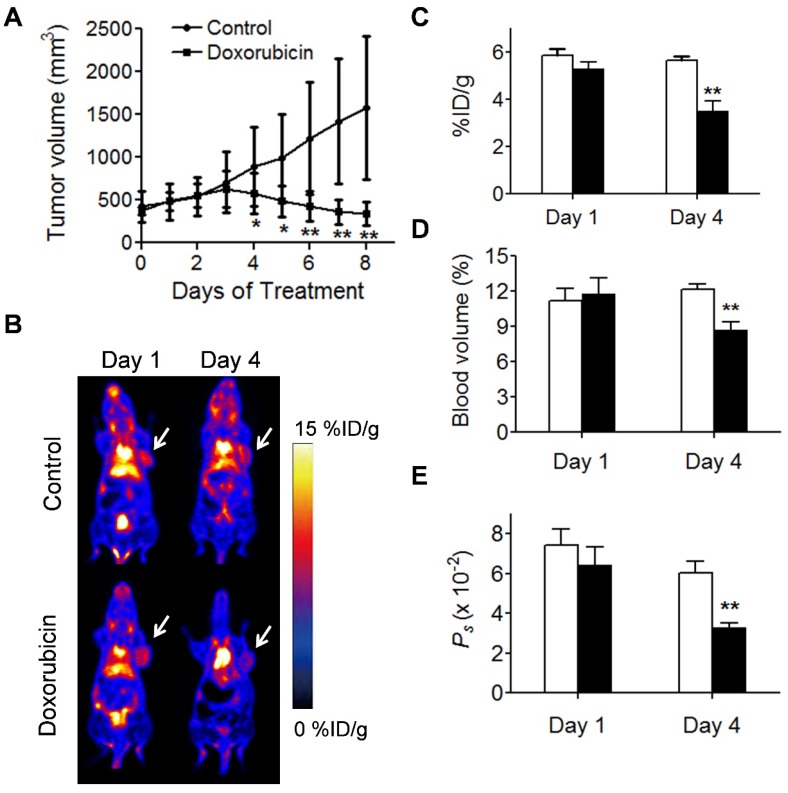
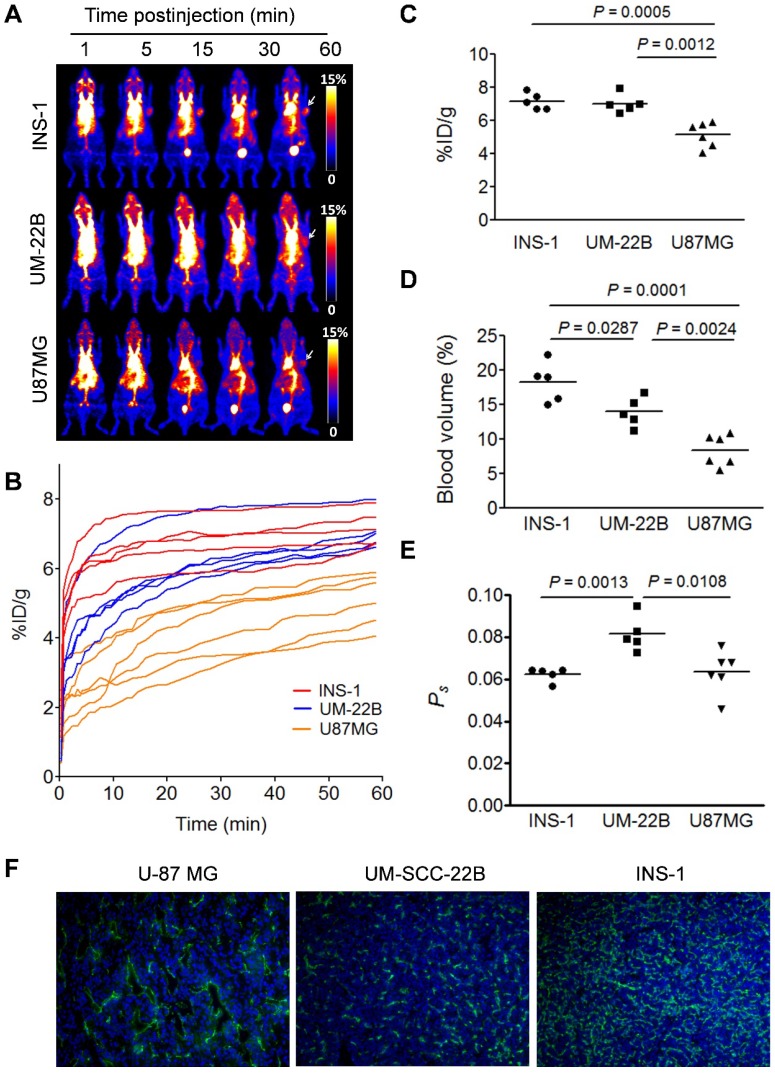
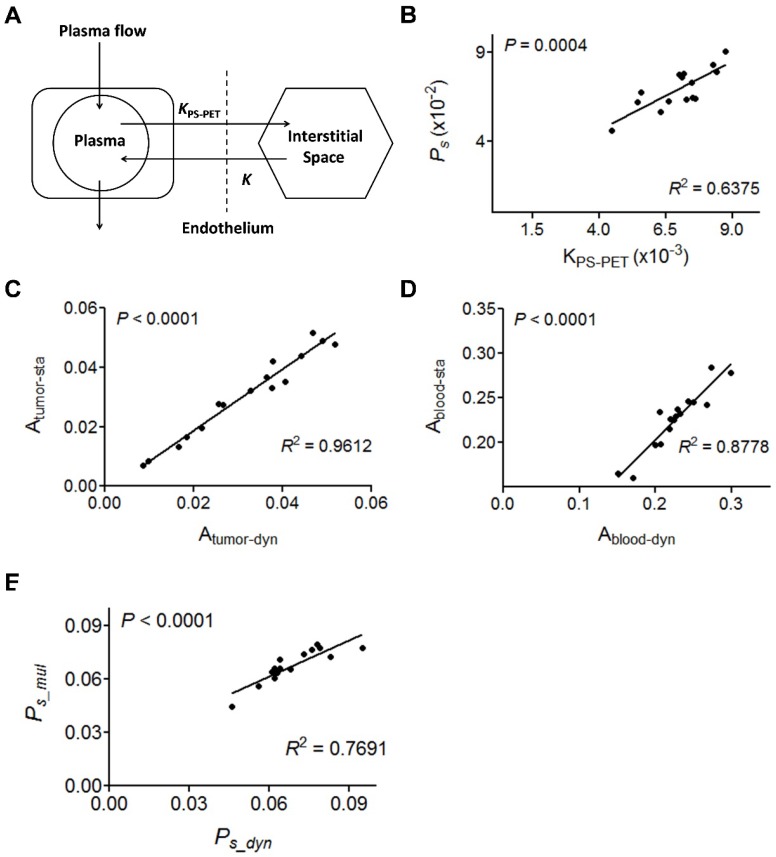
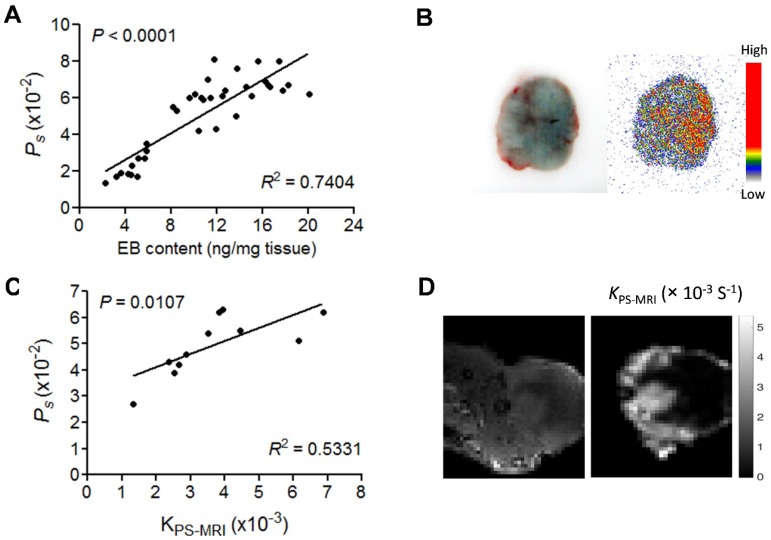
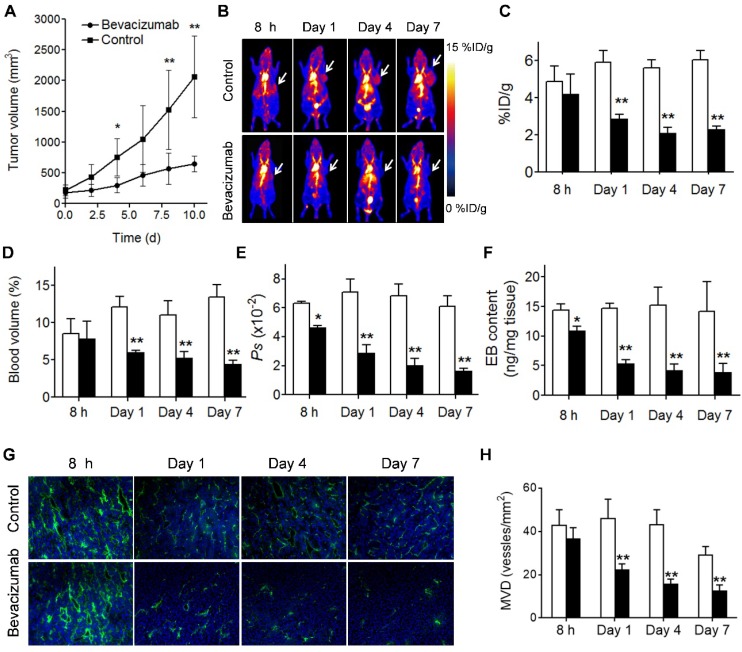
Evans Blue (EB) is an azo dye that binds quantitatively with serum albumin. With an albumin binding, NOTA conjugated truncated Evan's blue (NEB) dye derived PET tracer, we aimed to establish a strategy for evaluating vascular permeability in malignant tumors via non-invasive PET. Sixty-minute dynamic PET using [F]FAl-NEB was performed in three xenograft tumor models including INS-1 rat insulinoma, UM-SCC-22B human head and neck carcinoma and U-87 MG human glioblastoma. Tumor vascular permeability was quantified by the difference of the slopes between tumor and blood time-activity curve (TACs, expressed as ). The method was further substantiated by EB extraction and colorimetric assay and correlates with that calculated from dynamic contrast enhanced magnetic resonance imaging (DCE-MRI). The changes in tumor vasculature at different time points were assessed with NEB PET in U-87 MG and UM-SCC-22B tumor models after treatment with bevacizumab or doxorubicin. The values calculated from tumor and blood TACs from multiple time-point static images are consistent with those from dynamic images. Moreover, the showed a positive and significant correlation with extracted EB concentration and K generated from DCE-MRI, which further confirmed the soundness of this methodology. The antiangiogenic effect of bevacizumab could be revealed by NEB PET in U-87 MG tumors as early as 8 hrs after therapy, demonstrated by a substantial decrease of On the contrary, there was no significant change of in bevacizumab treated UM-SCC-22B tumors, compared with control group. However, the significant changes of were overestimated in doxorubicin treated UM-SCC-22B tumors. We successfully developed a relatively convenient and novel strategy to evaluate vascular permeability and blood volume using NEB PET. This method will be advantageous in evaluating vascular permeability, promoting drug delivery, and monitoring tumor response to therapeutics that affect tumor angiogenesis.
伊文思蓝(EB)是一种能与血清白蛋白定量结合的偶氮染料。通过一种与白蛋白结合的、NOTA共轭的截短型伊文思蓝(NEB)染料衍生的PET示踪剂,我们旨在建立一种通过非侵入性PET评估恶性肿瘤血管通透性的策略。使用[F]FAl-NEB进行60分钟的动态PET检查,应用于三种异种移植肿瘤模型,包括INS-1大鼠胰岛素瘤、UM-SCC-22B人头颈癌和U-87 MG人胶质母细胞瘤。通过肿瘤和血液时间-活性曲线(TACs,表示为 )之间斜率的差异来量化肿瘤血管通透性。该方法通过EB提取和比色测定进一步得到证实,并与动态对比增强磁共振成像(DCE-MRI)计算的结果相关。在用贝伐单抗或阿霉素治疗后,在U-87 MG和UM-SCC-22B肿瘤模型中用NEB PET评估不同时间点肿瘤血管的变化。从多个时间点静态图像的肿瘤和血液TACs计算得到的 值与动态图像的结果一致。此外, 与提取的EB浓度和DCE-MRI生成的K呈正相关且具有显著相关性,这进一步证实了该方法的可靠性。贝伐单抗的抗血管生成作用在U-87 MG肿瘤中治疗后8小时即可通过NEB PET显示出来,表现为 大幅下降。相反,与对照组相比,贝伐单抗治疗的UM-SCC-22B肿瘤中的 没有显著变化。然而,在阿霉素治疗的UM-SCC-22B肿瘤中, 的显著变化被高估了。我们成功开发了一种相对简便且新颖的策略,使用NEB PET评估血管通透性和血容量。该方法在评估血管通透性、促进药物递送以及监测肿瘤对影响肿瘤血管生成的治疗的反应方面将具有优势。