Division of Nephrology and Endocrinology, The University of Tokyo Graduate School of Medicine, Tokyo, Japan.
Genome Science laboratory, Research Center for Advanced Science and Technology, The University of Tokyo, Tokyo, Japan.
Sci Rep. 2017 Jul 26;7(1):6516. doi: 10.1038/s41598-017-06761-4.
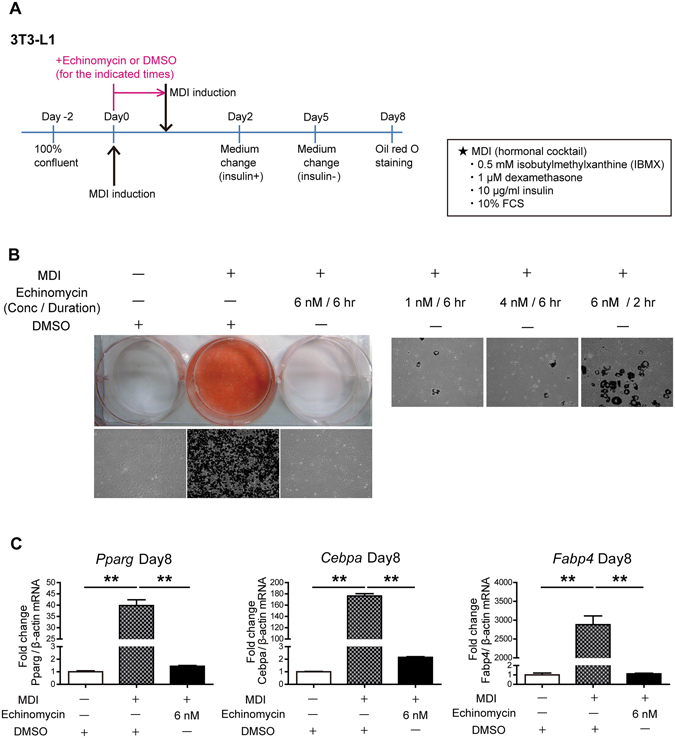
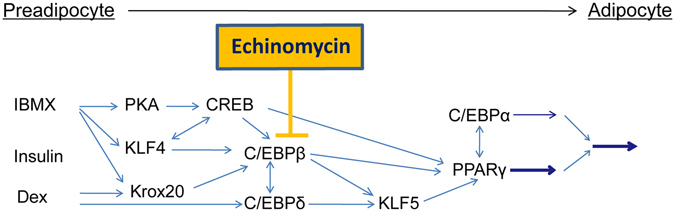
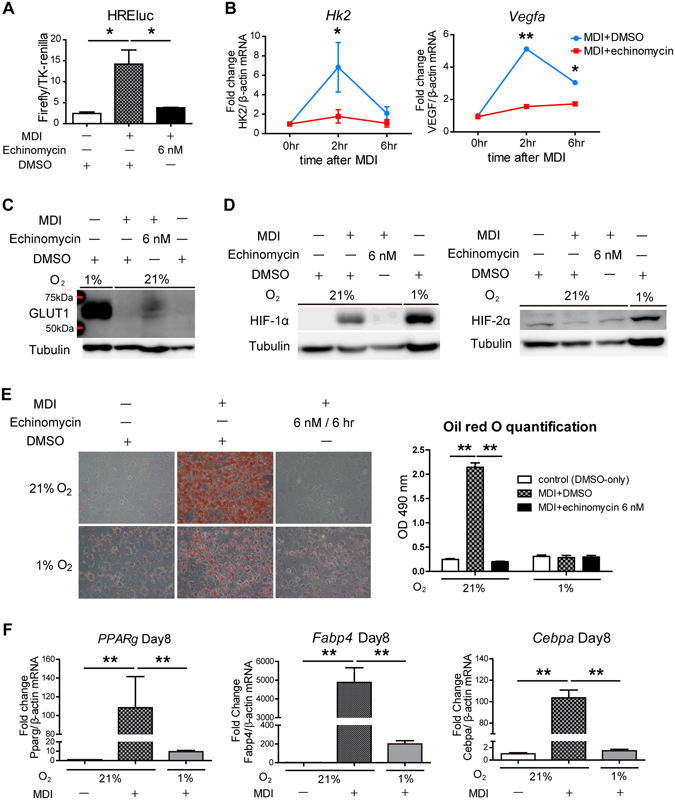
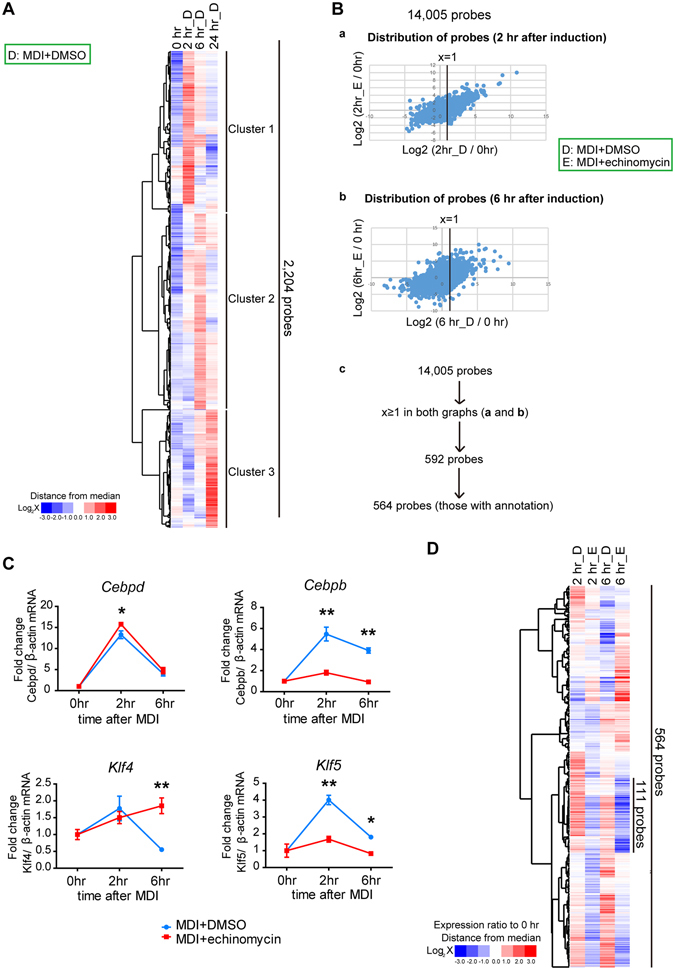
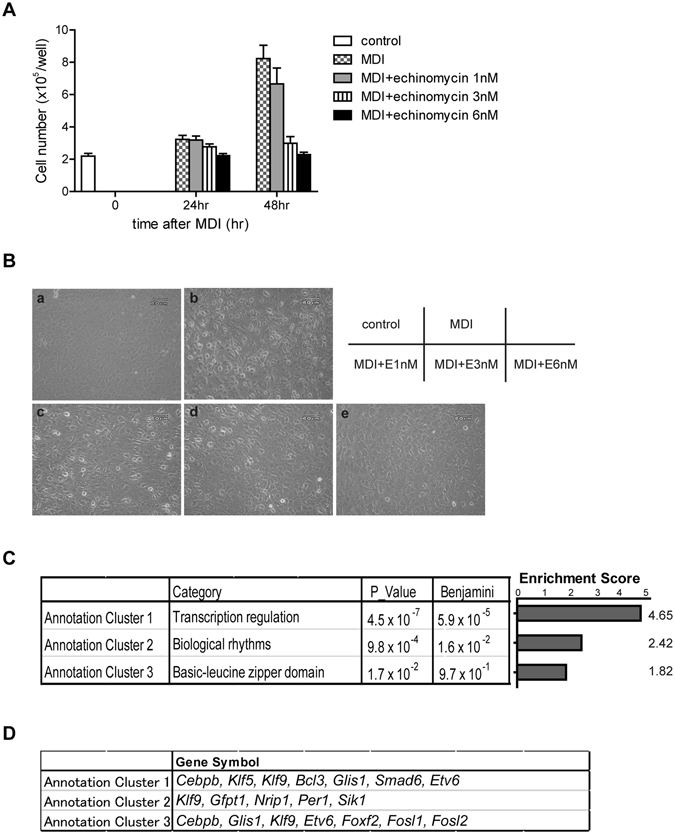
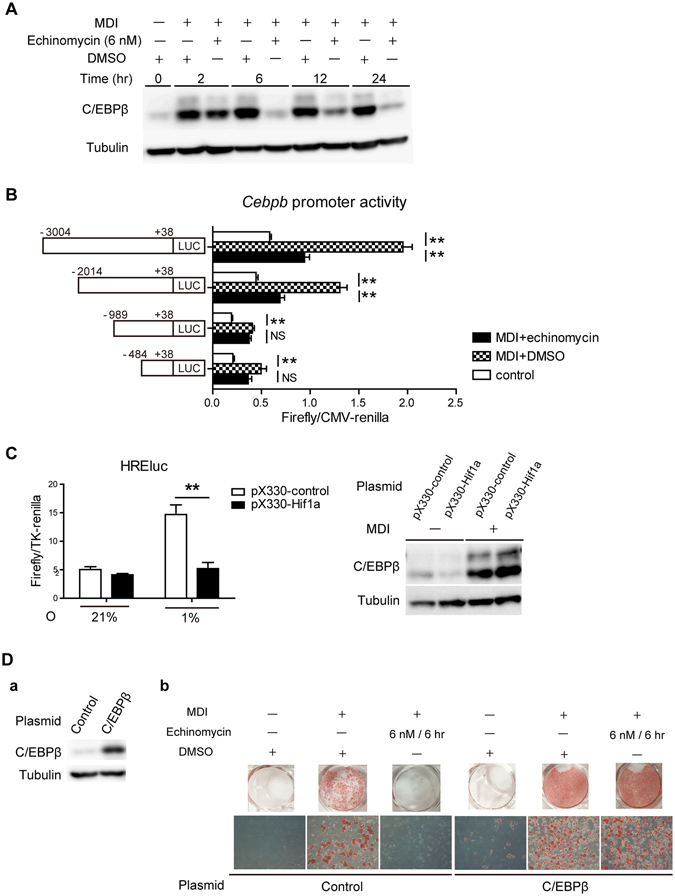
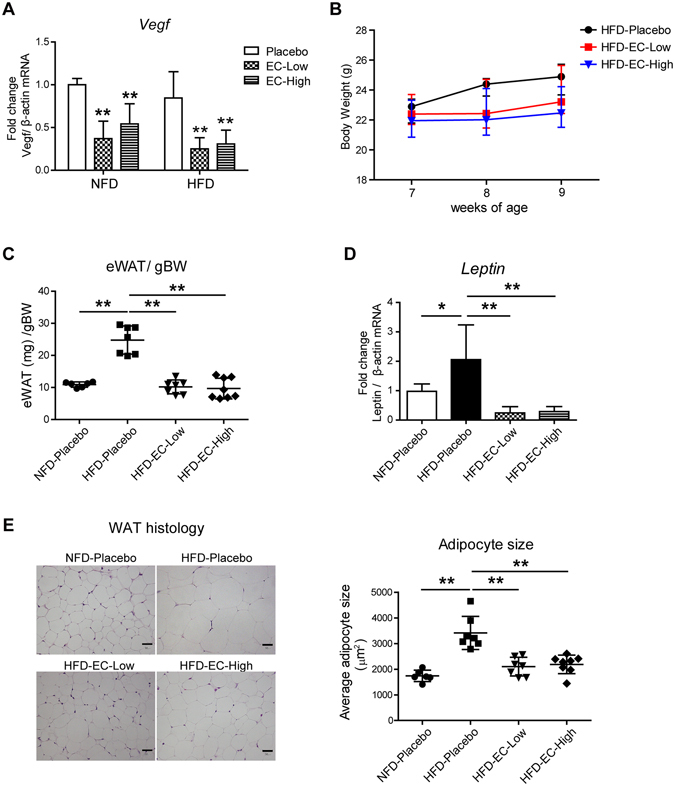
Obesity is a risk factor for many diseases including diabetes, cancer, cardiovascular disease, and chronic kidney disease. Obesity is characterized by the expansion of white adipose tissue (WAT). Hypertrophy and hyperplasia of adipocytes cause tissue hypoxia followed by inflammation and fibrosis. Its trigger, preadipocyte differentiation into mature adipocytes, is finely regulated by transcription factors, signal molecules, and cofactors. We found that echinomycin, a potent HIF-1 inhibitor, completely inhibited adipogenesis in 3T3-L1 WAT preadipocytes by affecting the early phase of mitotic clonal expansion. The dose required to exert the effect was surprisingly low and the time was short. Interestingly, its inhibitory effect was independent of HIF-1 pathways. Time-course DNA microarray analysis of drug-treated and untreated preadipocytes extracted a major transcription factor, CCAAT/enhancer-protein β, as a key target of echinomycin. Echinomycin also inhibited adipogenesis and body weight gain in high fat diet mice. These findings highlight a novel role of echinomycin in suppressing adipocyte differentiation and offer a new therapeutic strategy against obesity and diabetes.
肥胖是许多疾病的一个风险因素,包括糖尿病、癌症、心血管疾病和慢性肾病。肥胖的特征是白色脂肪组织(WAT)的扩张。脂肪细胞的肥大和增生导致组织缺氧,随后发生炎症和纤维化。其触发因素,前脂肪细胞分化为成熟脂肪细胞,是由转录因子、信号分子和辅助因子精细调节的。我们发现,海兔素是一种有效的 HIF-1 抑制剂,通过影响有丝分裂克隆扩张的早期阶段,完全抑制了 3T3-L1 WAT 前脂肪细胞的脂肪生成。发挥作用所需的剂量低得惊人,时间也很短。有趣的是,其抑制作用不依赖于 HIF-1 途径。对用药物处理和未处理的前脂肪细胞进行时间过程 DNA 微阵列分析,提取出主要的转录因子,CCAAT/增强子结合蛋白β,作为海兔素的一个关键靶点。海兔素还抑制高脂肪饮食诱导的肥胖小鼠的脂肪生成和体重增加。这些发现强调了海兔素在抑制脂肪细胞分化中的新作用,并为肥胖和糖尿病的治疗提供了一种新的策略。