Department of Gastroenterology, Hannover Medical School, Hannover, Germany.
Department of Department of Gastroenterology, Affiliated Hospital of Zunyi Medical College, Zunyi, China.
Acta Physiol (Oxf). 2018 Apr;222(4):e12923. doi: 10.1111/apha.12923. Epub 2017 Oct 19.
This study aimed to explore the molecular mechanisms for the parietal cell loss and fundic hyperplasia observed in gastric mucosa of mice lacking the carbonic anhydrase 9 (CAIX).
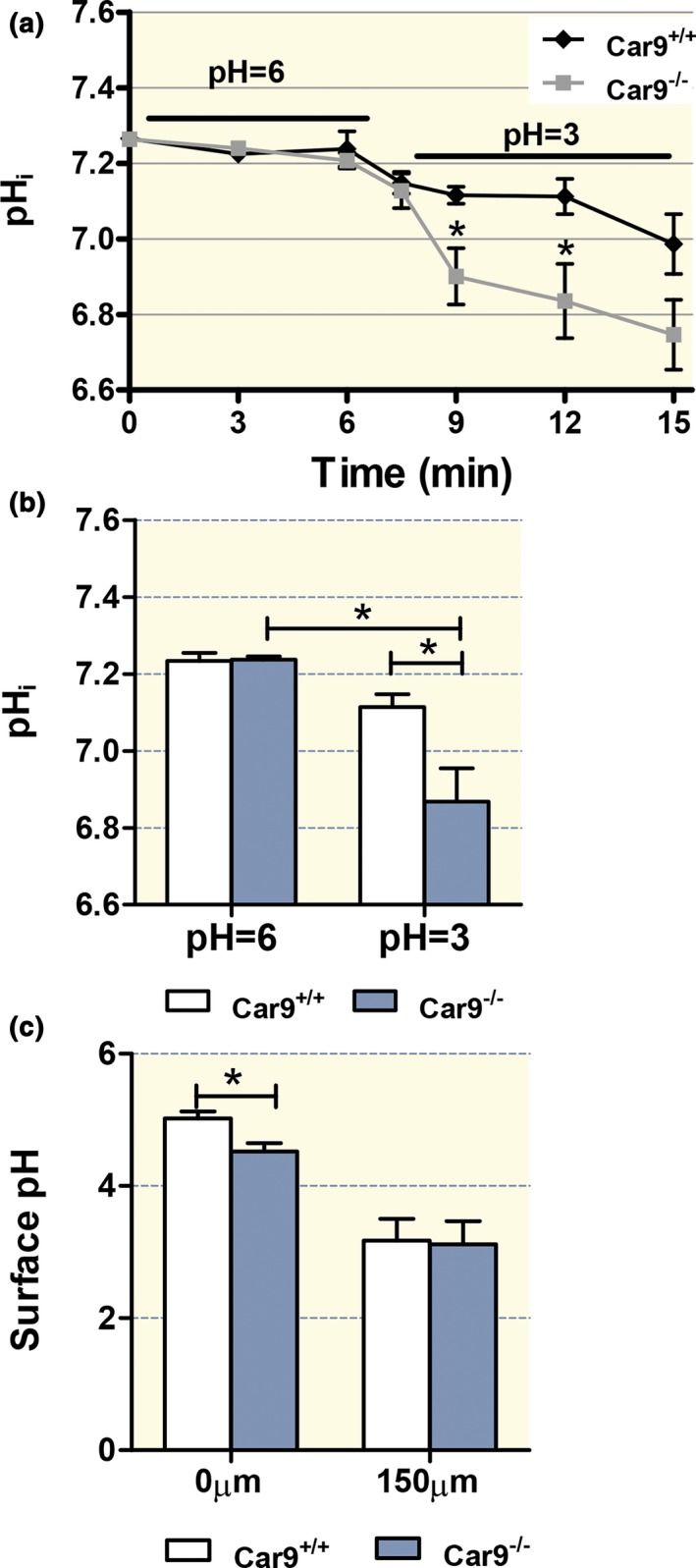
We assessed the ability of CAIX-knockout and WT gastric surface epithelial cells to withstand a luminal acid load by measuring the pH of exteriorized gastric mucosa in vivo using two-photon confocal laser scanning microscopy. Cytokines and claudin-18A2 expression was analysed by RT-PCR.
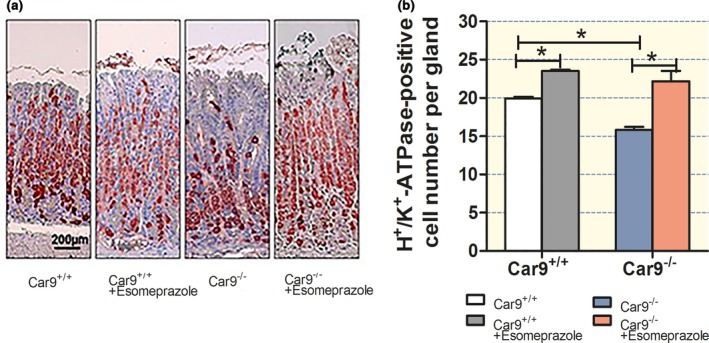
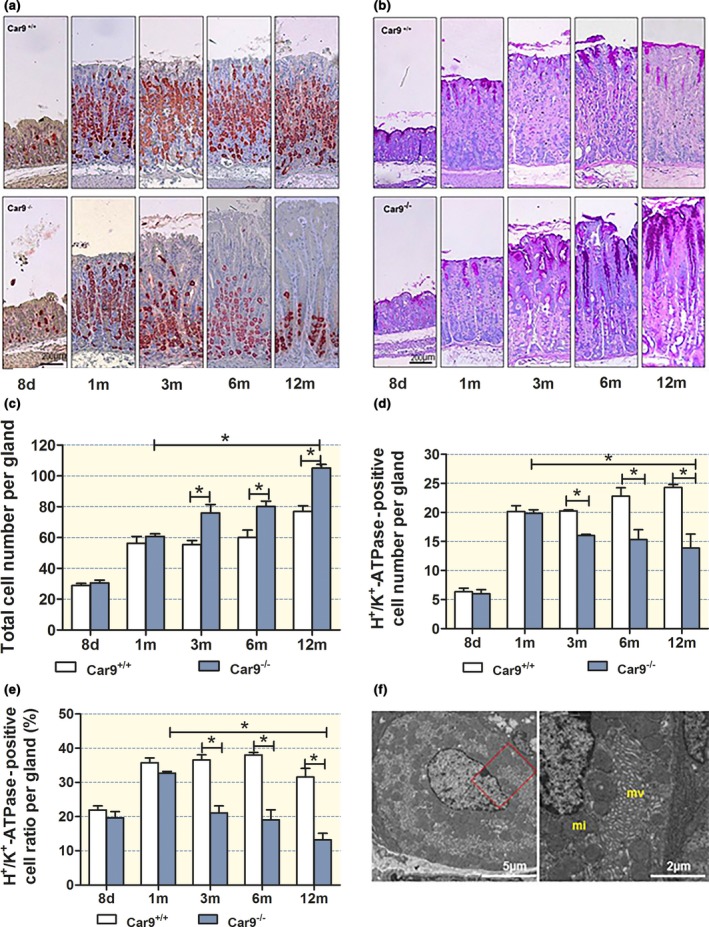
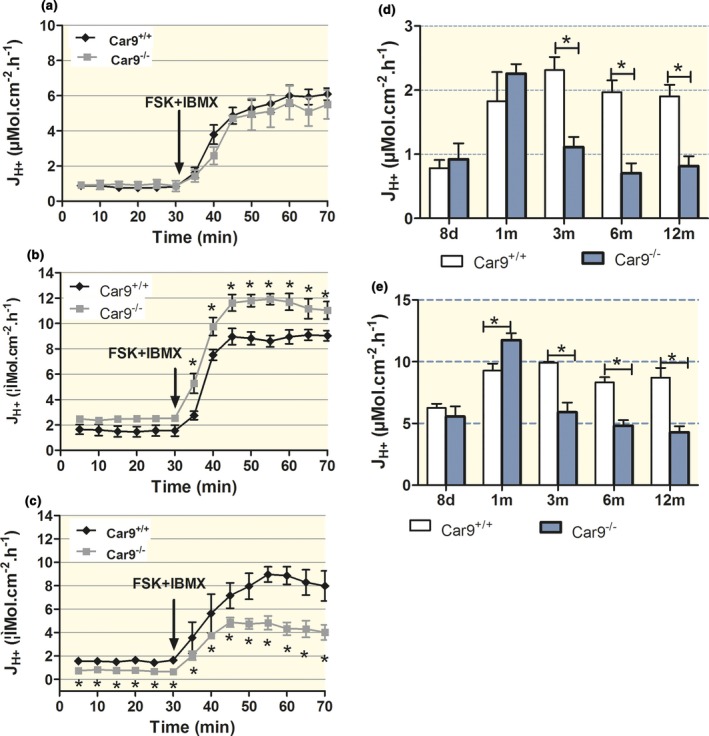
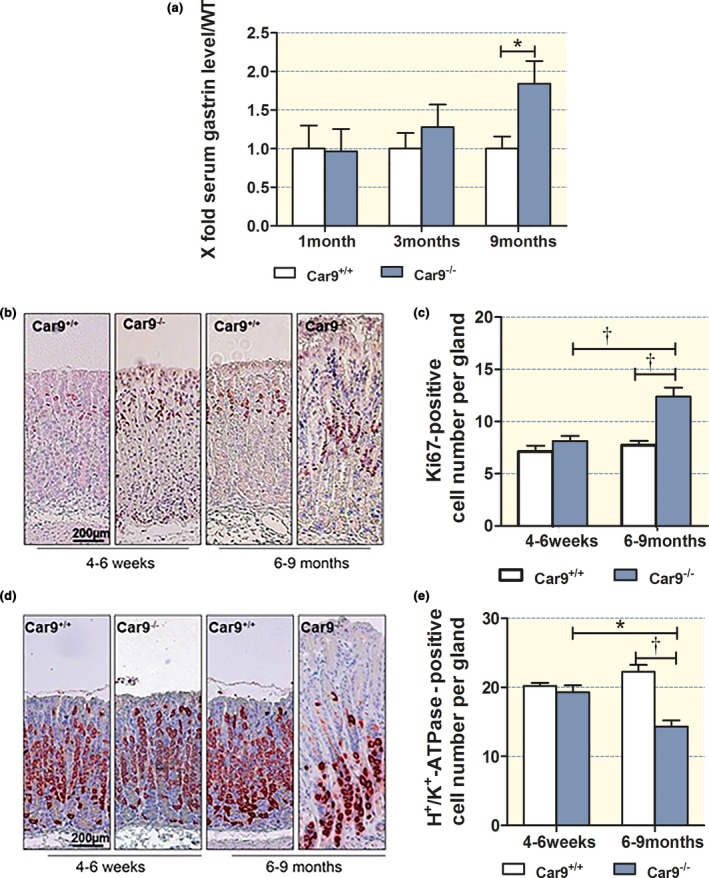
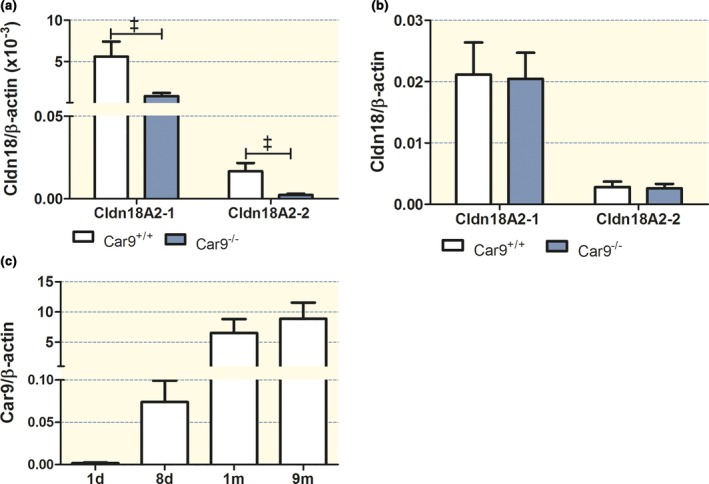
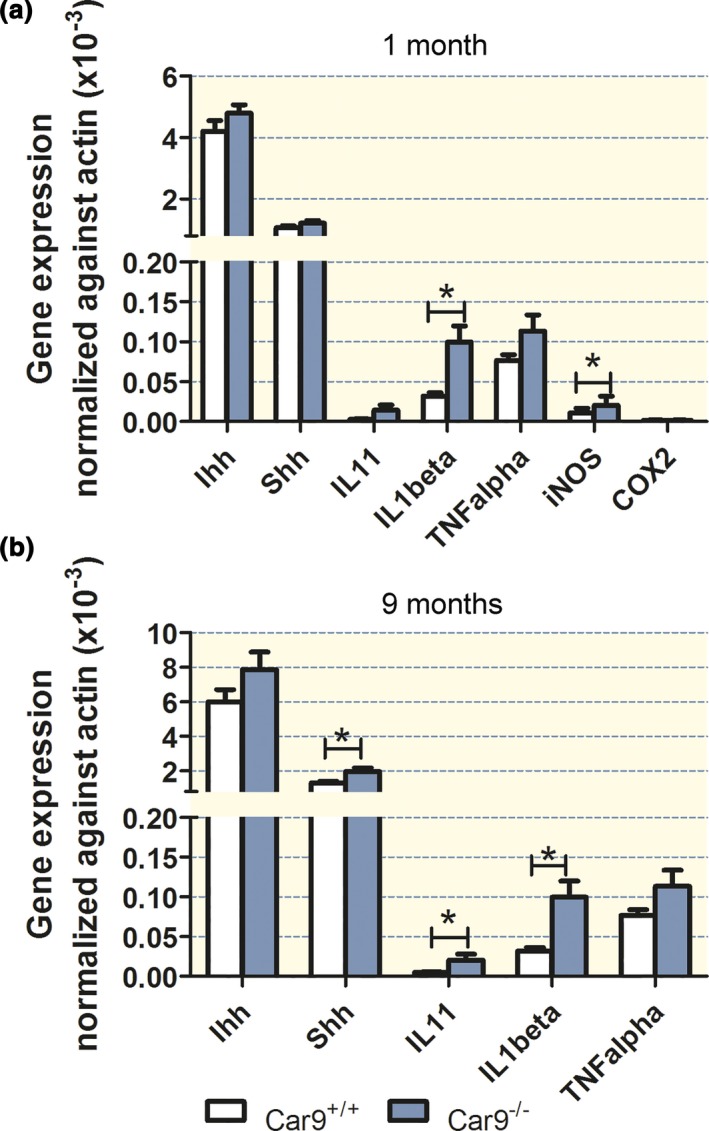
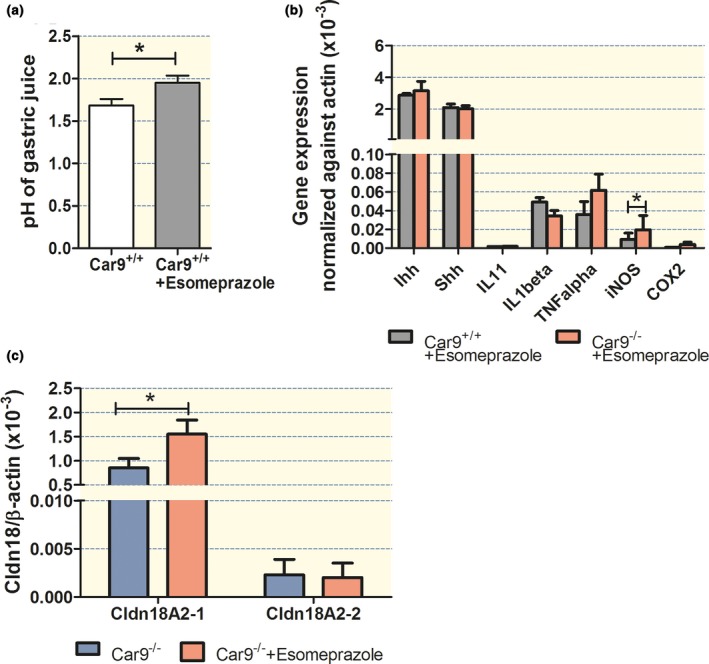
CAIX-knockout gastric surface epithelial cells showed significantly faster pH decline after luminal acid load compared to WT. Increased gastric mucosal IL-1β and iNOS, but decreased claudin-18A2 expression (which confer acid resistance) was observed shortly after weaning, prior to the loss of parietal and chief cells. At birth, neither inflammatory cytokines nor claudin-18 expression were altered between CAIX and WT gastric mucosa. The gradual loss of acid secretory capacity was paralleled by an increase in serum gastrin, IL-11 and foveolar hyperplasia. Mild chronic proton pump inhibition from the time of weaning did not prevent the claudin-18 decrease nor the increase in inflammatory markers at 1 month of age, except for IL-1β. However, the treatment reduced the parietal cell loss in CAIX-KO mice in the subsequent months.
We propose that CAIX converts protons that either backflux or are extruded from the cells rapidly to CO and H O, contributing to tight junction protection and gastric epithelial pH regulation. Lack of CAIX results in persistent acid backflux via claudin-18 downregulation, causing loss of parietal cells, hypergastrinaemia and foveolar hyperplasia.
本研究旨在探讨碳酸酐酶 9(CAIX)缺失导致的小鼠胃黏膜壁细胞缺失和底细胞增生的分子机制。
我们通过双光子共聚焦激光扫描显微镜在体测量外翻胃黏膜的 pH 值,评估 CAIX 敲除和 WT 胃表面上皮细胞耐受腔酸性负荷的能力。通过 RT-PCR 分析细胞因子和 Claudin-18A2 的表达。
与 WT 相比,CAIX 敲除的胃表面上皮细胞在腔酸性负荷后 pH 值下降明显更快。在断奶后不久,即壁细胞和主细胞丢失之前,观察到胃黏膜 IL-1β 和 iNOS 增加,但 Claudin-18A2 表达(赋予酸抗性)减少。出生时,CAIX 和 WT 胃黏膜之间的炎症细胞因子或 Claudin-18 表达均未改变。酸分泌能力的逐渐丧失伴随着血清胃泌素、IL-11 和滤泡增生的增加。从断奶开始,慢性质子泵抑制治疗并不能预防 Claudin-18 的减少或 1 个月时炎症标志物的增加,除了 IL-1β。然而,该治疗在随后的几个月中减少了 CAIX-KO 小鼠的壁细胞丢失。
我们提出 CAIX 将细胞内或外排的质子迅速转化为 CO 和 H2O,有助于紧密连接的保护和胃上皮 pH 值的调节。CAIX 的缺乏导致 Claudin-18 下调,持续的酸反流,引起壁细胞丢失、高胃泌素血症和滤泡增生。