Department of Chemical and Biomolecular Engineering, National University of Singapore, 4 Engineering Drive 4, 117585 Singapore, Singapore.
Advanced Membranes and Porous Materials Center, Physical Sciences and Engineering Division, King Abdullah University of Science and Technology, Thuwal 23955-6900, Saudi Arabia.
Nat Commun. 2017 Jul 27;8:16100. doi: 10.1038/ncomms16100.
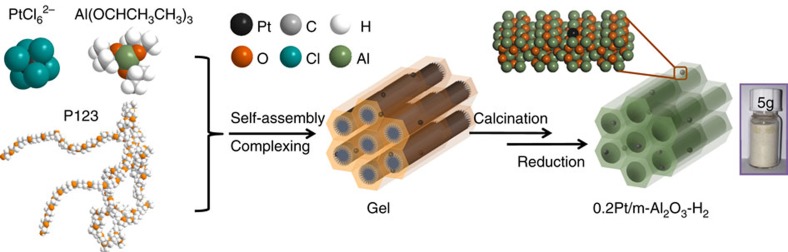
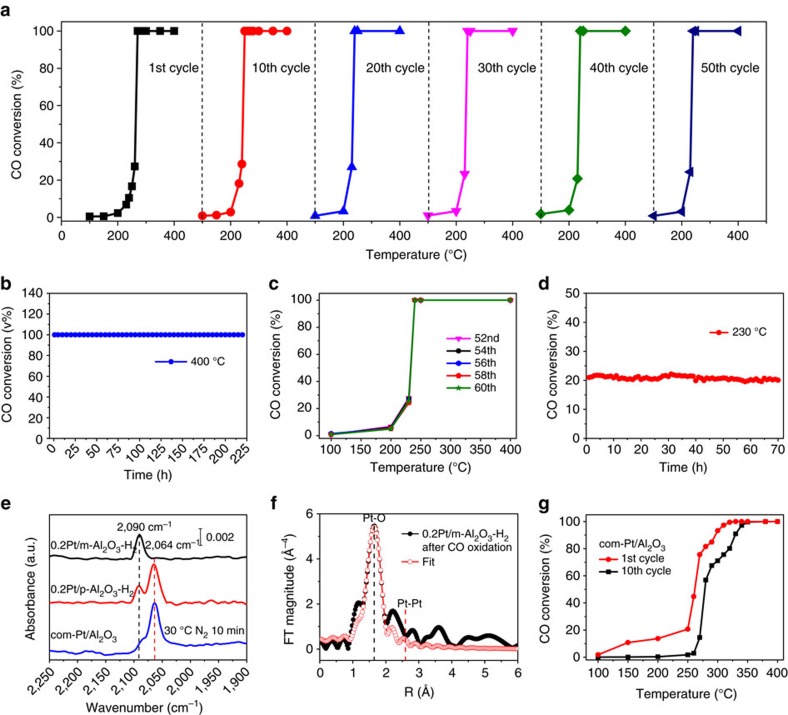
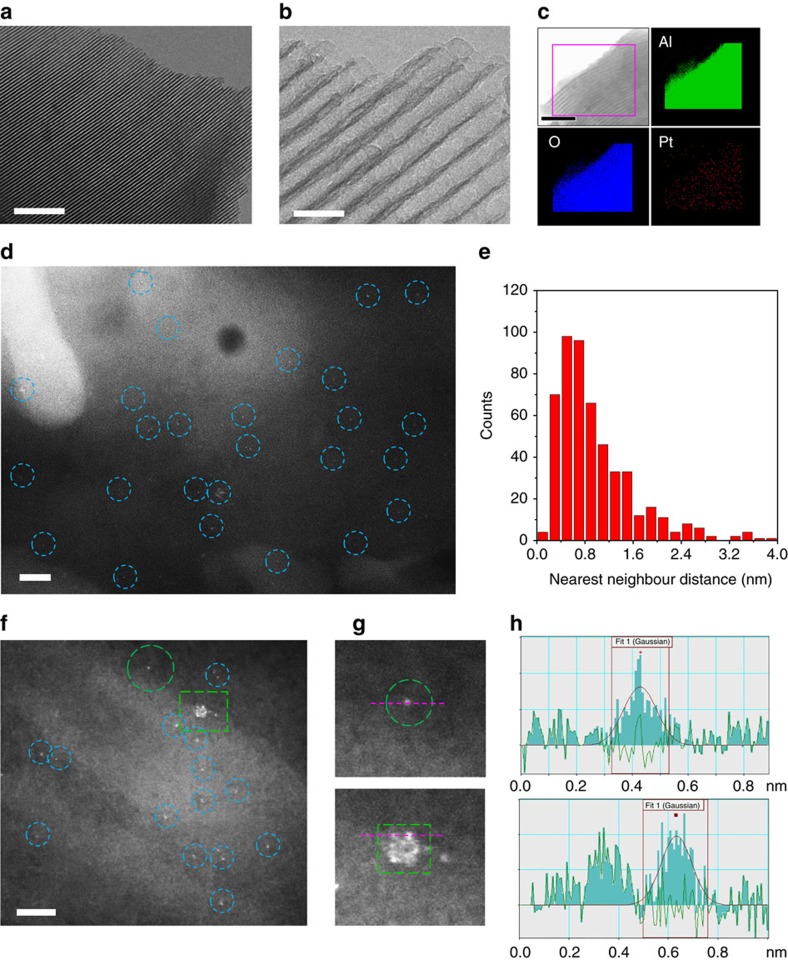
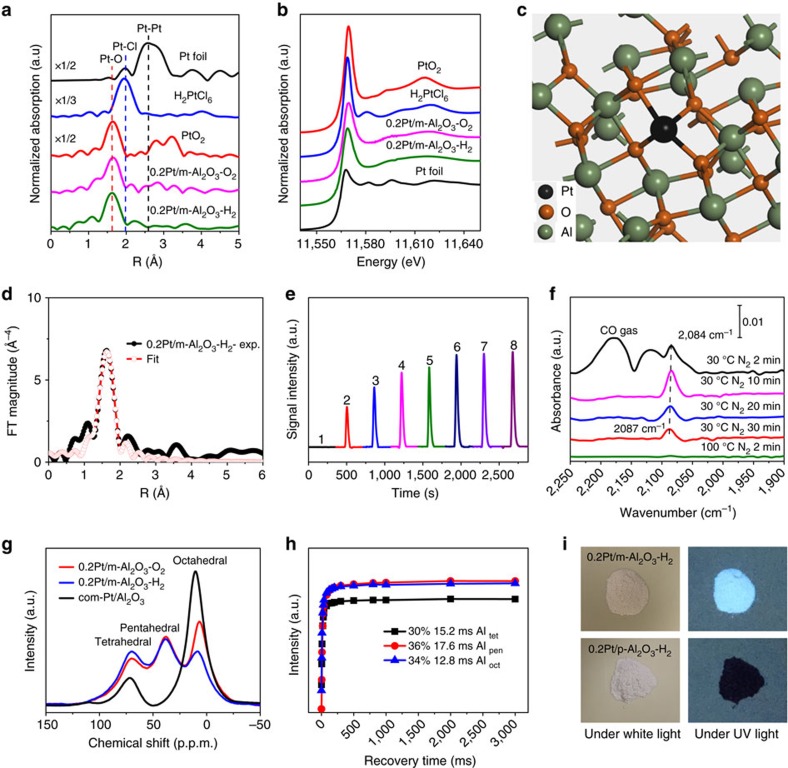
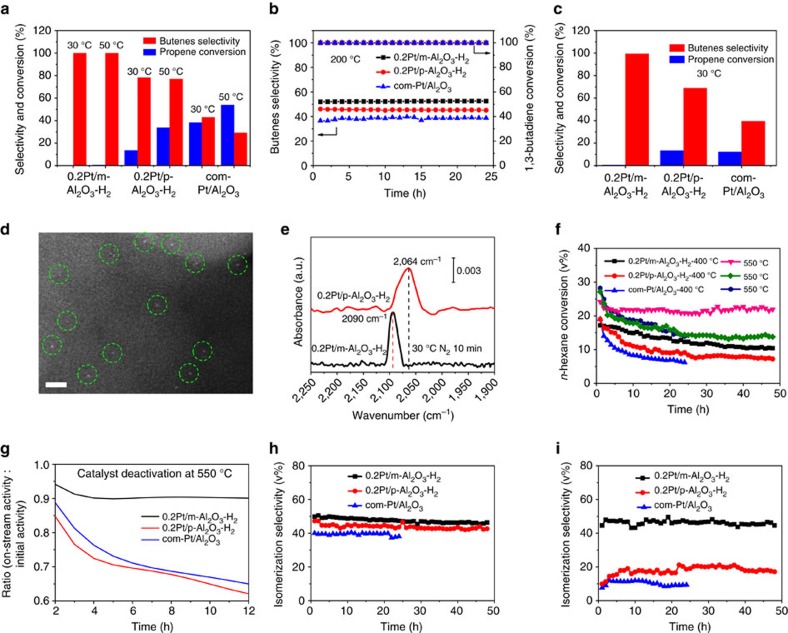
Single-atom metal catalysts offer a promising way to utilize precious noble metal elements more effectively, provided that they are catalytically active and sufficiently stable. Herein, we report a synthetic strategy for Pt single-atom catalysts with outstanding stability in several reactions under demanding conditions. The Pt atoms are firmly anchored in the internal surface of mesoporous AlO, likely stabilized by coordinatively unsaturated pentahedral Al centres. The catalyst keeps its structural integrity and excellent performance for the selective hydrogenation of 1,3-butadiene after exposure to a reductive atmosphere at 200 °C for 24 h. Compared to commercial Pt nanoparticle catalyst on AlO and control samples, this system exhibits significantly enhanced stability and performance for n-hexane hydro-reforming at 550 °C for 48 h, although agglomeration of Pt single-atoms into clusters is observed after reaction. In CO oxidation, the Pt single-atom identity was fully maintained after 60 cycles between 100 and 400 °C over a one-month period.
单原子金属催化剂为更有效地利用贵金属元素提供了一种有前景的方法,前提是它们具有催化活性和足够的稳定性。在此,我们报告了一种在苛刻条件下几种反应中具有出色稳定性的 Pt 单原子催化剂的合成策略。Pt 原子被牢固地锚定在介孔 AlO 的内部表面上,可能由配位不饱和的五配位 Al 中心稳定。该催化剂在 200°C 的还原气氛中暴露 24 小时后,仍保持其结构完整性和对 1,3-丁二烯选择性加氢的优异性能。与 AlO 上的商业 Pt 纳米颗粒催化剂和对照样品相比,尽管反应后观察到 Pt 单原子团聚成簇,但该体系在 550°C 下进行 n-己烷加氢重整反应时表现出显著增强的稳定性和性能,持续 48 小时。在 CO 氧化中,Pt 单原子的身份在 100 至 400°C 之间经过一个月的 60 个循环后得到了完全保持。