Gondalia Rahul, Avery Christy L, Napier Melanie D, Méndez-Giráldez Raúl, Stewart James D, Sitlani Colleen M, Li Yun, Wilhelmsen Kirk C, Duan Qing, Roach Jeffrey, North Kari E, Reiner Alexander P, Zhang Zhu-Ming, Tinker Lesley F, Yanosky Jeff D, Liao Duanping, Whitsel Eric A
Department of Epidemiology, University of North Carolina, Chapel Hill, North Carolina, USA
Carolina Population Center, University of North Carolina, Chapel Hill, North Carolina, USA
Environ Health Perspect. 2017 Jun 8;125(6):067002. doi: 10.1289/EHP347.
Ambient particulate matter (PM) air pollution exposure has been associated with increases in QT interval duration (QT). However, innate susceptibility to PM-associated QT prolongation has not been characterized.
To characterize genetic susceptibility to PM-associated QT prolongation in a multi-racial/ethnic, genome-wide association study (GWAS).
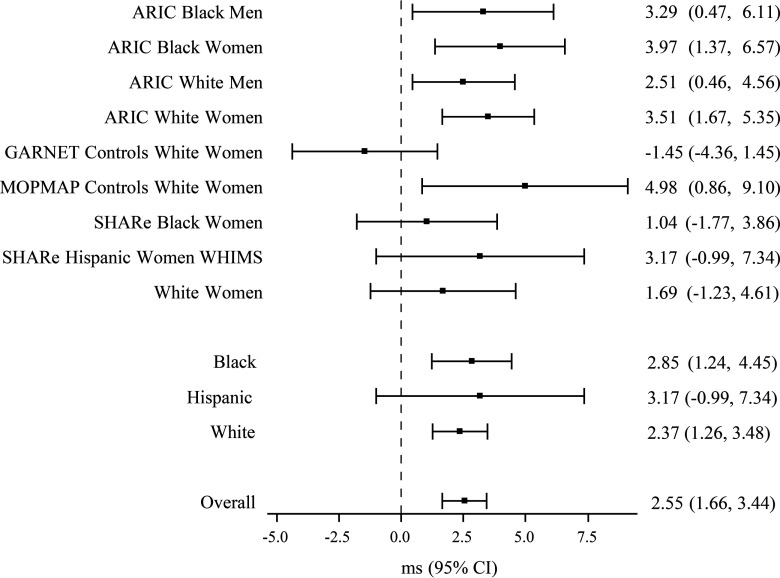
Using repeated electrocardiograms (1986–2004), longitudinal data on PM<10 μm in diameter (PM), and generalized estimating equations methods adapted for low-prevalence exposure, we estimated approximately 2.5×10 SNP×PM interactions among nine Women’s Health Initiative clinical trials and Atherosclerosis Risk in Communities Study subpopulations (n=22,158), then combined subpopulation-specific results in a fixed-effects, inverse variance-weighted meta-analysis.
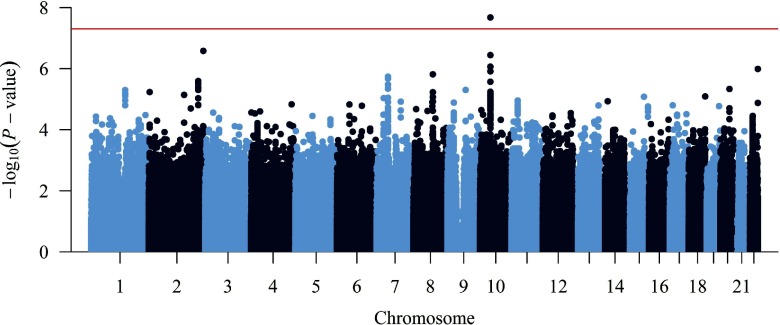
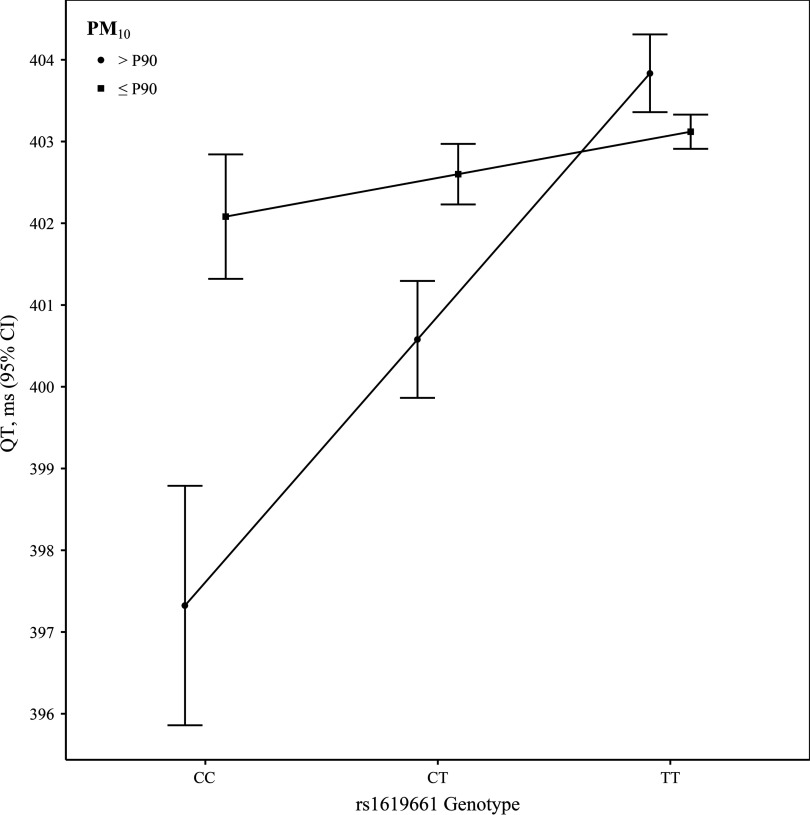
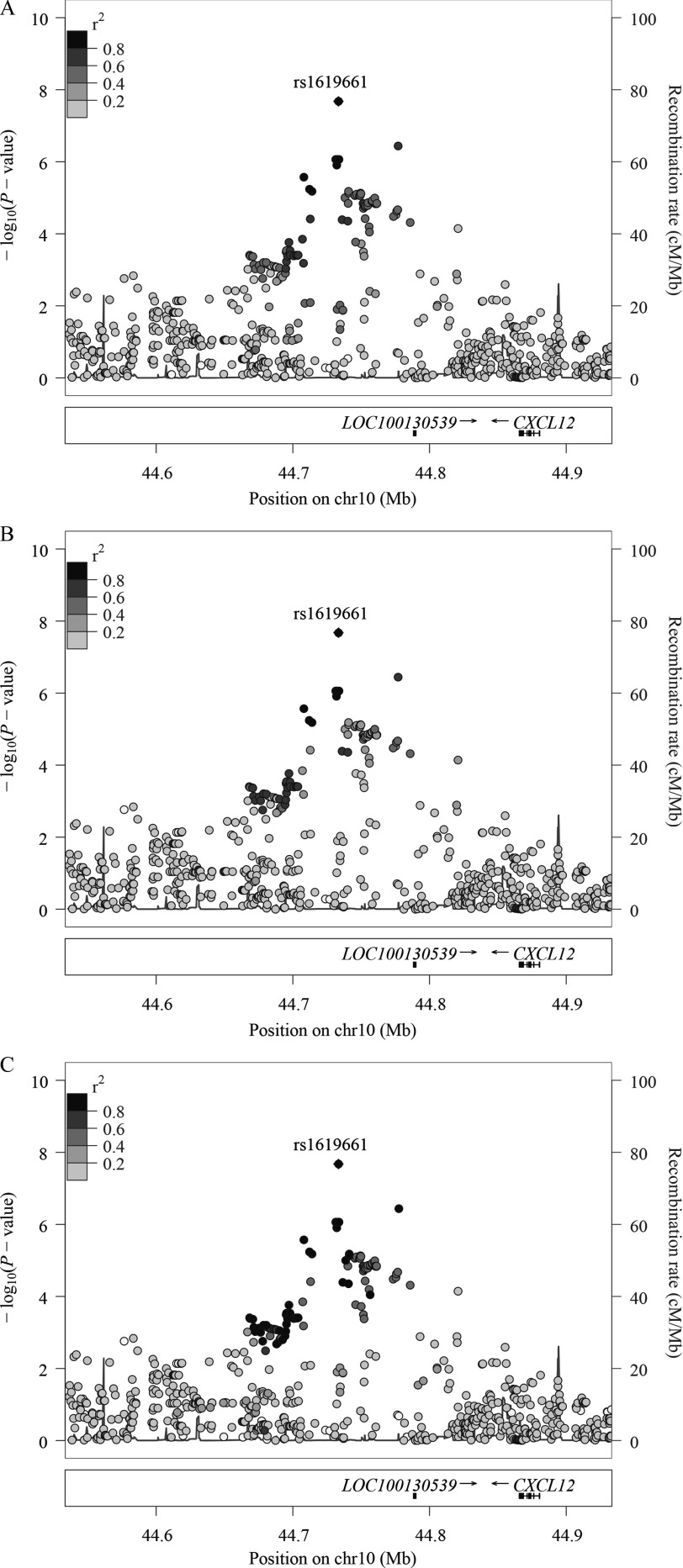
A common variant (rs1619661; coded allele: ) significantly modified the QT-PM association (p=2.11×10). At PM concentrations >90th percentile, QT increased 7 ms across the CC and TT genotypes: 397 (95% confidence interval: 396, 399) to 404 (403, 404) ms. However, QT changed minimally across rs1619661 genotypes at lower PM concentrations. The rs1619661 variant is on chromosome 10, 132 kilobase (kb) downstream from CXCL12, which encodes a chemokine, stromal cell-derived factor 1, that is expressed in cardiomyocytes and decreases calcium influx across the L-type Ca channel.
The findings suggest that biologically plausible genetic factors may alter susceptibility to PM-associated QT prolongation in populations protected by the U.S. Environmental Protection Agency’s National Ambient Air Quality Standards. Independent replication and functional characterization are necessary to validate our findings. https://doi.org/10.1289/EHP347
环境细颗粒物(PM)空气污染暴露与QT间期时长(QT)增加有关。然而,对PM相关QT延长的内在易感性尚未得到明确描述。
在一项多种族/民族的全基因组关联研究(GWAS)中明确对PM相关QT延长的遗传易感性。
利用重复心电图(1986 - 2004年)、直径<10μm的PM(PM)纵向数据以及适用于低患病率暴露的广义估计方程方法,我们在九项女性健康倡议临床试验和社区动脉粥样硬化风险研究亚组(n = 22,158)中估计了约2.5×10个单核苷酸多态性(SNP)×PM相互作用,然后在固定效应、逆方差加权荟萃分析中合并亚组特异性结果。
一个常见变异(rs1619661;编码等位基因:)显著改变了QT - PM关联(p = 2.11×10)。在PM浓度>第90百分位数时,CC和TT基因型的QT增加了7毫秒:从397(95%置信区间:396, 399)毫秒增加到404(403, 404)毫秒。然而,在较低PM浓度下,QT在rs1619661基因型间变化极小。rs1619661变异位于10号染色体上,在编码趋化因子基质细胞衍生因子1的CXCL12下游132千碱基(kb)处,该趋化因子在心肌细胞中表达并减少通过L型钙通道的钙内流。
研究结果表明,在受美国环境保护局国家环境空气质量标准保护的人群中,生物学上合理的遗传因素可能会改变对PM相关QT延长的易感性。需要进行独立重复研究和功能表征来验证我们的发现。https://doi.org/10.1289/EHP347