Imperial College Healthcare NHS Trust Lupus Centre, Hammersmith Hospital, London, UK; Renal and Vascular Inflammation Section, Department of Medicine, Imperial College London, Hammersmith Campus, London, UK.
Renal and Vascular Inflammation Section, Department of Medicine, Imperial College London, Hammersmith Campus, London, UK.
Kidney Int. 2017 Nov;92(5):1223-1231. doi: 10.1016/j.kint.2017.04.029. Epub 2017 Jul 24.
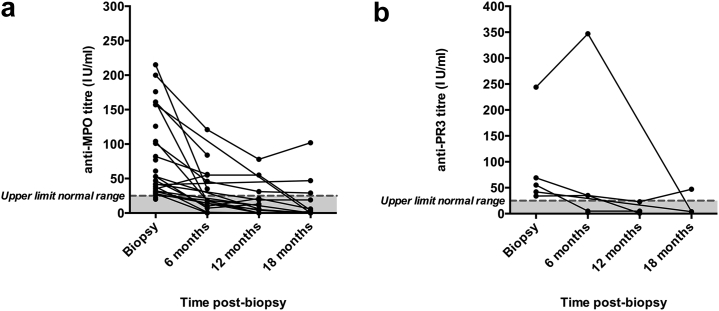
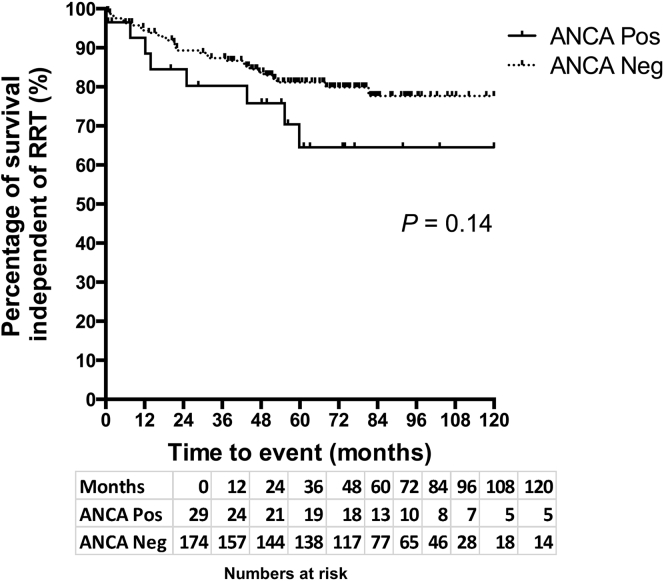
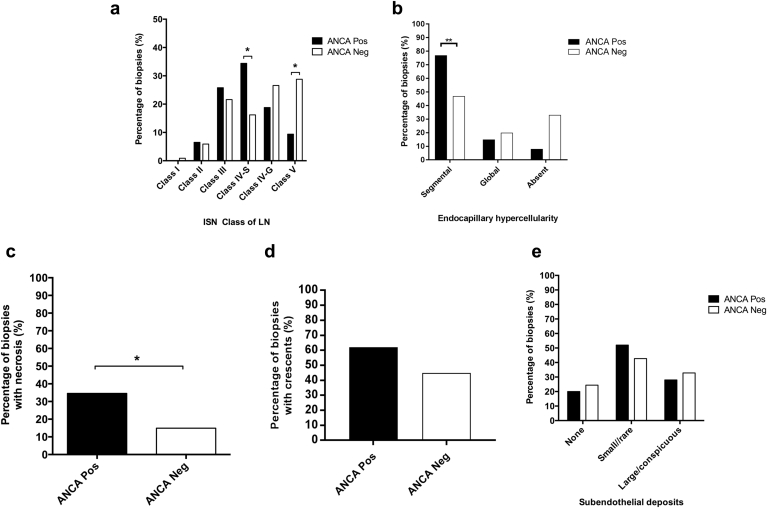
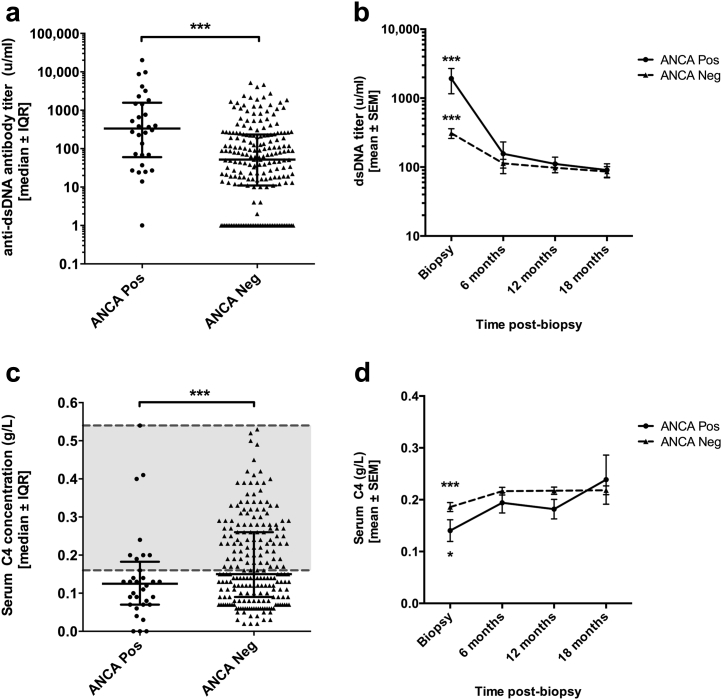
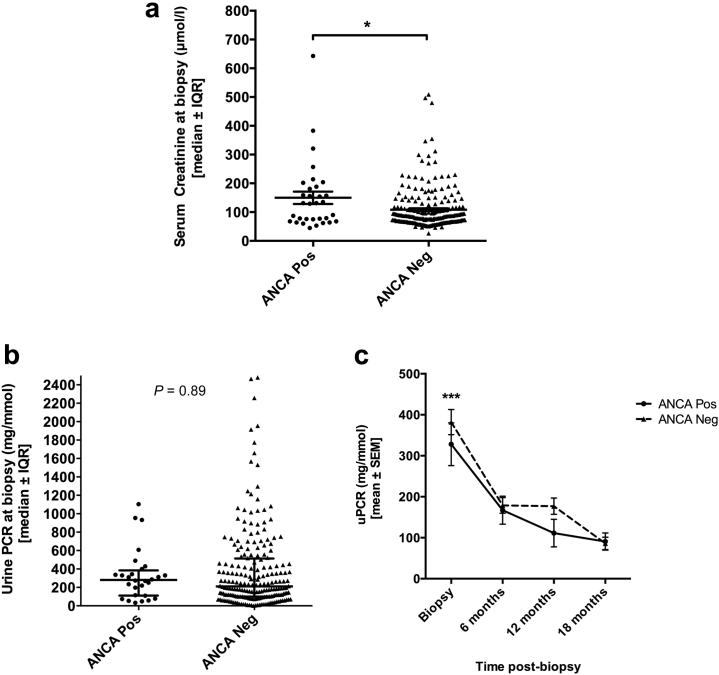
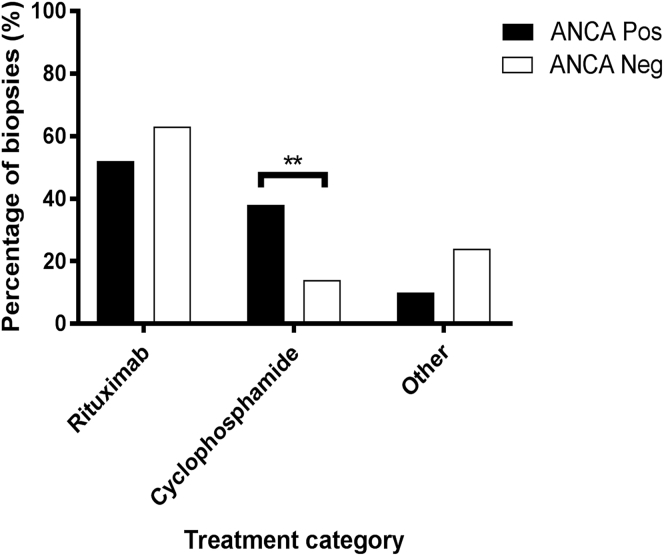
Class IV-S lupus nephritis is often associated with more necrosis and fewer subendothelial immune deposits compared to class IV-G lupus nephritis, suggestive of necrotising glomerular inflammation found in antineutrophil cytoplasmic antibody (ANCA)-associated vasculitis. ANCAs are present in a significant proportion of patients with lupus nephritis. Here we determine whether ANCAs are associated with distinct clinical and histopathologic features of lupus nephritis. Thirty-two ANCA-positive biopsies were compared to 222 ANCA-negative biopsies from patients with lupus nephritis. The majority (82%) of ANCA-positive patients had antimyeloperoxidase antibodies. Class IV-S lupus nephritis and glomerular necrosis were significantly more common (36% vs. 16% and 35% vs. 15%, respectively) and isolated Class V lupus nephritis significantly less common (10% vs. 29%) in the ANCA-positive group. ANCA-positive patients had significantly higher dsDNA titers (335u/ml vs. 52u/ml), significantly lower serum C4 concentrations (0.125g/L vs. 0.15g/L) and significantly higher serum creatinine (130μmol/L vs. 84μmol/L) at the time of biopsy. Hence ANCAs appear to influence the histological pattern of lupus nephritis and are associated with worse baseline renal function and more active lupus serology. There was no significant difference in outcome between groups when matched for severity of disease and treatment using propensity scoring. Thus, further studies are needed to examine whether ANCAs in patients with lupus nephritis have a pathogenic role and whether they are associated with worse renal outcomes or are simply a marker of more severe disease.
IV-S 级狼疮肾炎通常与更多的坏死和更少的内皮下免疫沉积物相关,与抗中性粒细胞胞浆抗体 (ANCA) 相关血管炎中发现的坏死性肾小球炎症相比,提示存在 ANCA。ANCA 存在于相当一部分狼疮肾炎患者中。在这里,我们确定 ANCA 是否与狼疮肾炎的不同临床和组织病理学特征相关。将 32 例 ANCA 阳性活检与 222 例狼疮肾炎的 ANCA 阴性活检进行比较。大多数(82%)ANCA 阳性患者存在抗髓过氧化物酶抗体。IV-S 级狼疮肾炎和肾小球坏死在 ANCA 阳性组中更为常见(分别为 36%比 16%和 35%比 15%),而孤立的 V 级狼疮肾炎则明显较少见(10%比 29%)。ANCA 阳性患者的 dsDNA 滴度明显更高(335u/ml 比 52u/ml),血清 C4 浓度明显更低(0.125g/L 比 0.15g/L),血清肌酐明显更高(130μmol/L 比 84μmol/L)。因此,ANCA 似乎影响狼疮肾炎的组织学模式,与基线肾功能更差和更活跃的狼疮血清学相关。通过倾向评分匹配疾病严重程度和治疗后,两组之间的结果没有显著差异。因此,需要进一步研究以检查狼疮肾炎患者中的 ANCA 是否具有致病性作用,以及它们是否与更差的肾脏结局相关,还是仅仅是疾病更严重的标志物。