Nightingale Tom E, Walhin Jean-Philippe, Thompson Dylan, Bilzon James L J
Department for Health, University of Bath, Bath, Somerset, UNITED KINGDOM.
Med Sci Sports Exerc. 2017 Dec;49(12):2469-2477. doi: 10.1249/MSS.0000000000001390.
Spinal cord injury (SCI) creates a complex pathology, characterized by low levels of habitual physical activity and an increased risk of cardiometabolic disease. This study aimed to assess the effect of a moderate-intensity upper-body exercise training intervention on biomarkers of cardiometabolic component risks, adipose tissue metabolism, and cardiorespiratory fitness in persons with SCI.
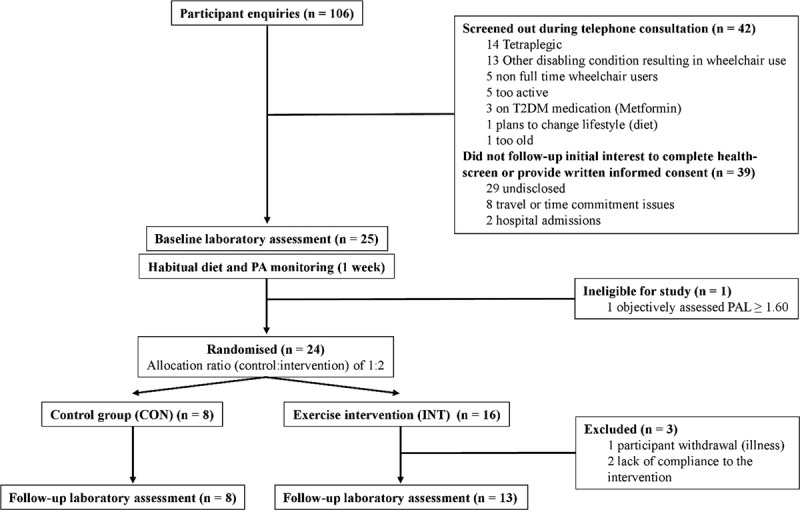
Twenty-one inactive men and women with chronic (>1 yr) SCI (all paraplegic injuries) 47 ± 8 yr of age (mean ± SD) were randomly allocated to either a 6-wk prescribed home-based exercise intervention (INT; n = 13) or control group (CON; n = 8). Participants assigned to the exercise group completed 4 × 45-min moderate-intensity (60%-65% peak oxygen uptake (V˙O2peak)) arm-crank exercise sessions per week. At baseline and follow-up, fasted and postload blood samples (collected during oral glucose tolerance tests) were obtained to measure metabolic regulation and biomarkers of cardiovascular disease. Abdominal subcutaneous adipose tissue biopsies were also obtained, and cardiorespiratory fitness was assessed.
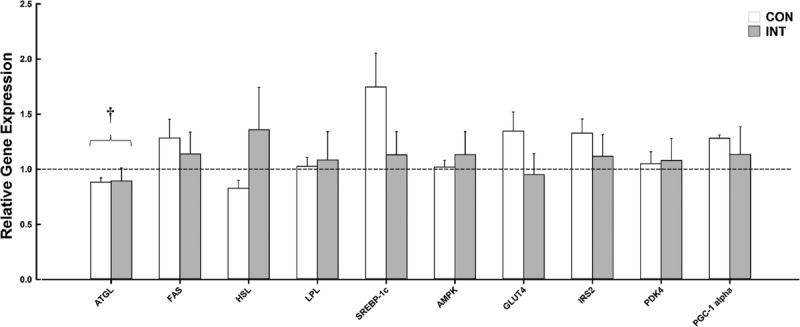
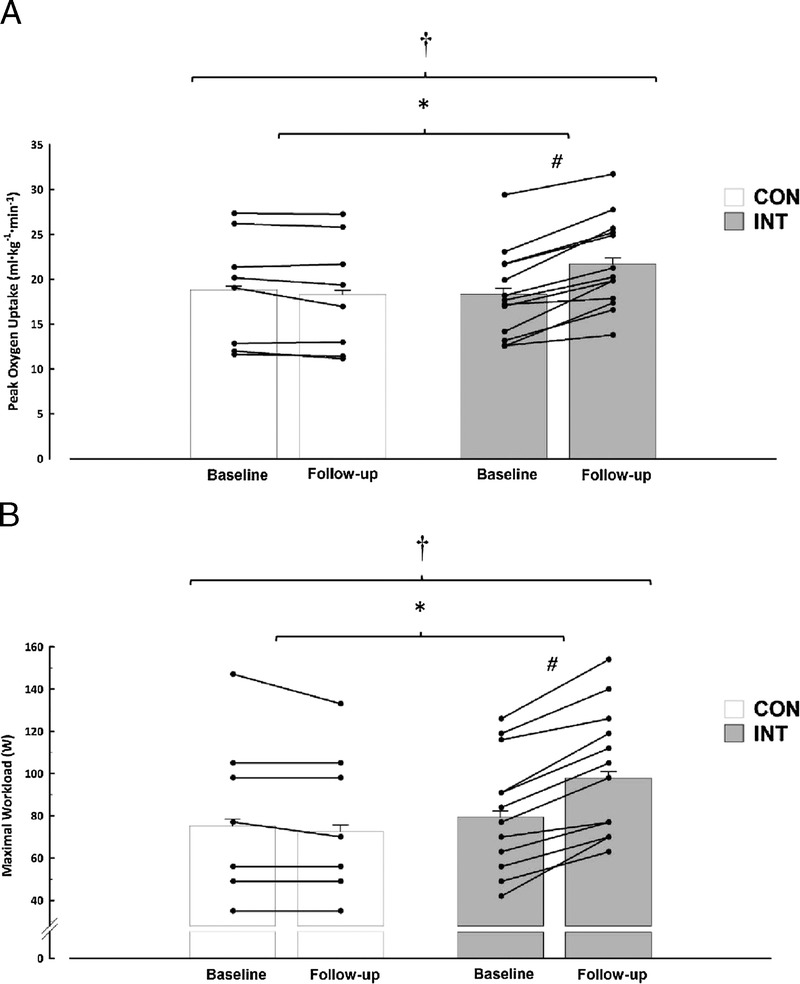
Compared with CON, INT significantly decreased (P = 0.04) serum fasting insulin (Δ, 3.1 ± 10.7 pmol·L for CON and -12.7 ± 18.7 pmol·L for INT) and homeostasis model assessment of insulin resistance (HOMA2-IR; Δ, 0.06 ± 0.20 for CON and -0.23 ± 0.36 for INT). The exercise group also increased V˙O2peak (Δ, 3.4 mL·kg·min; P ≤ 0.001). Adipose tissue metabolism, composite insulin sensitivity index (C-ISIMatsuda), and other cardiovascular disease risk biomarkers were not different between groups.
Moderate-intensity upper-body exercise improved aspects of metabolic regulation and cardiorespiratory fitness. Changes in fasting insulin and HOMA2-IR, but not C-ISIMatsuda, suggest improved hepatic but not peripheral insulin sensitivity after 6 wk of exercise training in persons with chronic paraplegia.
脊髓损伤(SCI)会引发复杂的病理状况,其特征为习惯性身体活动水平较低以及心脏代谢疾病风险增加。本研究旨在评估中等强度上身运动训练干预对脊髓损伤患者心脏代谢成分风险生物标志物、脂肪组织代谢及心肺适能的影响。
21名年龄为47±8岁(均值±标准差)、患有慢性(>1年)脊髓损伤(均为截瘫损伤)的不活跃男性和女性被随机分配至为期6周的居家规定运动干预组(INT;n = 13)或对照组(CON;n = 8)。分配至运动组的参与者每周完成4次、每次45分钟的中等强度(峰值摄氧量(V˙O2peak)的60%-65%)手摇臂运动训练。在基线和随访时,采集空腹及负荷后血样(在口服葡萄糖耐量试验期间采集)以测量代谢调节及心血管疾病生物标志物。还获取了腹部皮下脂肪组织活检样本,并评估了心肺适能。
与CON组相比,INT组血清空腹胰岛素显著降低(P = 0.04)(CON组变化量为3.1±10.7 pmol·L,INT组为-12.7±18.7 pmol·L)以及胰岛素抵抗稳态模型评估值(HOMA2-IR;CON组变化量为0.06±0.20,INT组为-0.23±0.36)。运动组的V˙O2peak也有所增加(变化量为3.4 mL·kg·min;P≤0.0