Fundamental Microbiology and Pathogenicity Laboratory, UMR 5234 CNRS, University of Bordeaux, SFR TransBioMed, 146 rue Léo Saignat, 33076, Bordeaux Cedex, France.
International Associated Laboratory (LIA) of Microbiology and Immunology, CNRS/University de Bordeaux/Heinrich Pette Institute-Leibniz Institute for Experimental Virology, Bordeaux, France.
Retrovirology. 2017 Jul 28;14(1):39. doi: 10.1186/s12977-017-0363-4.
Insertion of retroviral genome DNA occurs in the chromatin of the host cell. This step is modulated by chromatin structure as nucleosomes compaction was shown to prevent HIV-1 integration and chromatin remodeling has been reported to affect integration efficiency. LEDGF/p75-mediated targeting of the integration complex toward RNA polymerase II (polII) transcribed regions ensures optimal access to dynamic regions that are suitable for integration. Consequently, we have investigated the involvement of polII-associated factors in the regulation of HIV-1 integration.
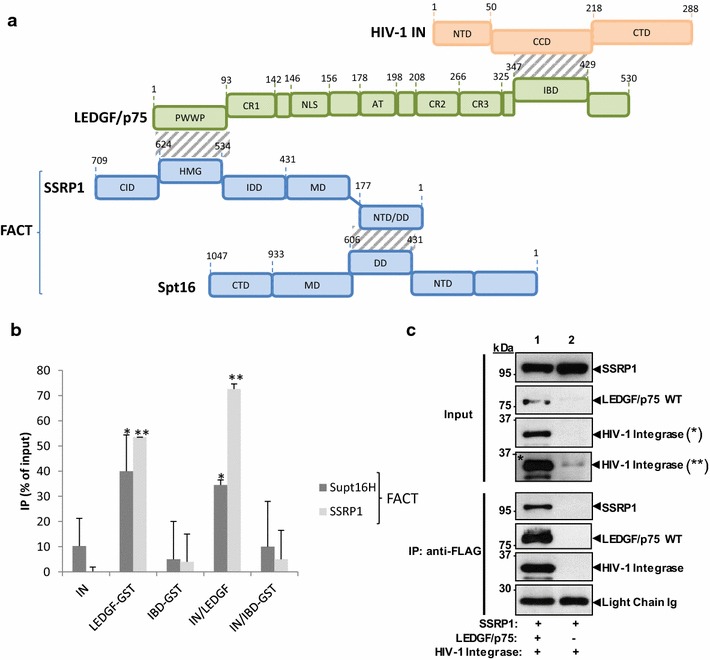
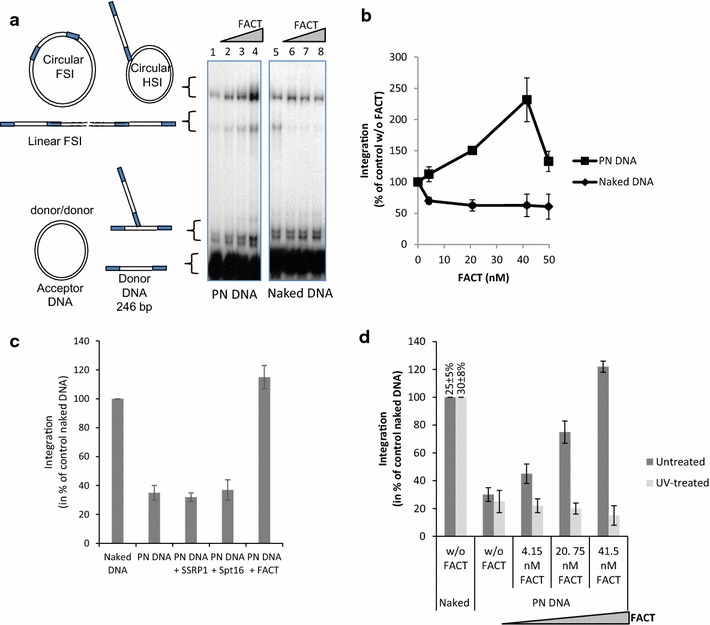
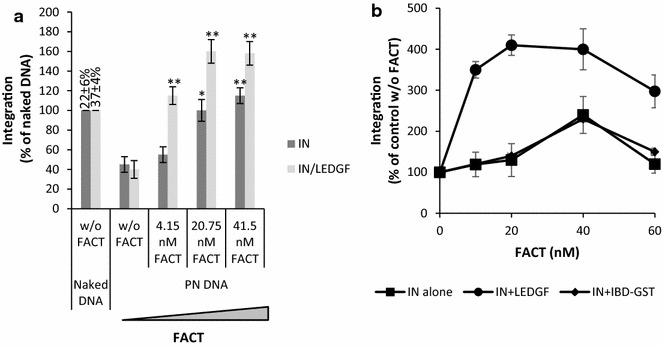
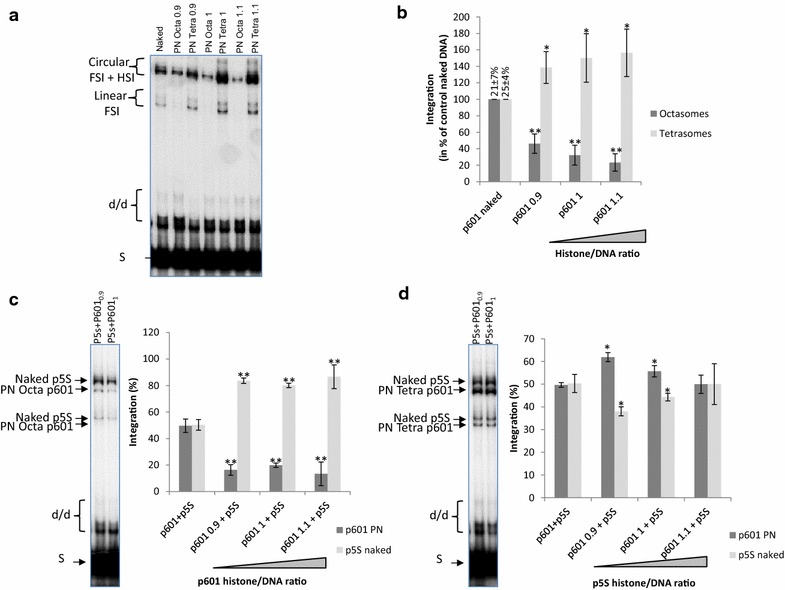
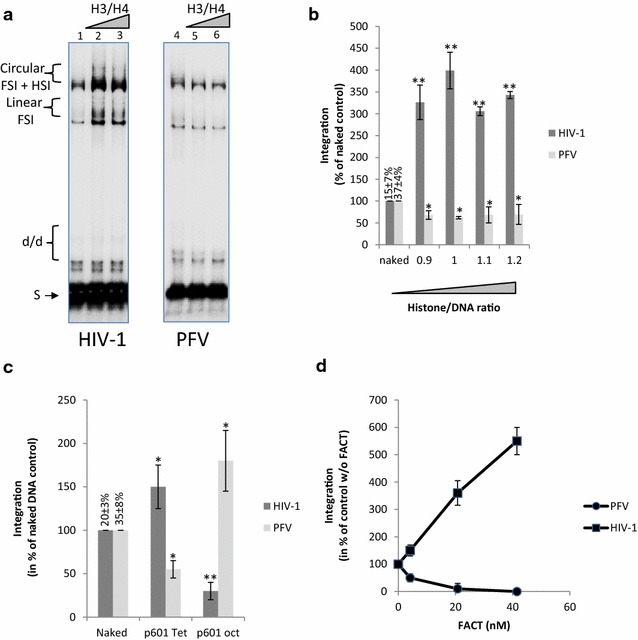
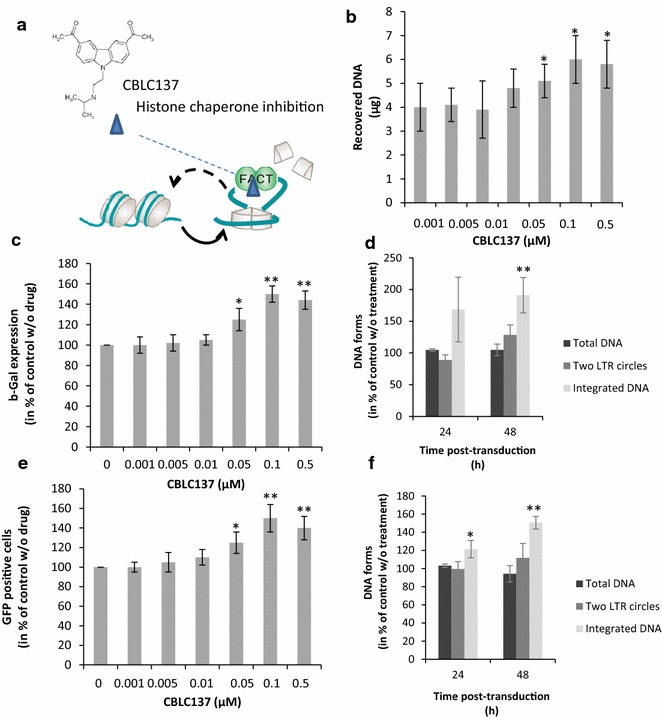
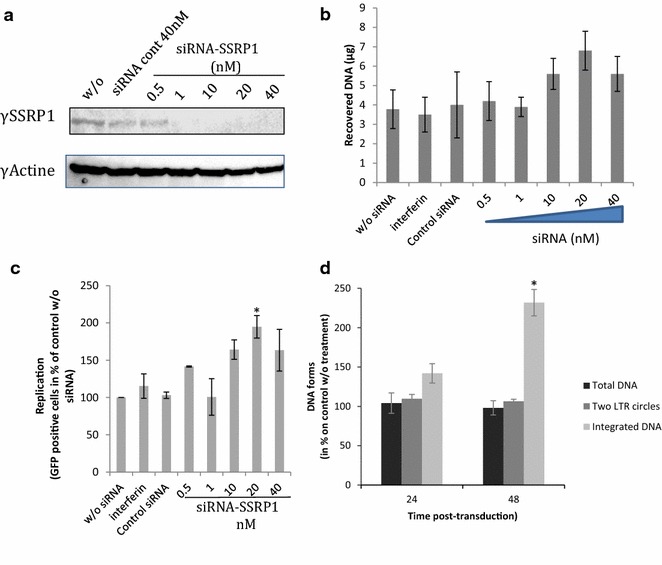
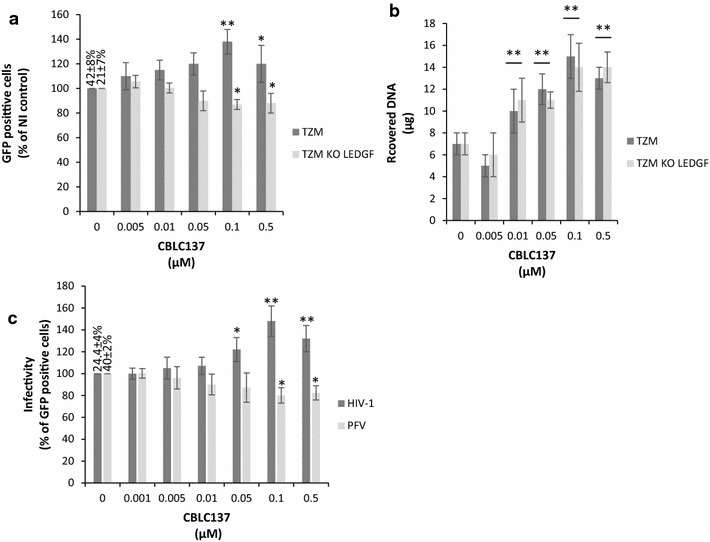
Using a pull down approach coupled with mass spectrometry, we have selected the FACT (FAcilitates Chromatin Transcription) complex as a new potential cofactor of HIV-1 integration. FACT is a histone chaperone complex associated with the polII transcription machinery and recently shown to bind LEDGF/p75. We report here that a tripartite complex can be formed between HIV-1 integrase, LEDGF/p75 and FACT in vitro and in cells. Biochemical analyzes show that FACT-dependent nucleosome disassembly promotes HIV-1 integration into chromatinized templates, and generates highly favored nucleosomal structures in vitro. This effect was found to be amplified by LEDGF/p75. Promotion of this FACT-mediated chromatin remodeling in cells both increases chromatin accessibility and stimulates HIV-1 infectivity and integration.
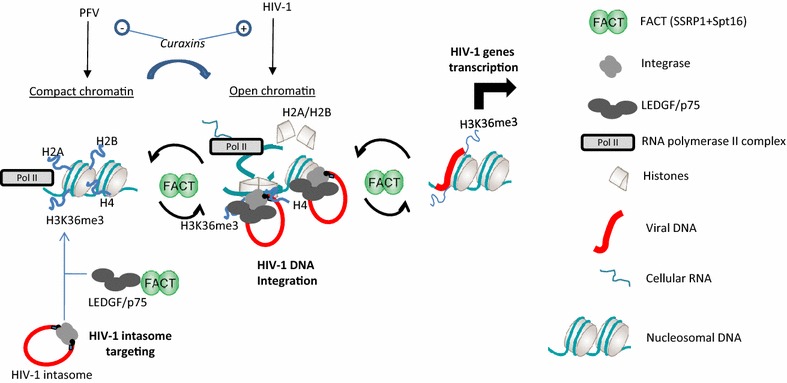
Altogether, our data indicate that FACT regulates HIV-1 integration by inducing local nucleosomes dissociation that modulates the functional association between the incoming intasome and the targeted nucleosome.
逆转录病毒基因组 DNA 的插入发生在宿主细胞的染色质中。这一步骤受到染色质结构的调节,因为核小体的紧缩被证明可以阻止 HIV-1 的整合,而染色质重塑已被报道会影响整合效率。LEDGF/p75 介导的整合复合物靶向 RNA 聚合酶 II(polII)转录区域,确保了对适合整合的动态区域的最佳进入。因此,我们研究了 polII 相关因子在 HIV-1 整合中的调节作用。
我们使用下拉法结合质谱法,选择了 FACT(促进染色质转录)复合物作为 HIV-1 整合的新的潜在辅助因子。FACT 是一种与 polII 转录机制相关的组蛋白伴侣复合物,最近被证明与 LEDGF/p75 结合。我们在这里报告,HIV-1 整合酶、LEDGF/p75 和 FACT 可以在体外和细胞中形成一个三分体复合物。生化分析表明,FACT 依赖性核小体解组装促进 HIV-1 整合到染色质模板中,并在体外产生高度有利的核小体结构。这种效应被 LEDGF/p75 放大。在细胞中促进这种 FACT 介导的染色质重塑,既增加了染色质的可及性,又刺激了 HIV-1 的感染和整合。
总之,我们的数据表明,FACT 通过诱导局部核小体解离来调节 HIV-1 的整合,从而调节进入的整合体与靶向核小体之间的功能关联。