Department of Biological and Medical Sciences, Oxford Brookes University, Gipsy Lane, Oxford, OX3 0BP, UK.
Department of Biological Sciences, University of Massachusetts Lowell, 198 Riverside Street, Lowell, MA, 01854, USA.
BMC Biol. 2017 Jul 31;15(1):62. doi: 10.1186/s12915-017-0399-x.
The duplication of genes can occur through various mechanisms and is thought to make a major contribution to the evolutionary diversification of organisms. There is increasing evidence for a large-scale duplication of genes in some chelicerate lineages including two rounds of whole genome duplication (WGD) in horseshoe crabs. To investigate this further, we sequenced and analyzed the genome of the common house spider Parasteatoda tepidariorum.
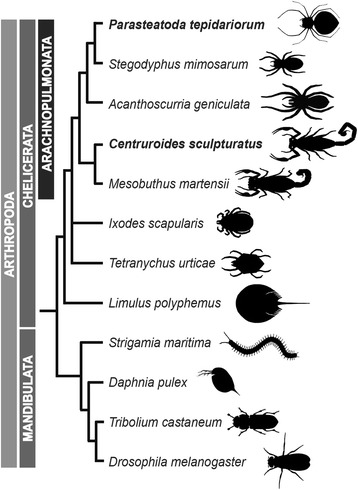
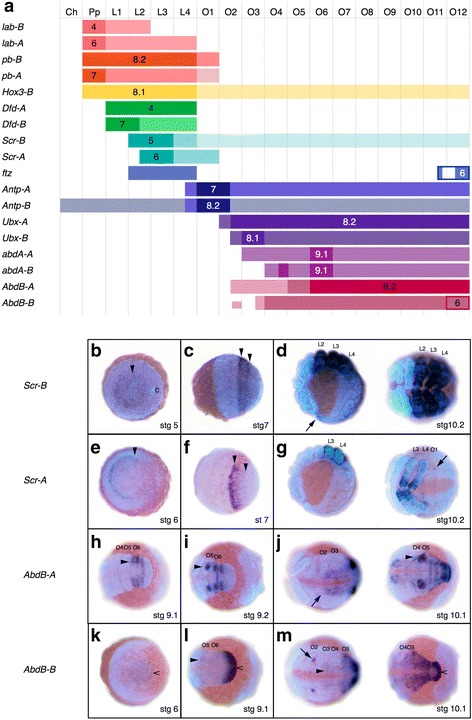
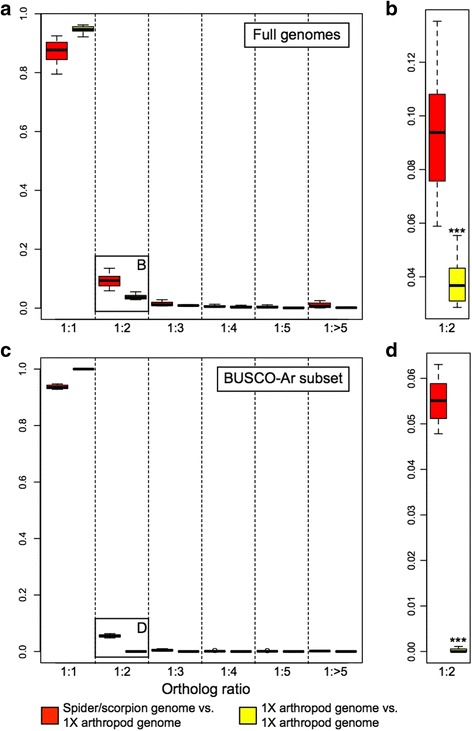
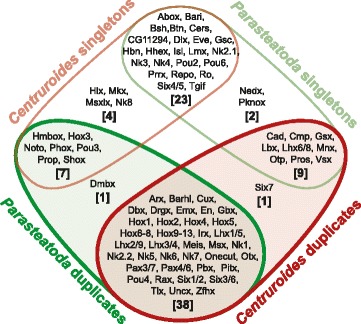
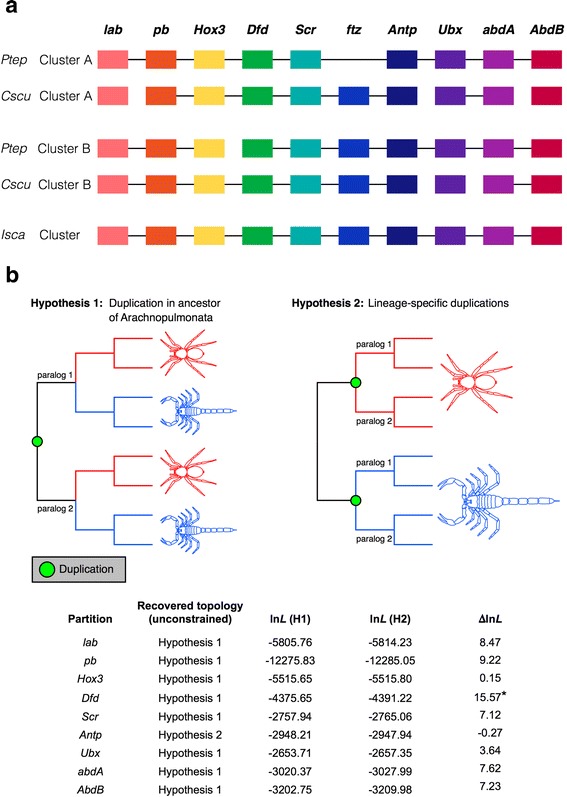
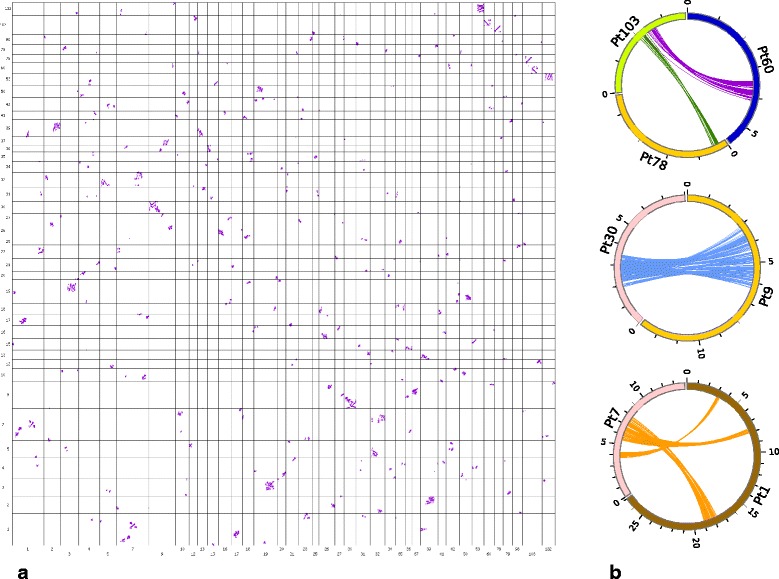
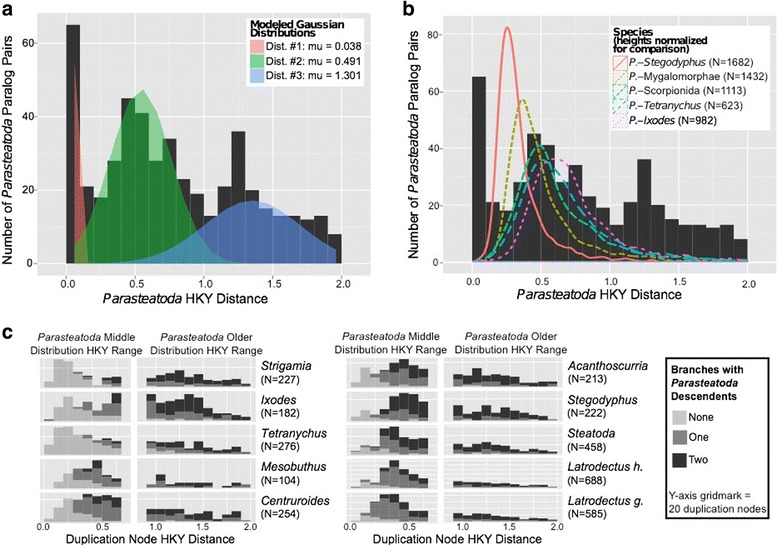
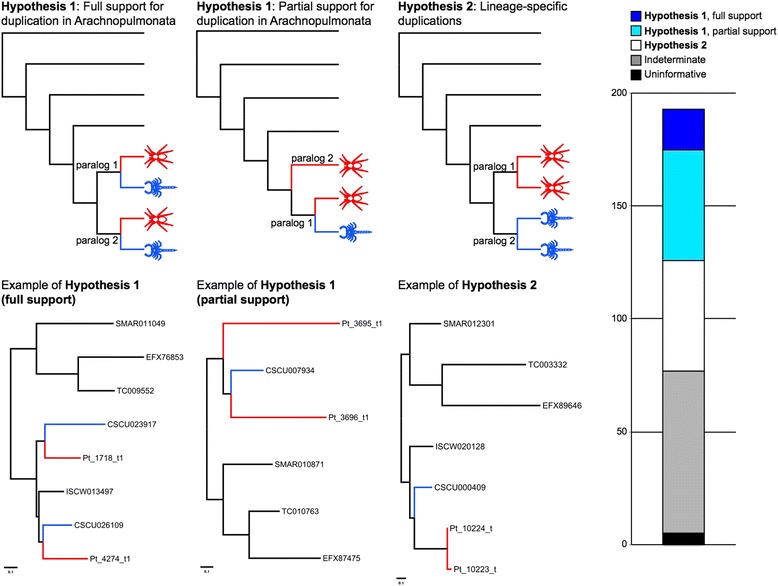
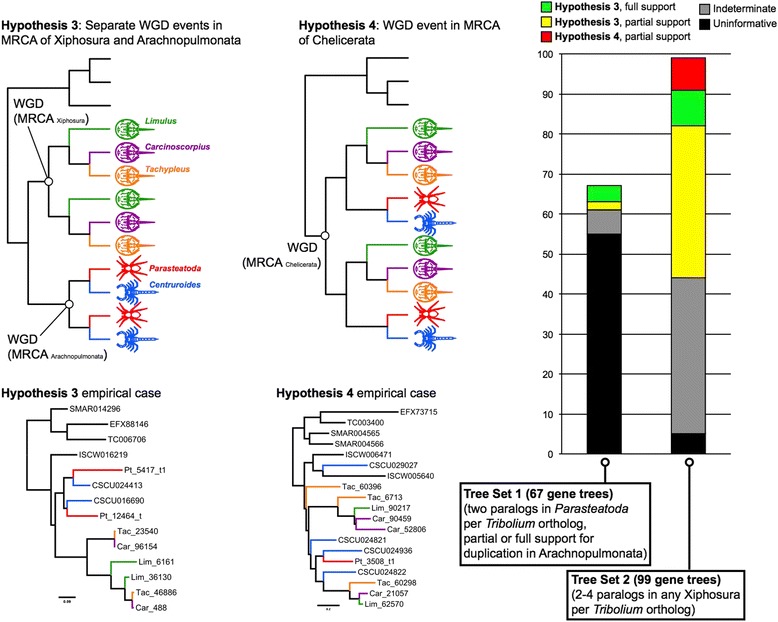
We found pervasive duplication of both coding and non-coding genes in this spider, including two clusters of Hox genes. Analysis of synteny conservation across the P. tepidariorum genome suggests that there has been an ancient WGD in spiders. Comparison with the genomes of other chelicerates, including that of the newly sequenced bark scorpion Centruroides sculpturatus, suggests that this event occurred in the common ancestor of spiders and scorpions, and is probably independent of the WGDs in horseshoe crabs. Furthermore, characterization of the sequence and expression of the Hox paralogs in P. tepidariorum suggests that many have been subject to neo-functionalization and/or sub-functionalization since their duplication.
Our results reveal that spiders and scorpions are likely the descendants of a polyploid ancestor that lived more than 450 MYA. Given the extensive morphological diversity and ecological adaptations found among these animals, rivaling those of vertebrates, our study of the ancient WGD event in Arachnopulmonata provides a new comparative platform to explore common and divergent evolutionary outcomes of polyploidization events across eukaryotes.
基因的复制可以通过多种机制发生,被认为是生物进化多样化的主要贡献者。越来越多的证据表明,某些螯肢动物谱系中存在大规模的基因复制,包括马蹄蟹的两轮全基因组复制(WGD)。为了进一步研究这个问题,我们对常见的家蛛 Parasteatoda tepidariorum 进行了测序和分析。
我们发现这种蜘蛛的编码和非编码基因普遍存在复制,包括两个 Hox 基因簇。对 P. tepidariorum 基因组中基因座保守性的分析表明,蜘蛛中存在古老的 WGD。与其他螯肢动物的基因组,包括新测序的树皮蝎子 Centruroides sculpturatus 的基因组进行比较,表明这一事件发生在蜘蛛和蝎子的共同祖先中,可能与马蹄蟹的 WGD 无关。此外,对 P. tepidariorum 中 Hox 基因家族的序列和表达特征的研究表明,许多基因在复制后已经经历了新功能化和/或亚功能化。
我们的研究结果表明,蜘蛛和蝎子可能是生活在 450 多 MYA 前的多倍体祖先的后代。鉴于这些动物在形态多样性和生态适应方面的广泛程度,可与脊椎动物相媲美,我们对 Arachnopulmonata 中古老的 WGD 事件的研究为探索多倍体化事件在真核生物中的共同和不同进化结果提供了一个新的比较平台。