Ferrer-Acosta Yancy, González Marieli, Fernández Mónica, Valance Washington A
University of Puerto Rico, Rio Piedras Campus, San Juan, Puerto Rico, USA.
Universidad Central del Caribe, Bayamón, Puerto Rico, USA.
J Infect Dis Ther. 2014 Aug;2(4). doi: 10.4172/2332-0877.1000149. Epub 2014 Jun 24.
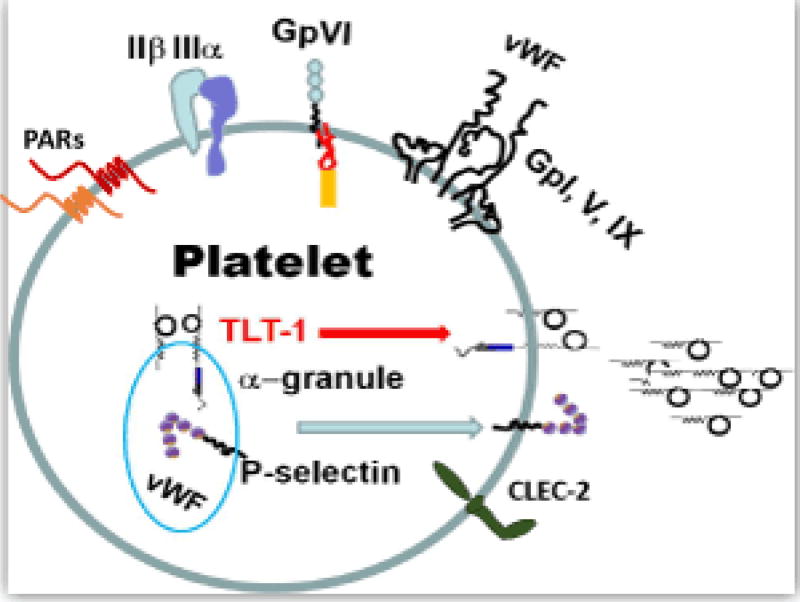
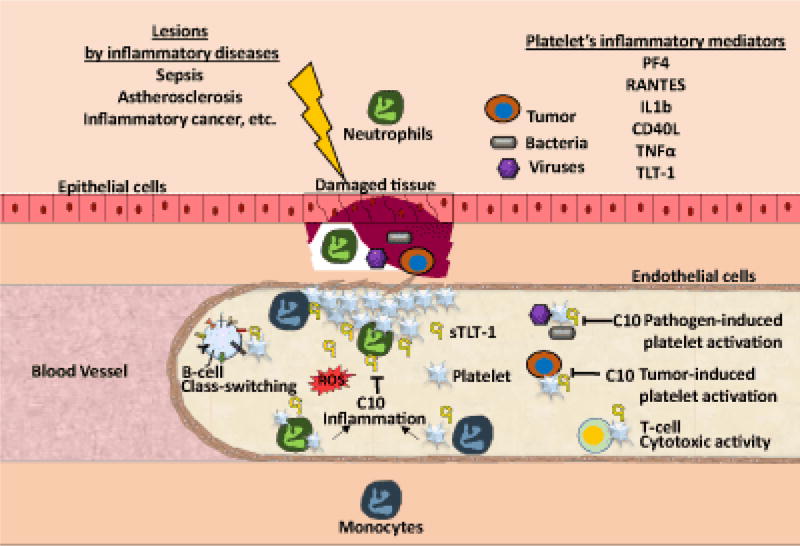
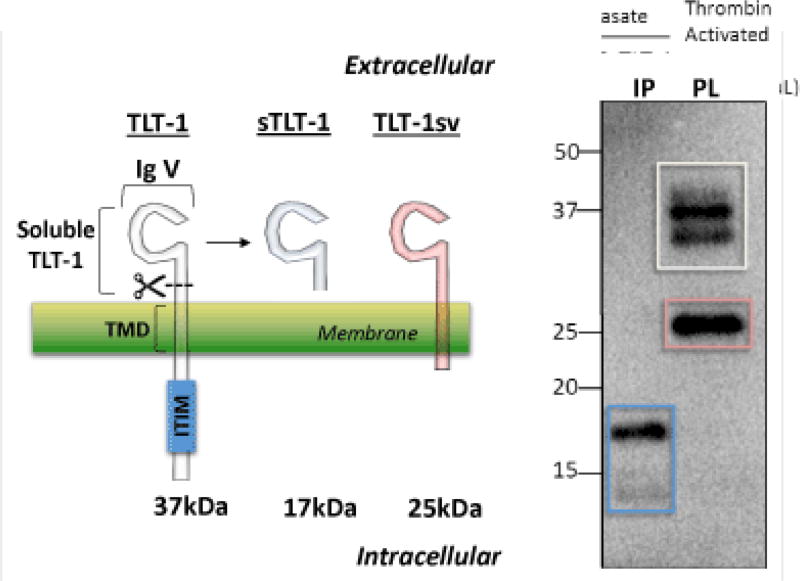
Platelets and their interaction with cells of the immune system contribute through a variety of molecular mechanisms to support hemostasis and inflammation. These simple yet essential cells exert their effects in lymphocytes, monocytes, and neutrophils, both recruiting and modulating their function after activation. Emerging evidence is starting to define the mechanisms that allow platelets to also play pivotal roles in host defense. For example, platelet cell-surface expression of toll-like receptors allows platelets to direct neutrophil activation toward extracellular trap formation and facilitate the elimination of blood pathogens. In addition to these well-known receptors, two of the most recently discovered platelet receptors, C-type lectin receptor 2 (CLEC-2), and TREM-like transcript-1 (TLT-1), have been shown to modulate hemostatic and inflammation-related roles in platelets. This review will discuss the evolution of our understanding of platelet functions from hemostasis to inflammation, and highlight novel mechanisms that platelets use to mediate hemostasis under inflammatory pressure.
血小板及其与免疫系统细胞的相互作用通过多种分子机制有助于支持止血和炎症反应。这些简单却至关重要的细胞在淋巴细胞、单核细胞和中性粒细胞中发挥作用,激活后既能募集这些细胞又能调节其功能。新出现的证据开始明确血小板在宿主防御中发挥关键作用的机制。例如,血小板表面的Toll样受体表达使血小板能够引导中性粒细胞激活形成细胞外陷阱,并促进血液病原体的清除。除了这些知名受体外,最近发现的两种血小板受体,C型凝集素受体2(CLEC-2)和TREM样转录本1(TLT-1),已被证明可调节血小板中与止血和炎症相关的作用。本综述将讨论我们对血小板功能从止血到炎症的认识演变,并强调血小板在炎症压力下介导止血的新机制。