Zhao Chuang, Zhao Jun, Yang Qian, Ye Yong
1 Department of Pharmaceutical Engineering, School of Chemistry and Chemical Engineering, South China University of Technology, Guangzhou, China.
2 Key Laboratory of Functional Molecular Engineering of Guangdong Province, Guangzhou, China.
Mol Pain. 2017 Jan-Dec;13:1744806917720336. doi: 10.1177/1744806917720336.
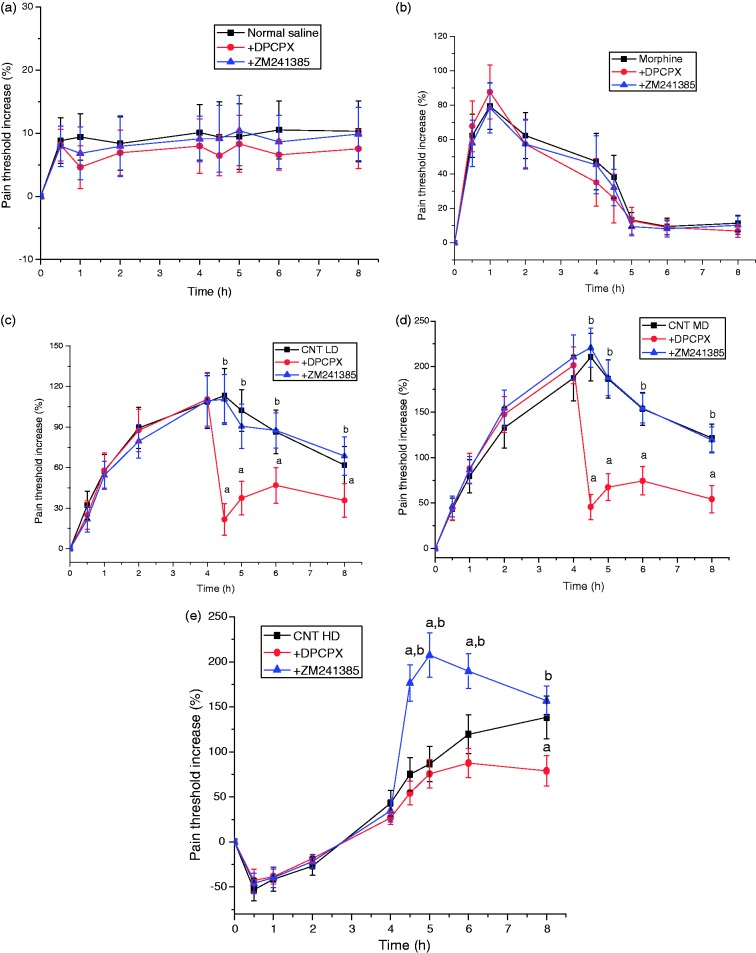
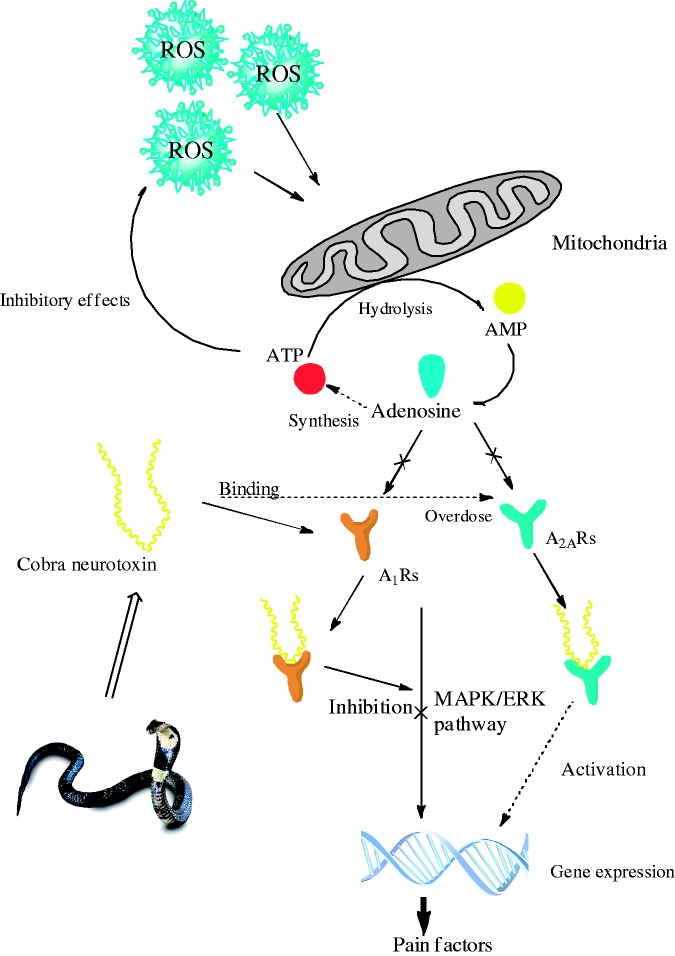
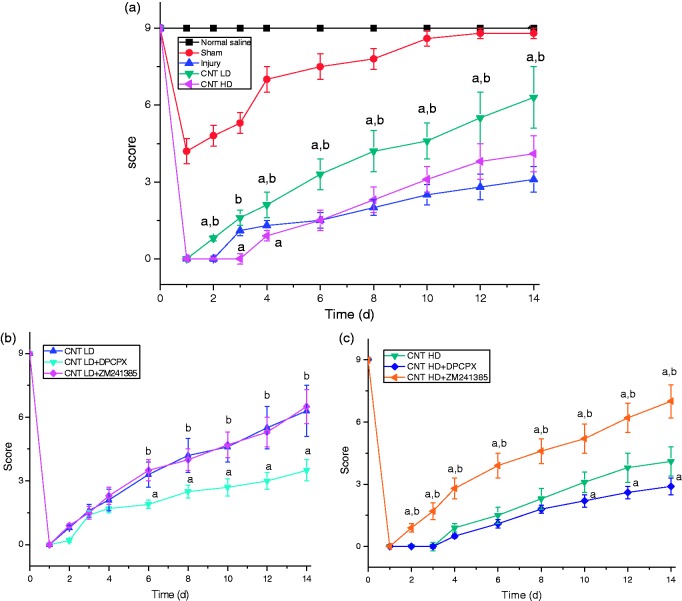
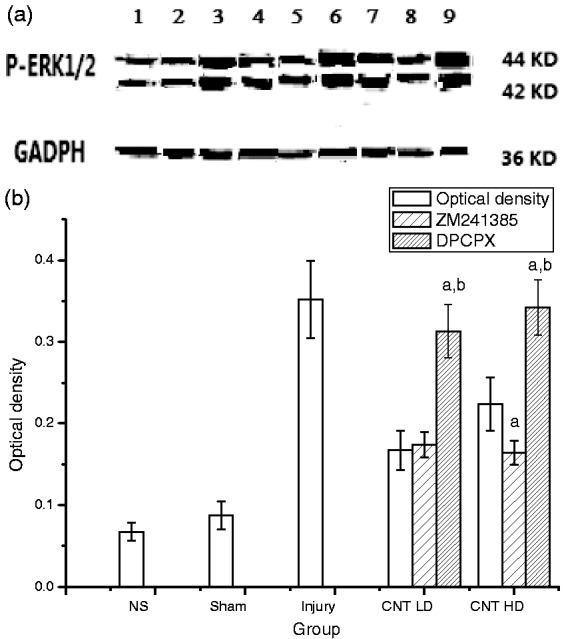
Cobra neurotoxin, a short-chain peptide isolated from snake venom of Naja naja atra, showed both a central analgesic effect and a hyperalgesic effect in mice tests. In order to explore mechanisms, a hypothesis is put forward that cobra neurotoxin takes effect through adenosine receptor pathway. The central effects of cobra neurotoxin were evaluated using the hot plate test (a model of acute pain) and the spinal cord injury (a model of central pain) in mice and using A receptor antagonist (DPCPX) and A receptor antagonist (ZM241385); behaviors were scored and signal molecules such as reactive oxygen species and adenosine triphosphate levels and mitogen-activated protein kinases/extracellular signal-regulated protein kinase expression were measured. Low dose of cobra neurotoxin (25 µg/kg) had analgesic effects which were inhibited by DPCPX, while high dose of cobra neurotoxin (100 µg/kg) had hyperalgesic effects which were blocked by ZM241385. Cobra neurotoxin reduced reactive oxygen species and increased adenosine triphosphate in brain tissues, and extracellular signal-regulated protein kinase expression was markedly inhibited by cobra neurotoxin. Cobra neurotoxin may take effect through mitogen-activated protein kinases/extracellular signal-regulated protein kinase pathway inhibition by activating adenosine ARs and cause changes of reactive oxygen species and adenosine triphosphate through feedback mechanisms. Overdose cobra neurotoxin further activates the adenosine ARs to generate pain sensitization. This research proposes a new central analgesic mechanism of cobra neurotoxin and discloses dual regulation of pain.
眼镜蛇神经毒素是从中华眼镜蛇蛇毒中分离出的一种短链肽,在小鼠实验中显示出中枢镇痛作用和痛觉过敏作用。为了探究其作用机制,提出了一种假设,即眼镜蛇神经毒素通过腺苷受体途径发挥作用。使用热板试验(急性疼痛模型)和小鼠脊髓损伤模型(中枢性疼痛模型),并使用A受体拮抗剂(DPCPX)和A受体拮抗剂(ZM241385)来评估眼镜蛇神经毒素的中枢作用;对行为进行评分,并测量活性氧和三磷酸腺苷水平以及丝裂原活化蛋白激酶/细胞外信号调节蛋白激酶表达等信号分子。低剂量的眼镜蛇神经毒素(25μg/kg)具有镇痛作用,可被DPCPX抑制,而高剂量的眼镜蛇神经毒素(100μg/kg)具有痛觉过敏作用,可被ZM241385阻断。眼镜蛇神经毒素可降低脑组织中的活性氧并增加三磷酸腺苷,并且细胞外信号调节蛋白激酶的表达受到眼镜蛇神经毒素的显著抑制。眼镜蛇神经毒素可能通过激活腺苷ARs抑制丝裂原活化蛋白激酶/细胞外信号调节蛋白激酶途径发挥作用,并通过反馈机制引起活性氧和三磷酸腺苷的变化。过量的眼镜蛇神经毒素会进一步激活腺苷ARs以产生疼痛敏化。本研究提出了眼镜蛇神经毒素一种新的中枢镇痛机制,并揭示了疼痛的双重调节。