Angelova Angelina, Angelov Borislav
Institut Galien Paris-Sud, CNRS UMR 8612, University of Paris-Sud, Université Paris-Saclay, LabEx LERMIT, Châtenay-Malabry cedex, France.
Institute of Physics, ELI Beamlines, Academy of Sciences of the Czech Republic, Prague, Czech Republic.
Neural Regen Res. 2017 Jun;12(6):886-889. doi: 10.4103/1673-5374.208546.
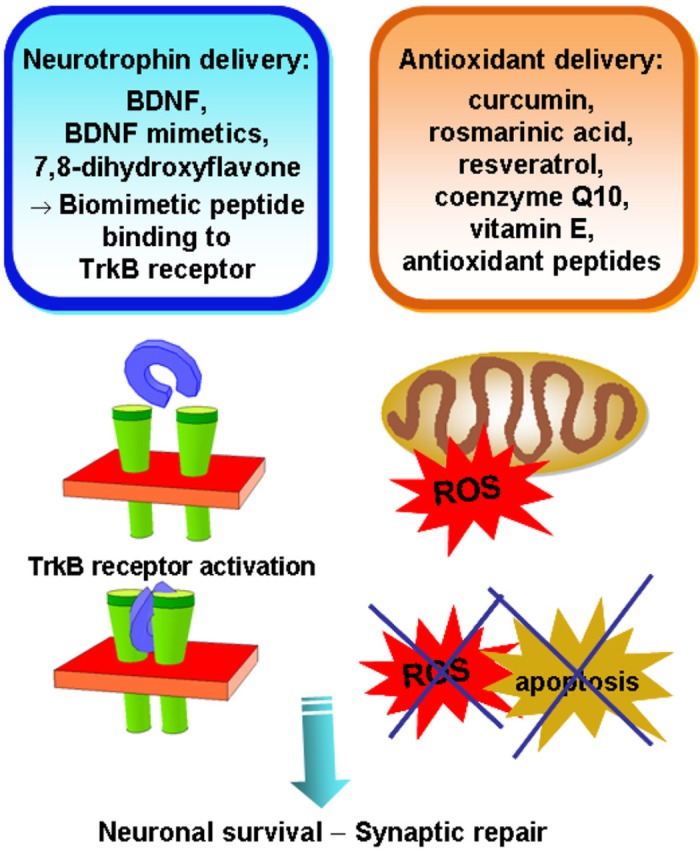
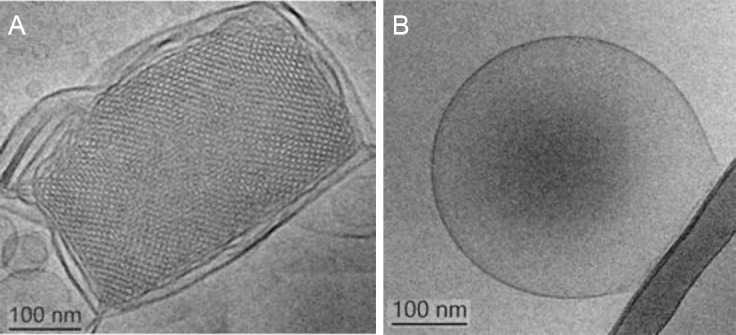
Among the macromolecular drug targets in neurodegenerative disorders, the neurotrophin brain-derived neurotrophic factor (BDNF) and its high-affinity tropomyosin-related kinase receptor (TrkB) present strong interest for nanomedicine development aiming at neuronal and synaptic repair. Currently, BDNF is regarded as the neurotrophic factor of highest therapeutic significance. However, BDNF has delivery problems as a protein drug. The enhanced activation of the transcription factor CREB (cAMP response element-binding protein) has been evidenced to increase the BDNF gene expression and hence the production of endogenous BDNF. We assume that BDNF delivery by nanocarriers and mitochondrial protection may provide high potential for therapeutic amelioration of the neuroregenerative strategies. Beneficial therapeutic outcomes may be expected for synergistic dual or multi-drug action aiming at (i) neurotrophic protein regulation in the central and peripheral nervous systems, and (ii) diminishment of the production of reactive oxygen species (ROS) and the oxidative damage in mitochondria. Our research strategy is based on a nanoarchitectonics approach for the design of nanomedicine assemblies by hierarchical self-assembly. We explore nanoarchitectonics concepts in soft-matter nanotechnology towards preparation of biodegradable self-assembled lipid nanostructures for safe neuro-therapeutic applications of multi-target nanomedicines.
在神经退行性疾病的大分子药物靶点中,神经营养因子脑源性神经营养因子(BDNF)及其高亲和力原肌球蛋白相关激酶受体(TrkB)对旨在神经元和突触修复的纳米医学发展具有浓厚的研究兴趣。目前,BDNF被认为是具有最高治疗意义的神经营养因子。然而,BDNF作为一种蛋白质药物存在递送问题。已有证据表明,转录因子CREB(cAMP反应元件结合蛋白)的增强激活可增加BDNF基因表达,从而增加内源性BDNF的产生。我们认为,通过纳米载体递送BDNF和保护线粒体可能为神经再生策略的治疗改善提供巨大潜力。针对(i)中枢和外周神经系统中的神经营养蛋白调节以及(ii)减少活性氧(ROS)的产生和线粒体中的氧化损伤的协同双药或多药作用,有望产生有益的治疗效果。我们的研究策略基于一种纳米建筑学方法,通过分级自组装来设计纳米医学组件。我们探索软物质纳米技术中的纳米建筑学概念,以制备用于多靶点纳米医学安全神经治疗应用的可生物降解自组装脂质纳米结构。