Collins Patrick B, Earnest Conrad P, Dalton Ryan L, Sowinski Ryan J, Grubic Tyler J, Favot Christopher J, Coletta Adriana M, Rasmussen Christopher, Greenwood Mike, Kreider Richard B
Exercise and Sport Nutrition Lab, Human Clinical Research Facility, Texas A&M University, College Station, TX 77843, USA.
Nutrabolt, Bryan, 3891 S. Traditions Drive, Bryan, TX 77807, USA.
Nutrients. 2017 Aug 1;9(8):823. doi: 10.3390/nu9080823.
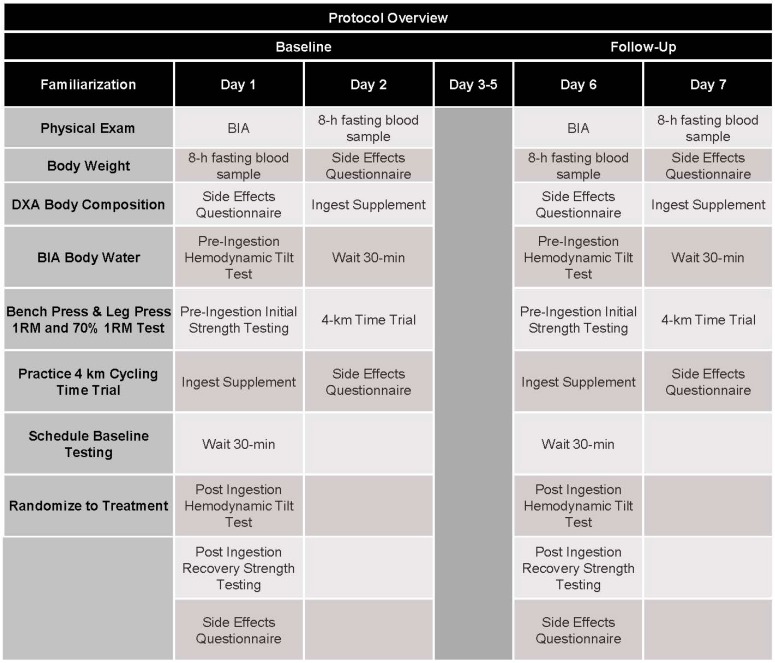
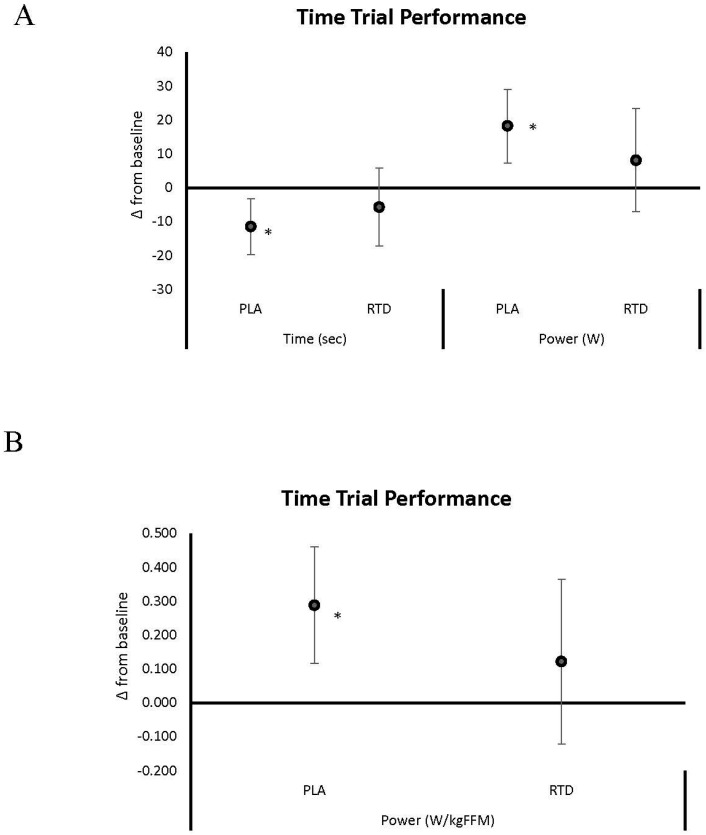
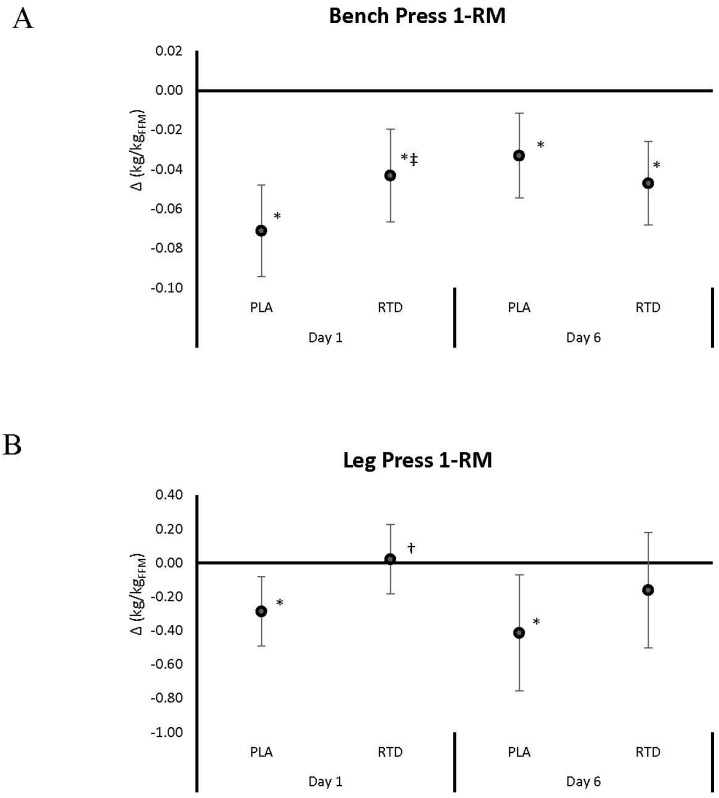
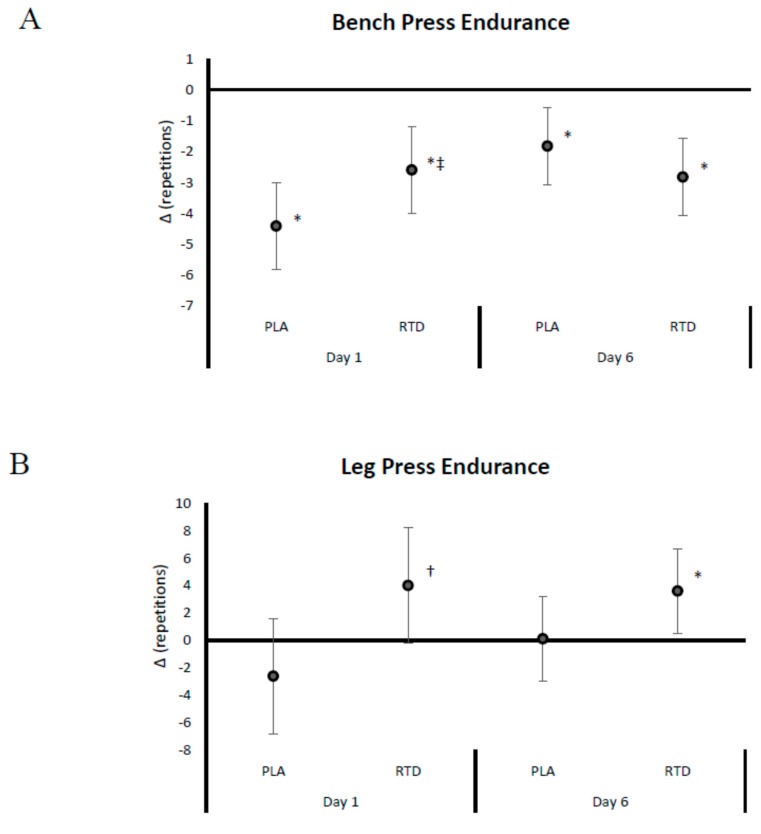
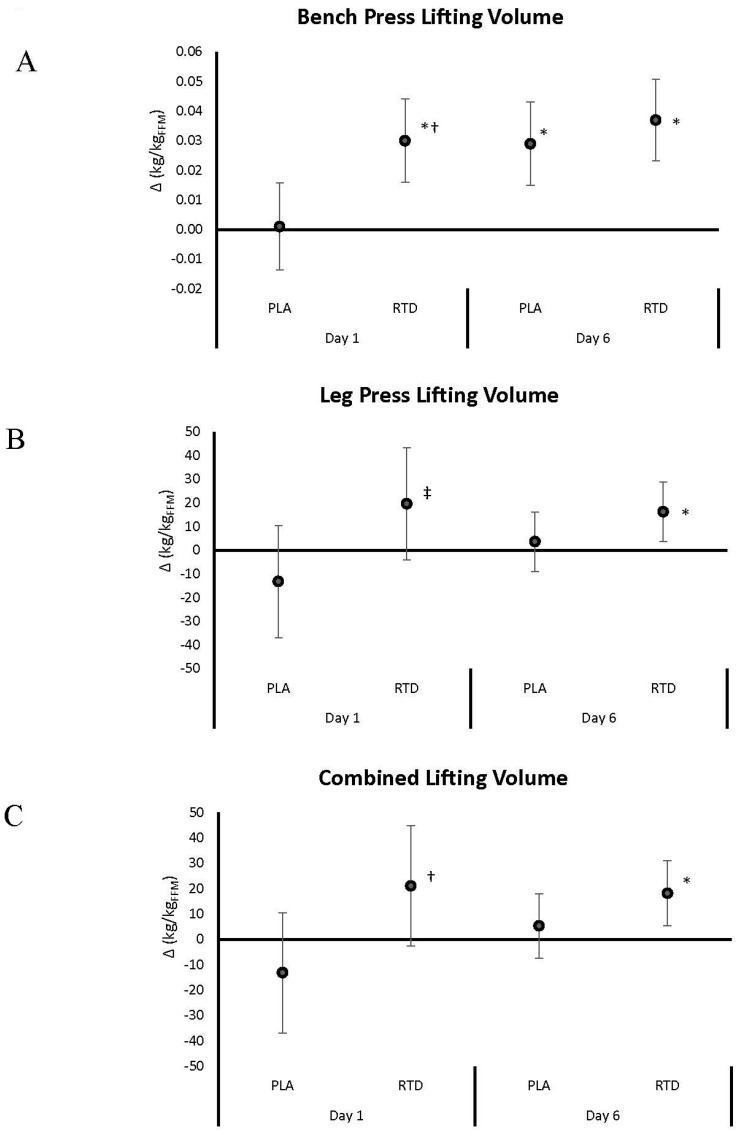
In a double-blind, randomized and crossover manner, 25 resistance-trained participants ingested a placebo (PLA) beverage containing 12 g of dextrose and a beverage (RTD) containing caffeine (200 mg), β-alanine (2.1 g), arginine nitrate (1.3 g), niacin (65 mg), folic acid (325 mcg), and Vitamin B12 (45 mcg) for 7-days, separated by a 7-10-day. On day 1 and 6, participants donated a fasting blood sample and completed a side-effects questionnaire (SEQ), hemodynamic challenge test, 1-RM and muscular endurance tests (3 × 10 repetitions at 70% of 1-RM with the last set to failure on the bench press (BP) and leg press (LP)) followed by ingesting the assigned beverage. After 15 min, participants repeated the hemodynamic test, 1-RM tests, and performed a repetition to fatigue (RtF) test at 70% of 1-RM, followed by completing the SEQ. On day 2 and 7, participants donated a fasting blood sample, completed the SEQ, ingested the assigned beverage, rested 30 min, and performed a 4 km cycling time-trial (TT). Data were analyzed by univariate, multivariate, and repeated measures general linear models (GLM), adjusted for gender and relative caffeine intake. Data are presented as mean change (95% CI). An overall multivariate time × treatment interaction was observed on strength performance variables ( = 0.01). Acute RTD ingestion better maintained LP 1-RM (PLA: -0.285 (-0.49, -0.08); RTD: 0.23 (-0.50, 0.18) kg/kg, = 0.30); increased LP RtF (PLA: -2.60 (-6.8, 1.6); RTD: 4.00 (-0.2, 8.2) repetitions, = 0.031); increased BP lifting volume (PLA: 0.001 (-0.13, 0.16); RTD: 0.03 (0.02, 0.04) kg/kg, = 0.007); and, increased total lifting volume (PLA: -13.12 (-36.9, 10.5); RTD: 21.06 (-2.7, 44.8) kg/kg, = 0.046). Short-term RTD ingestion maintained baseline LP 1-RM (PLA: -0.412 (-0.08, -0.07); RTD: 0.16 (-0.50, 0.18) kg/kg, = 0.30); LP RtF (PLA: 0.12 (-3.0, 3.2); RTD: 3.6 (0.5, 6.7) repetitions, = 0.116); and, LP lifting volume (PLA: 3.64 (-8.8, 16.1); RTD: 16.25 (3.8, 28.7) kg/kg, = 0.157) to a greater degree than PLA. No significant differences were observed between treatments in cycling TT performance, hemodynamic assessment, fasting blood panels, or self-reported side effects.
25名进行抗阻训练的参与者以双盲、随机和交叉的方式,连续7天摄入一种含有12克葡萄糖的安慰剂(PLA)饮料和一种含有咖啡因(200毫克)、β-丙氨酸(2.1克)、硝酸精氨酸(1.3克)、烟酸(65毫克)、叶酸(325微克)和维生素B12(45微克)的饮料(RTD),两次摄入之间间隔7至10天。在第1天和第6天,参与者捐献空腹血样并完成一份副作用问卷(SEQ)、血流动力学挑战测试、1次最大重复量(1-RM)测试和肌肉耐力测试(在卧推(BP)和腿举(LP)中以1-RM的70%进行3组,每组10次重复,最后一组至力竭),然后摄入指定饮料。15分钟后,参与者重复血流动力学测试、1-RM测试,并以1-RM的70%进行重复至疲劳(RtF)测试,随后完成SEQ。在第2天和第7天,参与者捐献空腹血样,完成SEQ,摄入指定饮料,休息30分钟,然后进行4公里自行车计时赛(TT)。数据通过单变量、多变量和重复测量通用线性模型(GLM)进行分析,并根据性别和相对咖啡因摄入量进行调整。数据以平均变化(95%置信区间)表示。在力量表现变量上观察到总体多变量时间×处理交互作用(P = 0.01)。急性摄入RTD能更好地维持LP的1-RM(PLA:-0.285(-0.49,-0.08);RTD:0.23(-0.50,0.18)千克/千克,P = 0.30);增加LP的RtF(PLA:-2.60(-6.8,1.6);RTD:4.00(-0.2,8.2)次重复,P = 0.031);增加BP的举起重量(PLA:0.001(-0.13,0.16);RTD:0.03(0.02,0.04)千克/千克,P = 0.007);并且,增加总举起重量(PLA:-13.12(-36.9,10.5);RTD:21.06(-2.7,44.8)千克/千克,P = 0.046)。短期摄入RTD能维持基线LP的1-RM(PLA:-0.412(-0.08,-0.07);RTD:0.16(-0.50,0.18)千克/千克,P = 0.30);LP的RtF(PLA:0.12(-3.0,3.2);RTD:3.6(0.5,6.7)次重复,P = 0.116);以及,LP的举起重量(PLA:3.64(-8.8,16.1);RTD:16.25(3.8,28.7)千克/千克,P = 0.157),且维持程度高于PLA。在自行车TT表现、血流动力学评估、空腹血检或自我报告的副作用方面,各处理之间未观察到显著差异。