Vohra Mihir, Lemieux George A, Lin Lin, Ashrafi Kaveh
Department of Physiology, University of California San Francisco, San Francisco, California, United States of America.
PLoS Biol. 2017 Aug 1;15(8):e2002032. doi: 10.1371/journal.pbio.2002032. eCollection 2017 Aug.
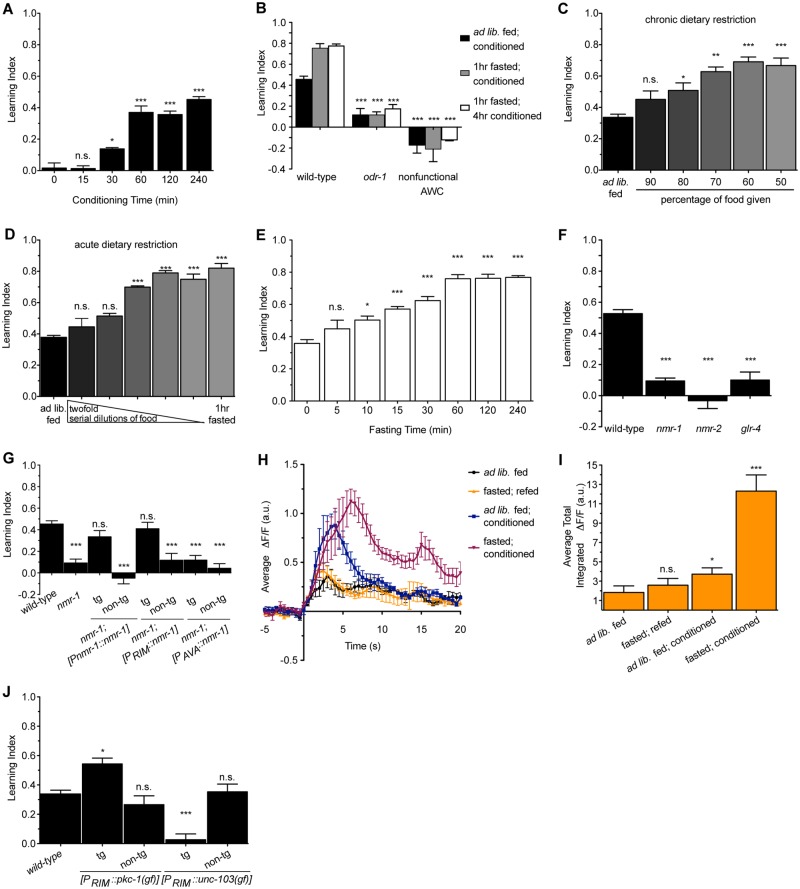
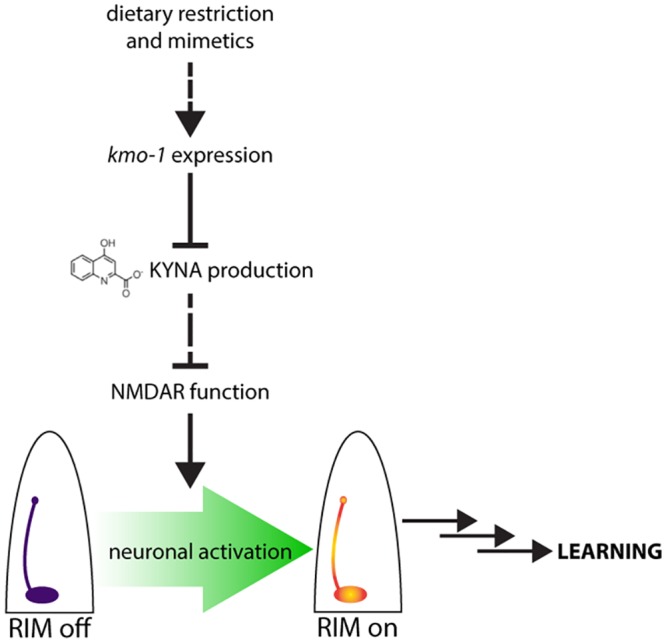
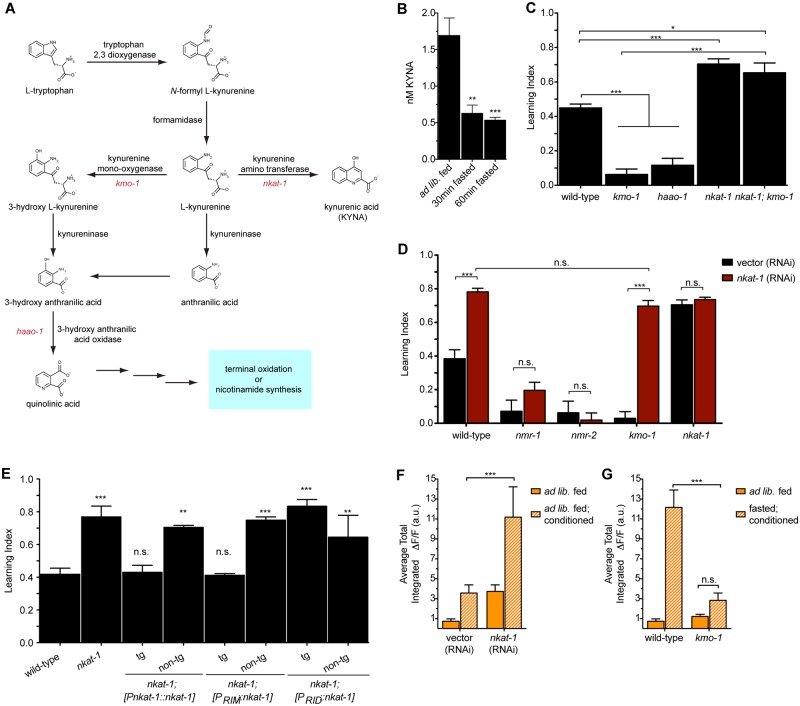
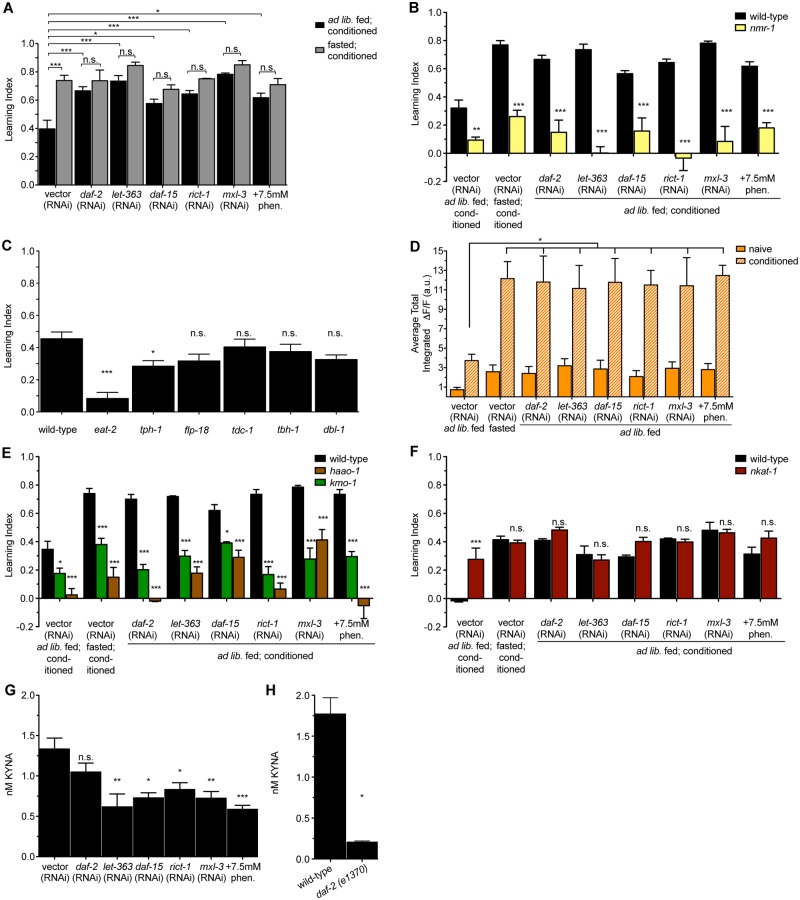
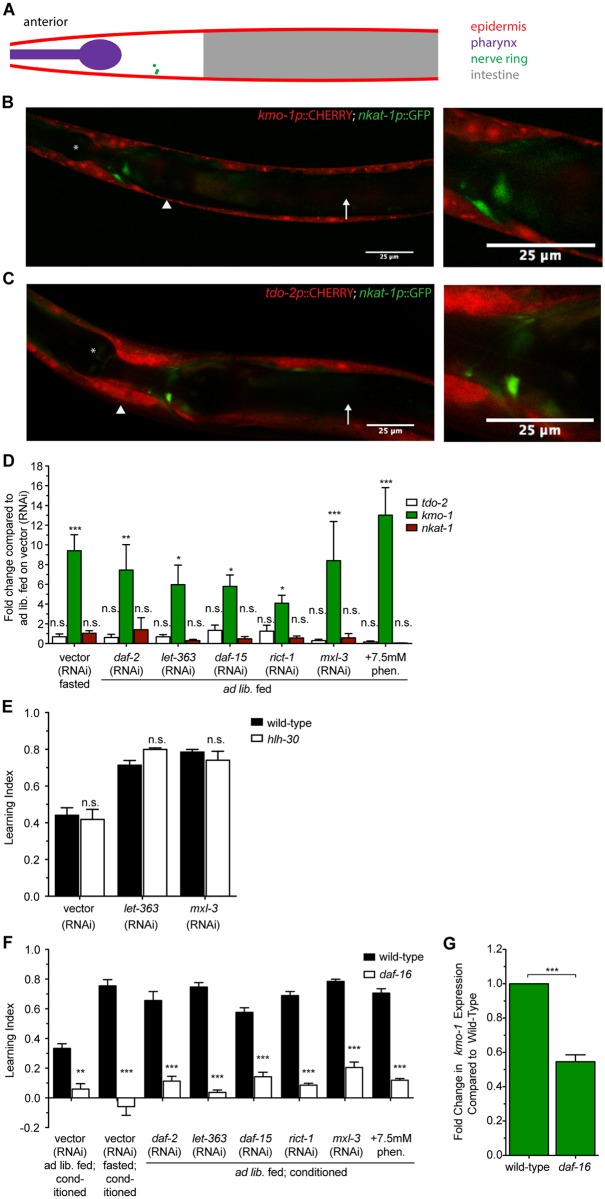
In species ranging from humans to Caenorhabditis elegans, dietary restriction (DR) grants numerous benefits, including enhanced learning. The precise mechanisms by which DR engenders benefits on processes related to learning remain poorly understood. As a result, it is unclear whether the learning benefits of DR are due to myriad improvements in mechanisms that collectively confer improved cellular health and extension of organismal lifespan or due to specific neural mechanisms. Using an associative learning paradigm in C. elegans, we investigated the effects of DR as well as manipulations of insulin, mechanistic target of rapamycin (mTOR), AMP-activated protein kinase (AMPK), and autophagy pathways-processes implicated in longevity-on learning. Despite their effects on a vast number of molecular effectors, we found that the beneficial effects on learning elicited by each of these manipulations are fully dependent on depletion of kynurenic acid (KYNA), a neuroinhibitory metabolite. KYNA depletion then leads, in an N-methyl D-aspartate receptor (NMDAR)-dependent manner, to activation of a specific pair of interneurons with a critical role in learning. Thus, fluctuations in KYNA levels emerge as a previously unidentified molecular mechanism linking longevity and metabolic pathways to neural mechanisms of learning. Importantly, KYNA levels did not alter lifespan in any of the conditions tested. As such, the beneficial effects of DR on learning can be attributed to changes in a nutritionally sensitive metabolite with neuromodulatory activity rather than indirect or secondary consequences of improved health and extended longevity.
从人类到秀丽隐杆线虫等物种中,饮食限制(DR)都能带来诸多益处,包括增强学习能力。然而,饮食限制对学习相关过程产生有益影响的确切机制仍知之甚少。因此,饮食限制对学习的有益影响是由于多种机制的改善共同赋予了细胞健康的提升和生物体寿命的延长,还是由于特定的神经机制,目前尚不清楚。我们利用秀丽隐杆线虫的联想学习范式,研究了饮食限制以及胰岛素、雷帕霉素靶蛋白(mTOR)、AMP激活蛋白激酶(AMPK)和自噬途径(这些过程与长寿有关)的调控对学习的影响。尽管这些调控对大量分子效应器有影响,但我们发现,这些调控对学习产生的有益影响完全依赖于犬尿烯酸(KYNA)的消耗,犬尿烯酸是一种神经抑制性代谢物。然后,犬尿烯酸的消耗以N-甲基-D-天冬氨酸受体(NMDAR)依赖的方式,导致一对在学习中起关键作用的中间神经元被激活。因此,犬尿烯酸水平的波动成为一种以前未被识别的分子机制,将长寿和代谢途径与学习的神经机制联系起来。重要的是,在任何测试条件下,犬尿烯酸水平都不会改变寿命。因此,饮食限制对学习的有益影响可归因于具有神经调节活性的营养敏感代谢物的变化,而不是健康改善和寿命延长的间接或次要后果。