Ni Guoxin, Konno Hiroyasu, Barber Glen N
Department of Cell Biology, University of Miami Miller School of Medicine, Miami, FL 33136, USA.
Sci Immunol. 2017 May 5;2(11). doi: 10.1126/sciimmunol.aah7119.
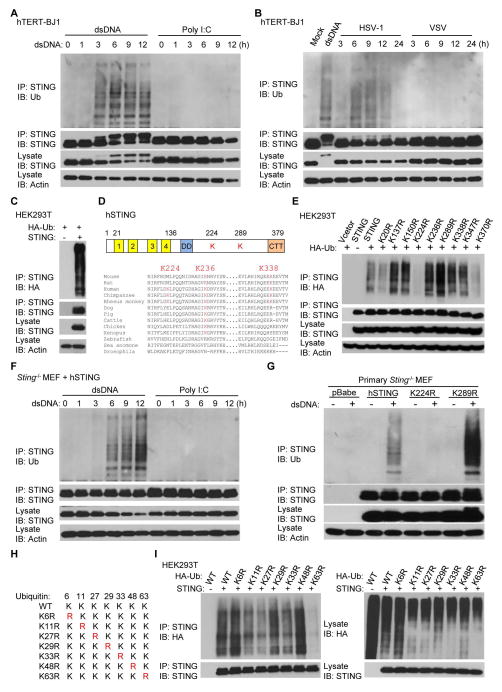
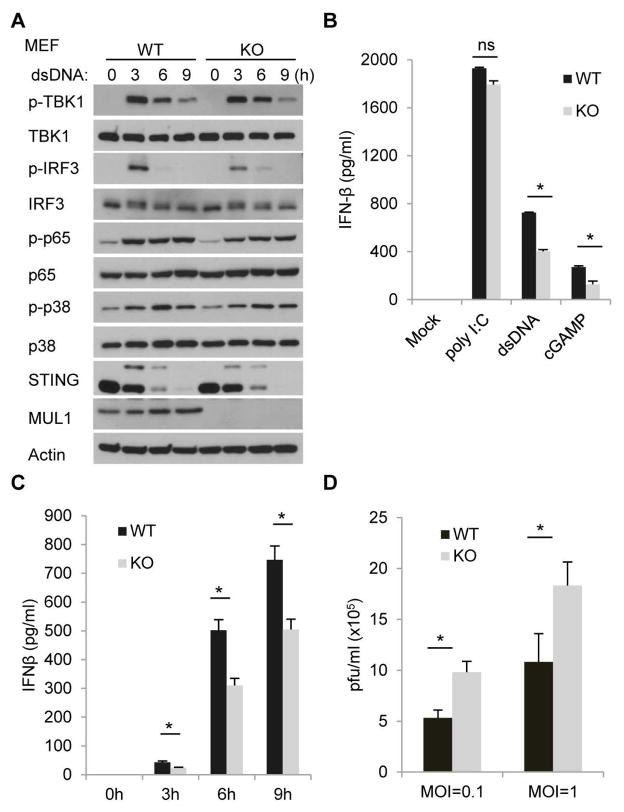
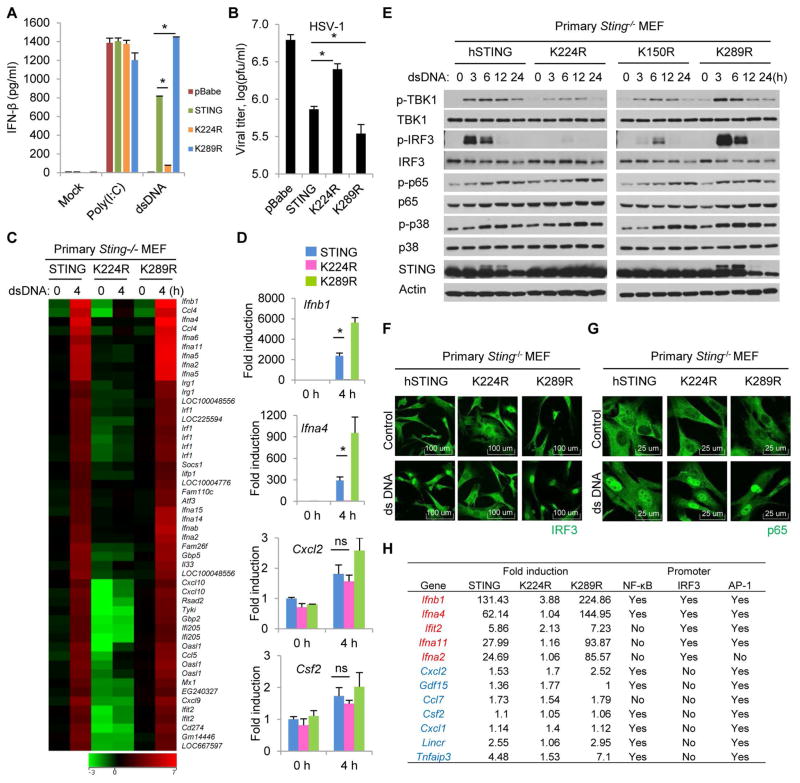
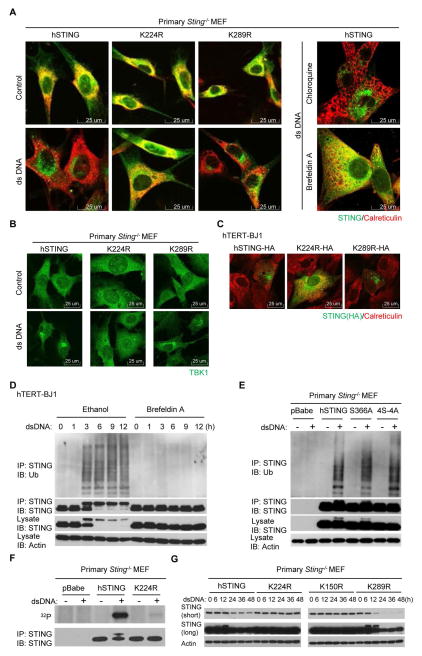
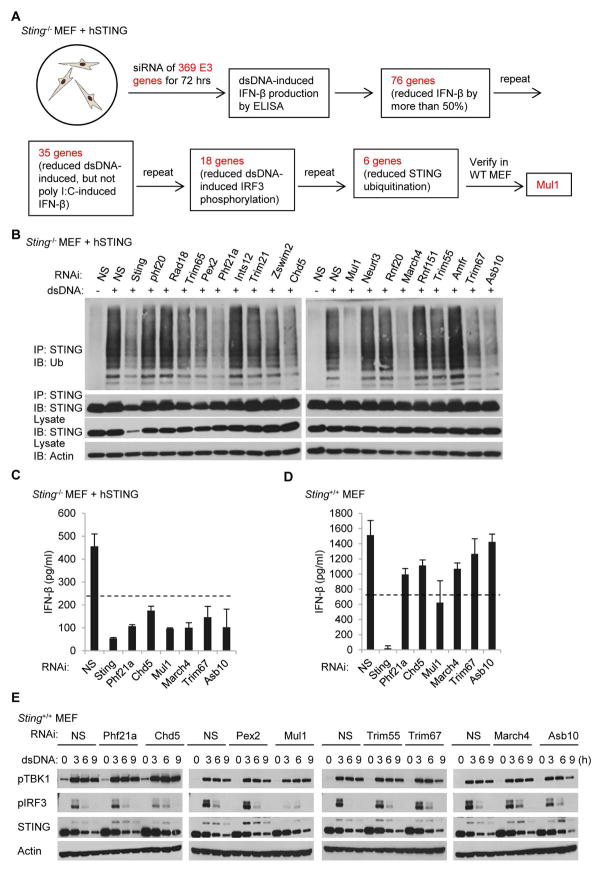
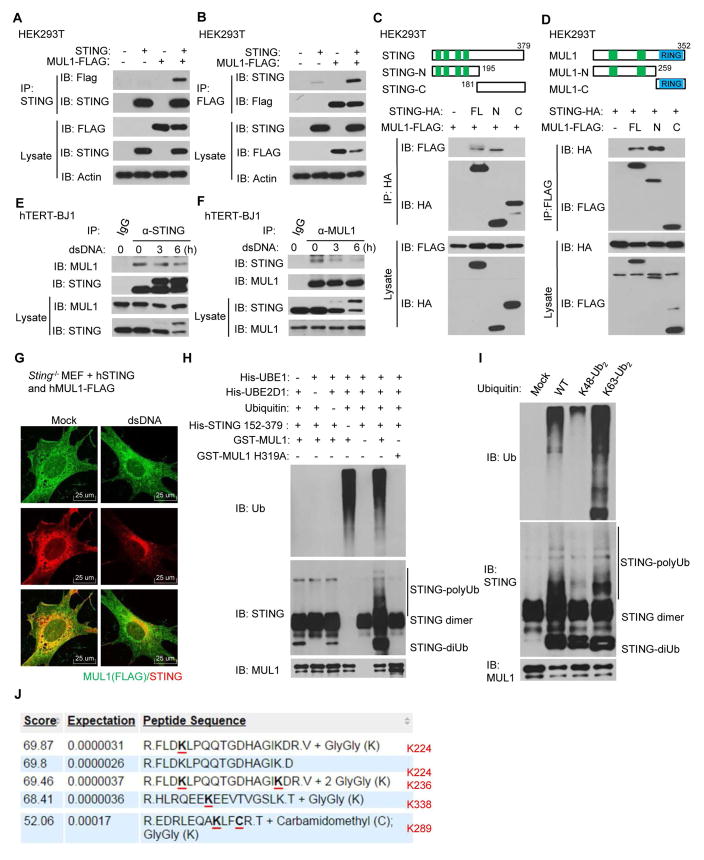
Cytosolic DNA species derived from invading microbes or leaked from the nuclear or mitochondrial compartments of the cell can trigger the induction of host defense genes by activating the endoplasmic reticulum-associated protein STING (stimulator of interferon genes). Using a mass spectrometry-based approach, we show that after association with cyclic dinucleotides, delivery of Tank-binding kinase 1 to interferon regulatory factors (IRFs), such as IRF3, relies on K63-linked ubiquitination of K224 on STING. Blocking K224 ubiquitination specifically prevented IRF3 but not nuclear factor κB activation, additionally indicating that STING trafficking is not required to stimulate the latter signaling pathway. By carrying out a limited small interfering RNA screen, we have identified MUL1 (mitochondrial E3 ubiquitin protein ligase 1) as an E3 ligase that catalyzes the ubiquitination of STING on K224. These data demonstrate the critical role of K224 ubiquitination in STING function and provide molecular insight into the mechanisms governing host defense responses.
源自入侵微生物或从细胞核或线粒体区室泄漏的胞质DNA种类,可通过激活内质网相关蛋白STING(干扰素基因刺激因子)来触发宿主防御基因的诱导。我们使用基于质谱的方法表明,与环二核苷酸结合后,Tank结合激酶1向干扰素调节因子(如IRF3)的传递依赖于STING上K224的K63连接泛素化。阻断K224泛素化可特异性阻止IRF3激活,但不影响核因子κB的激活,这还表明刺激后一种信号通路不需要STING转运。通过进行有限的小干扰RNA筛选,我们鉴定出MUL1(线粒体E3泛素蛋白连接酶1)作为催化STING上K224泛素化的E3连接酶。这些数据证明了K224泛素化在STING功能中的关键作用,并为控制宿主防御反应的机制提供了分子层面的见解。