Center for Craniofacial Research, Department of Diagnostic and Biomedical Sciences, School of Dentistry, University of Texas Health Science Center at Houston, TX, 77054, USA.
Department of Pediatrics, Medical School, University of Texas Health Science Center at Houston, TX, 77030, USA.
Sci Rep. 2017 Aug 2;7(1):7129. doi: 10.1038/s41598-017-06310-z.
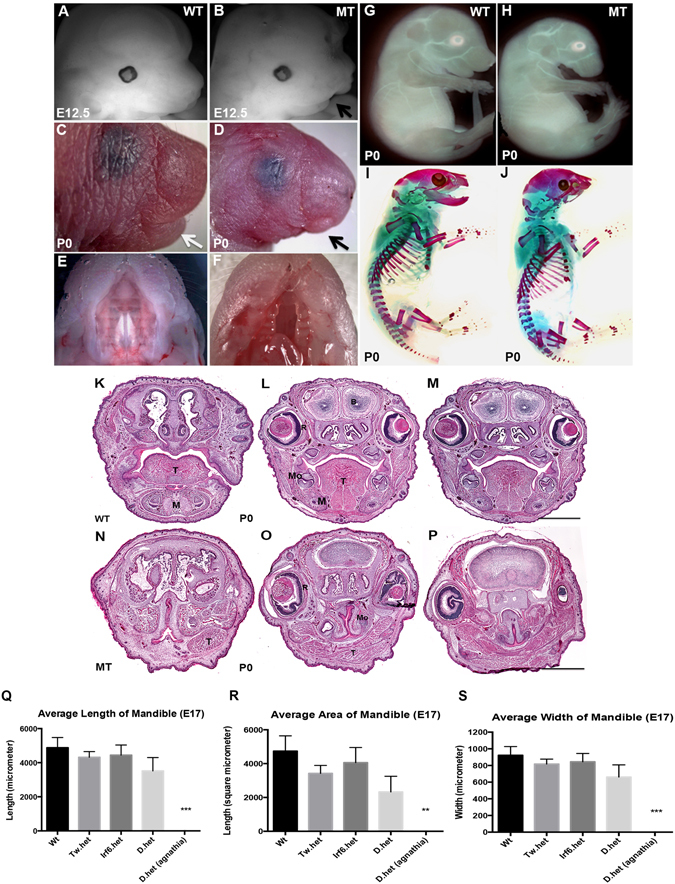
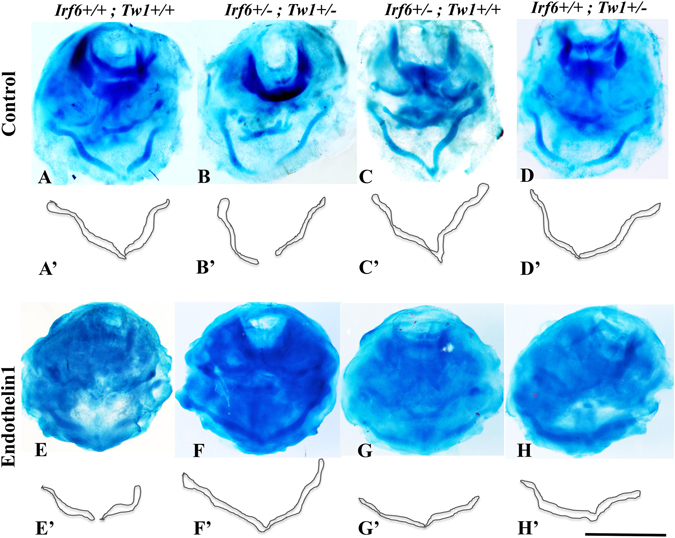
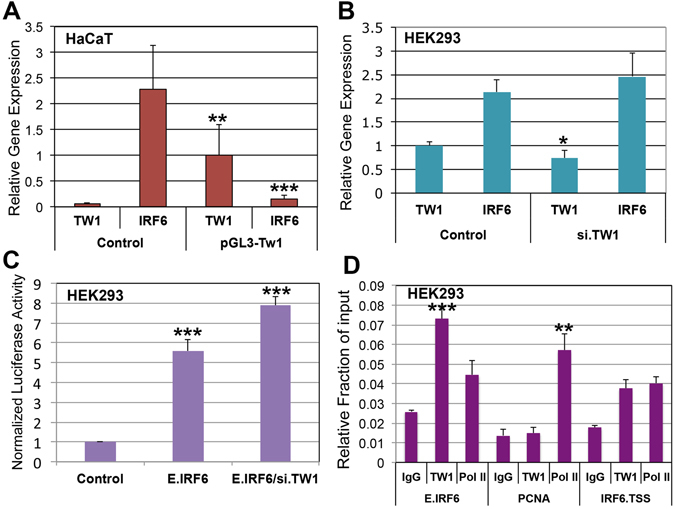
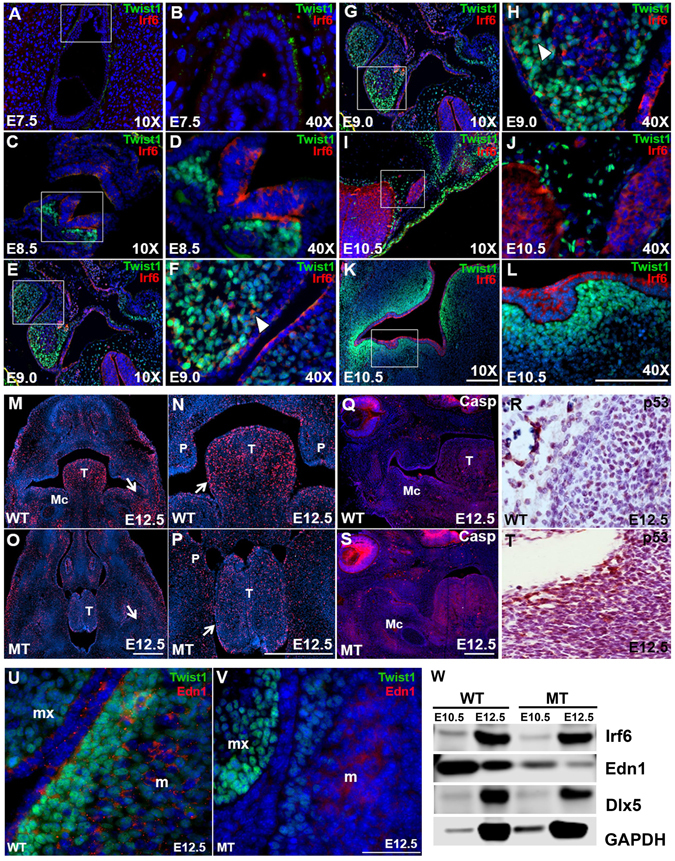
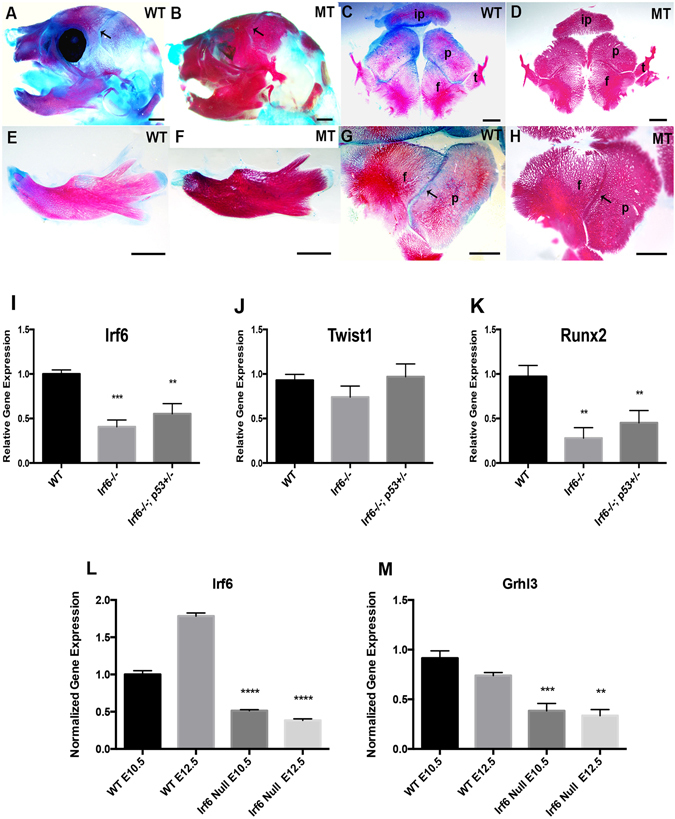
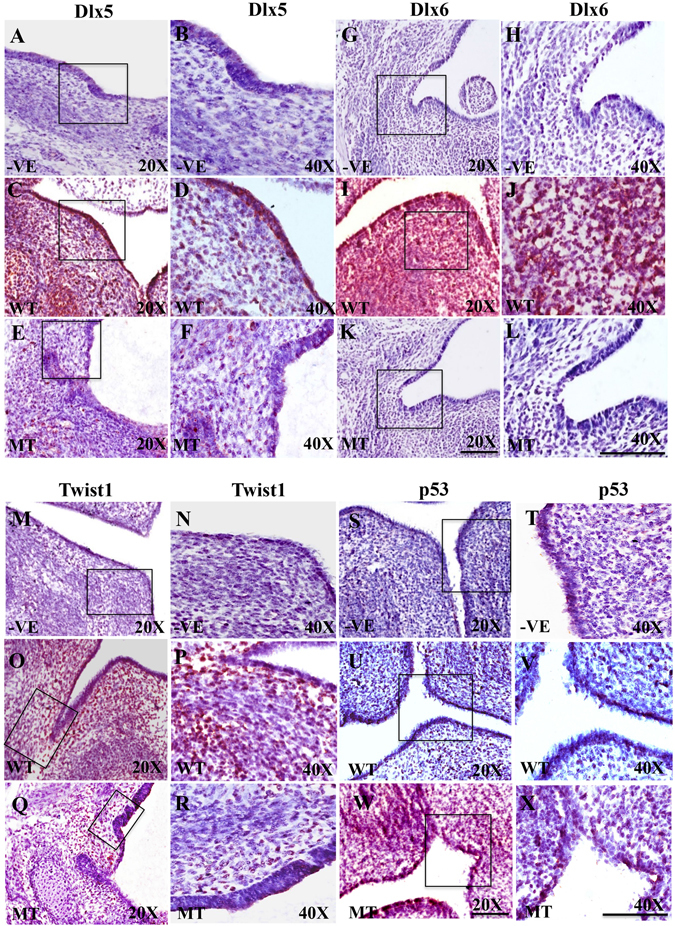
Interferon Regulatory Factor 6 (IRF6) and TWIST1 are transcription factors necessary for craniofacial development. Human genetic studies showed that mutations in IRF6 lead to cleft lip and palate and mandibular abnormalities. In the mouse, we found that loss of Irf6 causes craniosynostosis and mandibular hypoplasia. Similarly, mutations in TWIST1 cause craniosynostosis, mandibular hypoplasia and cleft palate. Based on this phenotypic overlap, we asked if Irf6 and Twist1 interact genetically during craniofacial formation. While single heterozygous mice are normal, double heterozygous embryos (Irf6 ; Twist1 ) can have severe mandibular hypoplasia that leads to agnathia and cleft palate at birth. Analysis of spatiotemporal expression showed that Irf6 and Twist1 are found in different cell types. Consistent with the intercellular interaction, we found reduced expression of Endothelin1 (EDN1) in mandible and transcription factors that are critical for mandibular patterning including DLX5, DLX6 and HAND2, were also reduced in mesenchymal cells. Treatment of mandibular explants with exogenous EDN1 peptides partially rescued abnormalities in Meckel's cartilage. In addition, partial rescue was observed when double heterozygous embryos also carried a null allele of p53. Considering that variants in IRF6 and TWIST1 contribute to human craniofacial defects, this gene-gene interaction may have implications on craniofacial disorders.
干扰素调节因子 6(IRF6)和 TWIST1 是颅面发育所必需的转录因子。人类遗传学研究表明,IRF6 突变导致唇裂和腭裂以及下颌骨异常。在小鼠中,我们发现 Irf6 的缺失会导致颅缝早闭和下颌骨发育不良。同样,TWIST1 突变会导致颅缝早闭、下颌骨发育不良和腭裂。基于这种表型重叠,我们询问 Irf6 和 Twist1 是否在颅面形成过程中存在遗传相互作用。虽然单个杂合子小鼠是正常的,但双杂合子胚胎(Irf6 ;Twist1 )可能会出现严重的下颌骨发育不良,导致出生时无颌畸形和腭裂。时空表达分析表明,Irf6 和 Twist1 存在于不同的细胞类型中。与细胞间相互作用一致,我们发现下颌骨中内皮素 1(EDN1)的表达减少,而对于下颌骨模式形成至关重要的转录因子,包括 DLX5、DLX6 和 HAND2,在间充质细胞中也减少。用外源性 EDN1 肽处理下颌骨外植体部分挽救了 Meckel 软骨的异常。此外,当双杂合子胚胎还携带 p53 缺失等位基因时,也观察到部分挽救。鉴于 IRF6 和 TWIST1 的变体导致人类颅面缺陷,这种基因-基因相互作用可能对颅面疾病有影响。