Lee Bob Shih-Liang, Devor Daniel C, Hamilton Kirk L
Department of Physiology, School of Biomedical Sciences, University of OtagoDunedin, New Zealand.
Department of Cell Biology, University of Pittsburgh School of MedicinePittsburgh, PA, United States.
Front Physiol. 2017 Jul 18;8:489. doi: 10.3389/fphys.2017.00489. eCollection 2017.
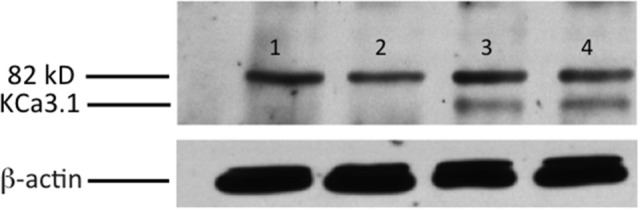
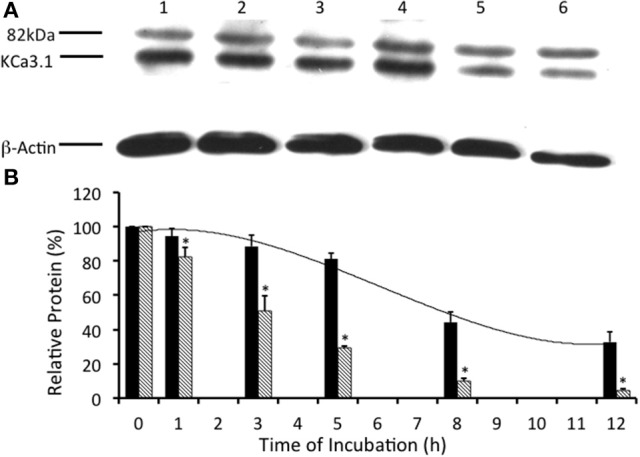
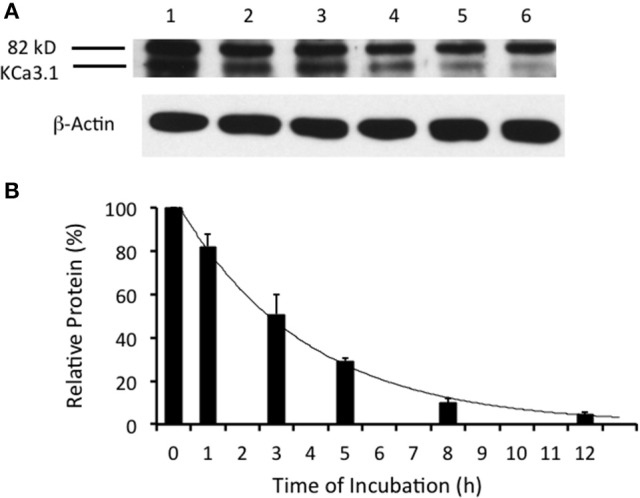
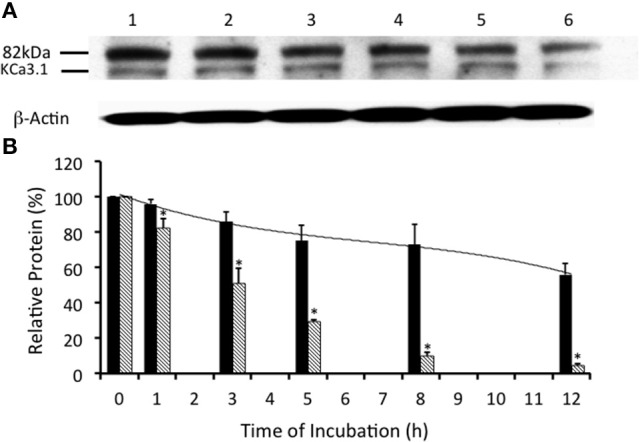
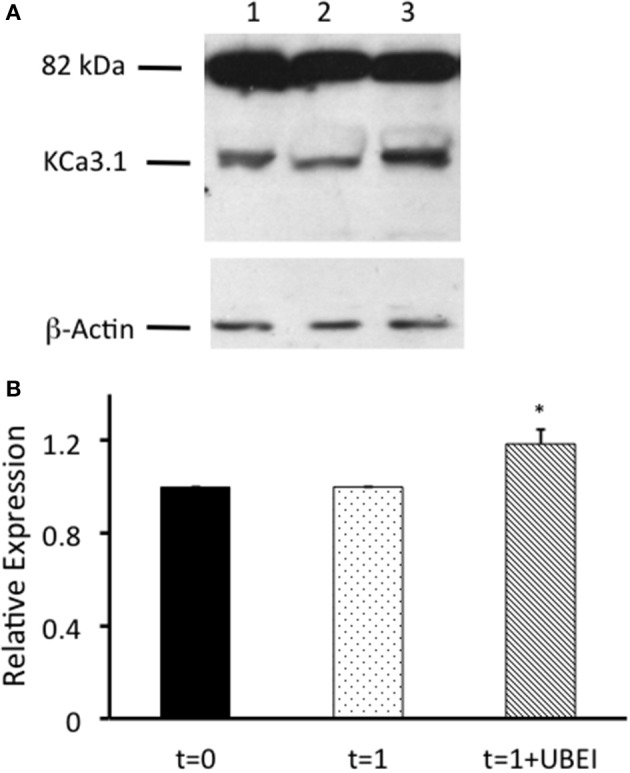
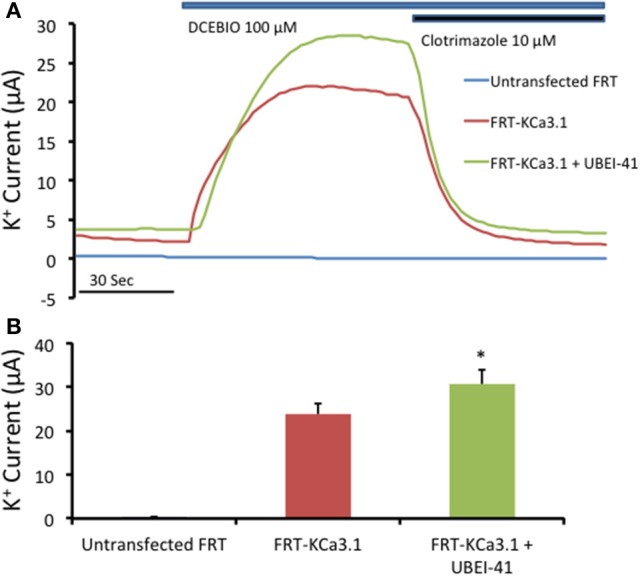
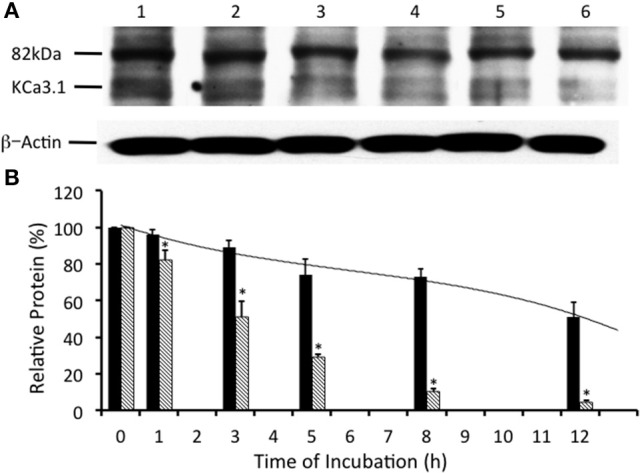
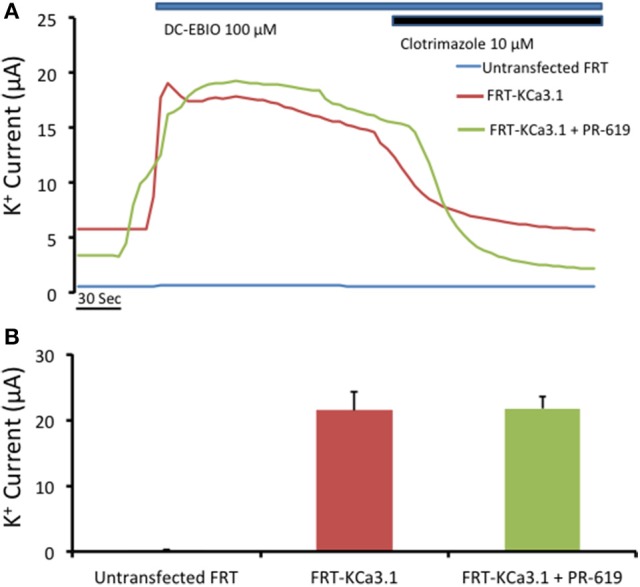
In epithelia, the intermediate conductance, Ca-activated K channel (KCa3.1) is targeted to the basolateral membrane (BLM) where this channel plays numerous roles in absorption and secretion. A growing body of research suggests that the membrane resident population of KCa3.1 may be critical in clinical manifestation of diseases. In this study, we investigated the key molecular components that regulate the degradation of KCa3.1 using a Fisher rat thyroid cell line stably expressing KCa3.1. Using immunoblot, Ussing chamber, and pharmacological approaches, we demonstrated that KCa3.1 is targeted exclusively to the BLM, provided a complete time course of degradation of KCa3.1 and degradation time courses of the channel in the presence of pharmacological inhibitors of ubiquitylation and deubiquitylation to advance our understanding of the retrograde trafficking of KCa3.1. We provide a complete degradation profile of KCa3.1 and that the degradation is via an ubiquitin-dependent pathway. Inhibition of E1 ubiquitin activating enzyme by UBEI-41 crippled the ability of the cells to internalize the channel, shown by the increased BLM surface expression resulting in an increased function of the channel as measured by a DCEBIO sensitive K current. Additionally, the involvement of deubiquitylases and degradation by the lysosome were also confirmed by treating the cells with PR-619 or leupeptin/pepstatin, respectively; which significantly decreased the degradation rate of membrane KCa3.1. Additionally, we provided the first evidence that KCa3.1 channels were not deubiquitylated at the BLM. These data further define the retrograde trafficking of KCa3.1, and may provide an avenue for therapeutic approach for treatment of disease.
在上皮细胞中,中间电导的钙激活钾通道(KCa3.1)定位于基底外侧膜(BLM),该通道在吸收和分泌过程中发挥着多种作用。越来越多的研究表明,KCa3.1的膜驻留群体可能在疾病的临床表现中起关键作用。在本研究中,我们使用稳定表达KCa3.1的Fisher大鼠甲状腺细胞系,研究了调节KCa3.1降解的关键分子成分。通过免疫印迹、尤斯灌流小室和药理学方法,我们证明KCa3.1仅定位于BLM,给出了KCa3.1降解的完整时间进程以及在存在泛素化和去泛素化药理学抑制剂的情况下该通道的降解时间进程,以增进我们对KCa3.1逆行运输的理解。我们给出了KCa3.1的完整降解图谱,且降解是通过泛素依赖性途径进行的。UBE1-41对E1泛素激活酶的抑制削弱了细胞内化该通道的能力,表现为BLM表面表达增加,导致通过DCEBIO敏感钾电流测量的通道功能增强。此外,分别用PR-619或亮抑酶肽/胃蛋白酶抑制剂处理细胞,也证实了去泛素化酶的参与和溶酶体的降解作用;这显著降低了膜KCa3.1的降解速率。此外,我们首次提供证据表明KCa3.1通道在BLM处不会发生去泛素化。这些数据进一步明确了KCa3.1的逆行运输,可能为疾病治疗提供一种治疗途径。