Dobbs Kerry, Tabellini Giovanna, Calzoni Enrica, Patrizi Ornella, Martinez Paula, Giliani Silvia Clara, Moratto Daniele, Al-Herz Waleed, Cancrini Caterina, Cowan Morton, Bleesing Jacob, Booth Claire, Buchbinder David, Burns Siobhan O, Chatila Talal A, Chou Janet, Daza-Cajigal Vanessa, Ott de Bruin Lisa M, de la Morena MaiteTeresa, Di Matteo Gigliola, Finocchi Andrea, Geha Raif, Goyal Rakesh K, Hayward Anthony, Holland Steven, Huang Chiung-Hui, Kanariou Maria G, King Alejandra, Kaplan Blanka, Kleva Anastasiya, Kuijpers Taco W, Lee Bee Wah, Lougaris Vassilios, Massaad Michel, Meyts Isabelle, Morsheimer Megan, Neven Benedicte, Pai Sung-Yun, Parvaneh Nima, Plebani Alessandro, Prockop Susan, Reisli Ismail, Soh Jian Yi, Somech Raz, Torgerson Troy R, Kim Yae-Jaen, Walter Jolan E, Gennery Andrew R, Keles Sevgi, Manis John P, Marcenaro Emanuela, Moretta Alessandro, Parolini Silvia, Notarangelo Luigi D
Laboratory of Host Defenses, Division of Intramural Research, National Institute of Allergy and Infectious Diseases, National Institutes of Health, Bethesda, MD, United States.
Department of Molecular and Translational Medicine, University of Brescia, Brescia, Italy.
Front Immunol. 2017 Jul 17;8:798. doi: 10.3389/fimmu.2017.00798. eCollection 2017.
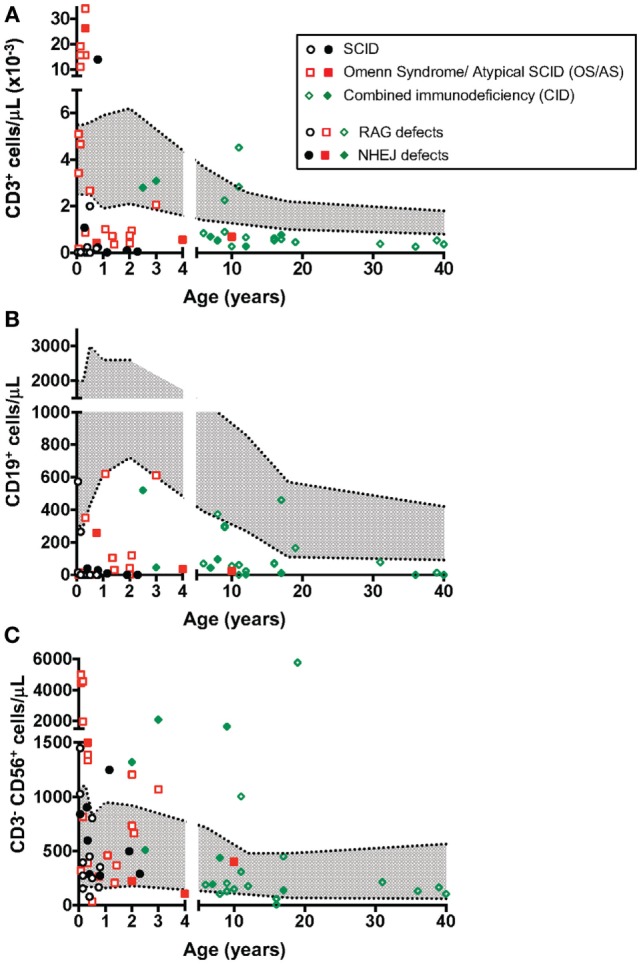
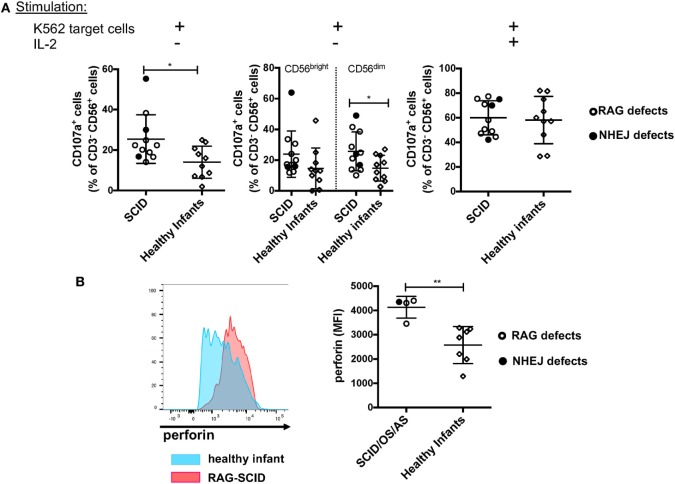
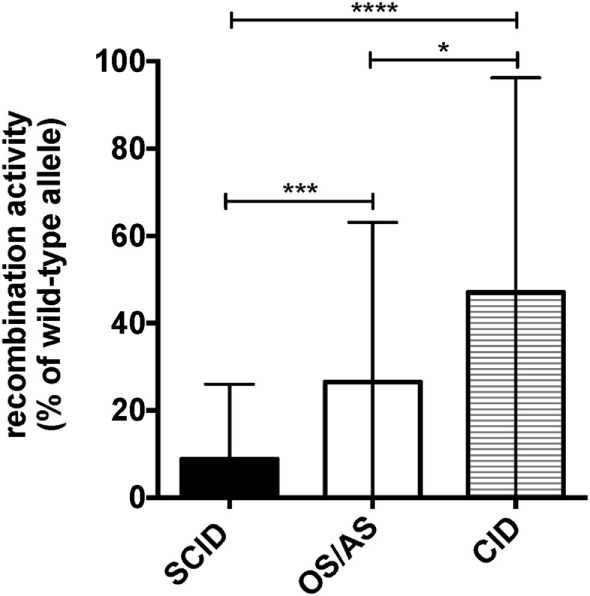
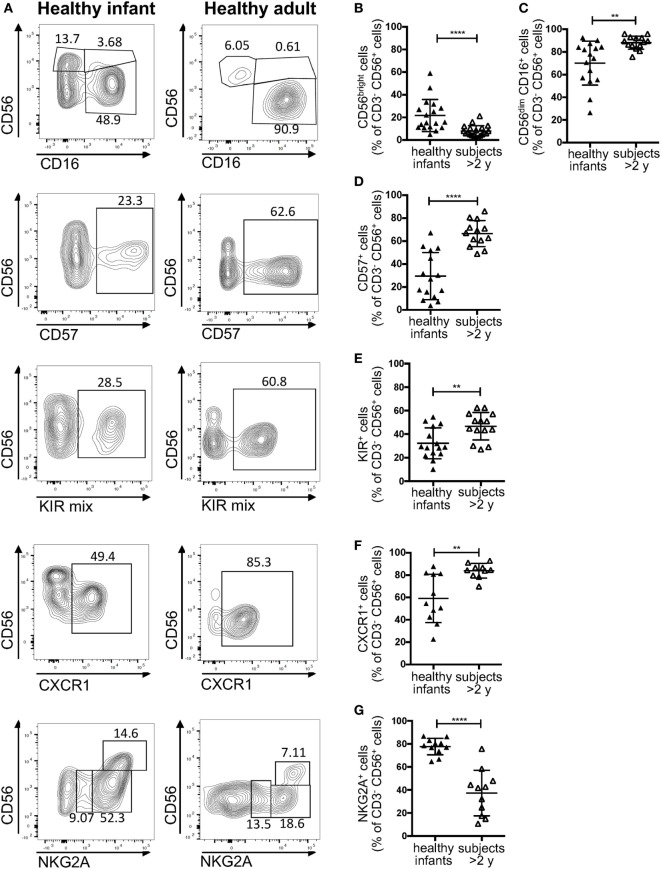
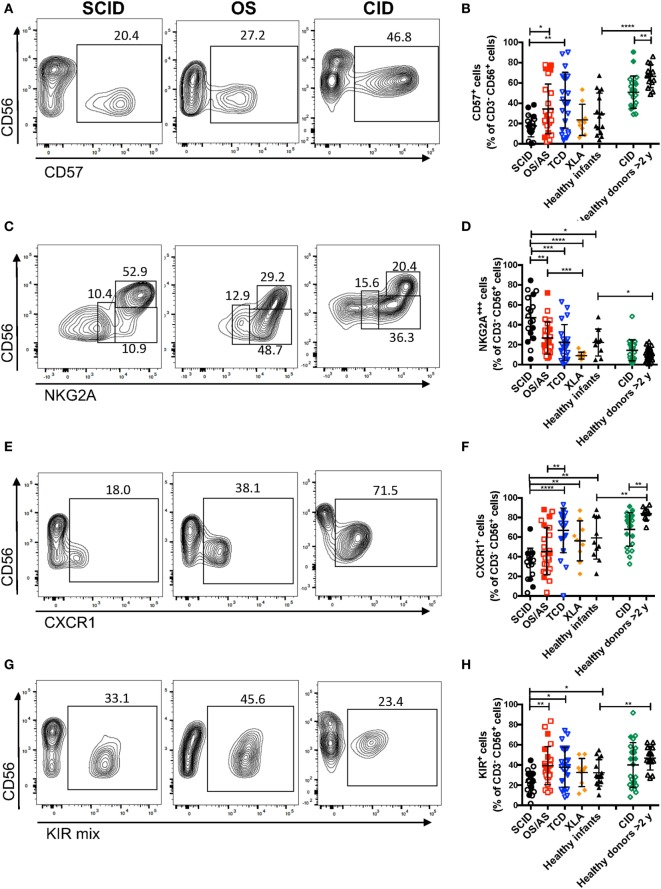
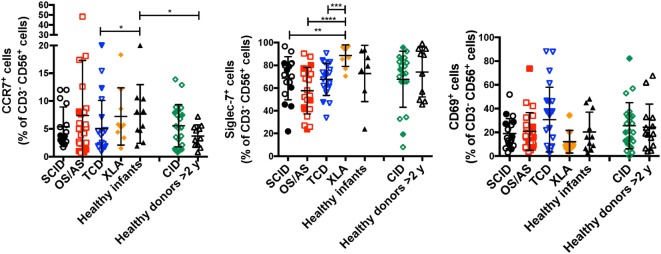
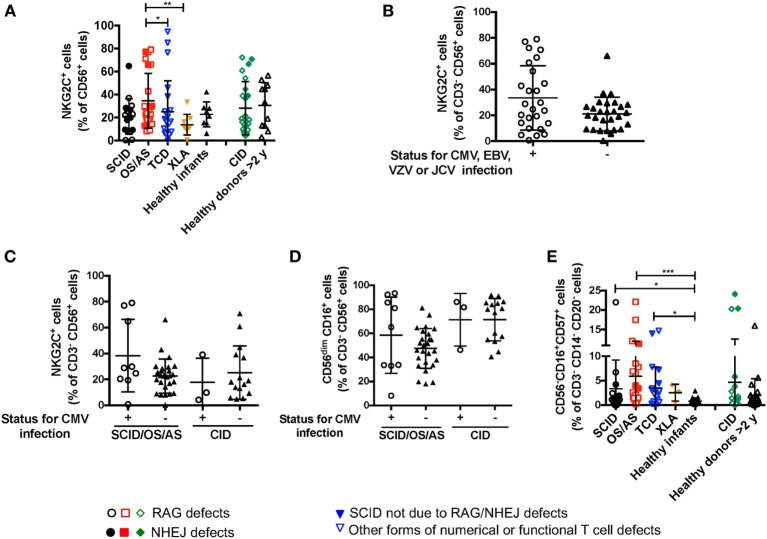
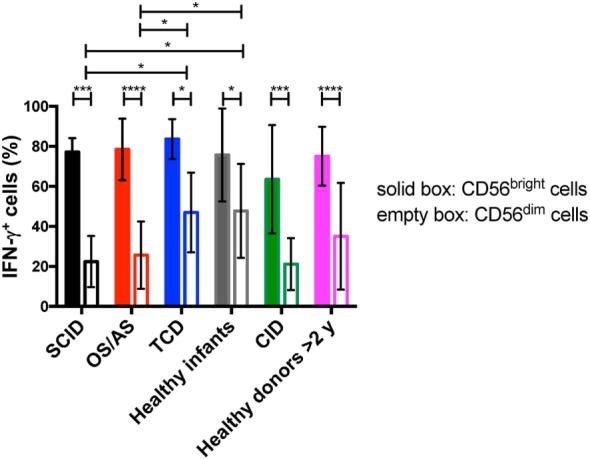
Mutations of the recombinase-activating genes 1 and 2 ( and ) in humans are associated with a broad range of phenotypes. For patients with severe clinical presentation, hematopoietic stem cell transplantation (HSCT) represents the only curative treatment; however, high rates of graft failure and incomplete immune reconstitution have been observed, especially after unconditioned haploidentical transplantation. Studies in mice have shown that natural killer (NK) cells have a mature phenotype, reduced fitness, and increased cytotoxicity. We aimed to analyze NK cell phenotype and function in patients with mutations in and in non-homologous end joining (NHEJ) genes. Here, we provide evidence that NK cells from these patients have an immature phenotype, with significant expansion of CD56 CD16 CD57 cells, yet increased degranulation and high perforin content. Correlation was observed between recombinase activity of the mutant proteins, NK cell abnormalities, and clinical phenotype. Addition of serotherapy in the conditioning regimen, with the aim of depleting the autologous NK cell compartment, may be important to facilitate engraftment and immune reconstitution in patients with RAG and NHEJ defects treated by HSCT.
人类重组激活基因1和2(RAG1和RAG2)的突变与多种表型相关。对于临床表现严重的患者,造血干细胞移植(HSCT)是唯一的治愈性治疗方法;然而,已观察到高移植失败率和不完全免疫重建,尤其是在非预处理的单倍体相合移植后。小鼠研究表明,自然杀伤(NK)细胞具有成熟的表型、降低的适应性和增加的细胞毒性。我们旨在分析RAG1和RAG2以及非同源末端连接(NHEJ)基因突变患者的NK细胞表型和功能。在此,我们提供证据表明,这些患者的NK细胞具有不成熟的表型,CD56⁺CD16⁻CD57⁻细胞显著扩增,但脱颗粒增加且穿孔素含量高。观察到突变蛋白的RAG重组酶活性、NK细胞异常和临床表型之间存在相关性。在预处理方案中添加血清疗法,旨在耗尽自体NK细胞库,对于促进接受HSCT治疗的RAG和NHEJ缺陷患者的植入和免疫重建可能很重要。