Lombardo Jeffrey A, Elkinton Joseph S
Department of Environmental Conservation University of Massachusetts Amherst MA USA.
Ecol Evol. 2017 Jun 4;7(14):5123-5130. doi: 10.1002/ece3.2894. eCollection 2017 Jul.
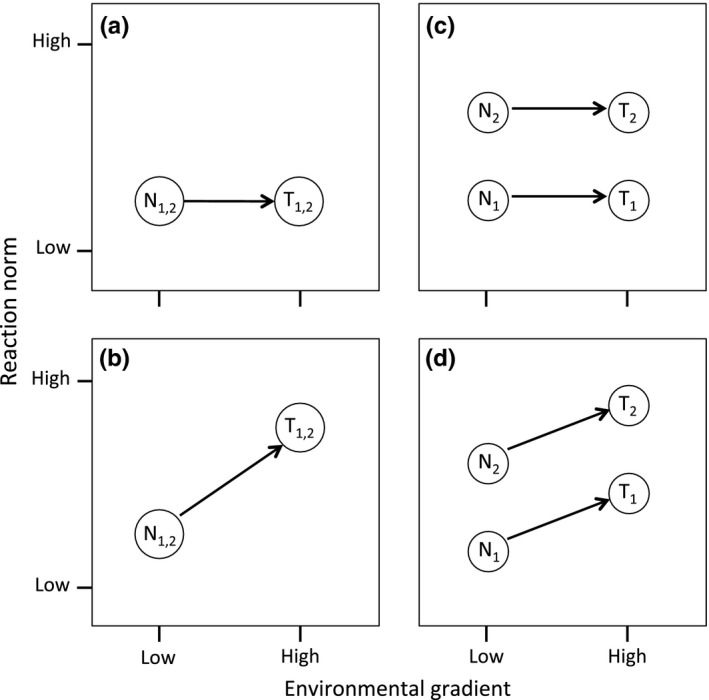
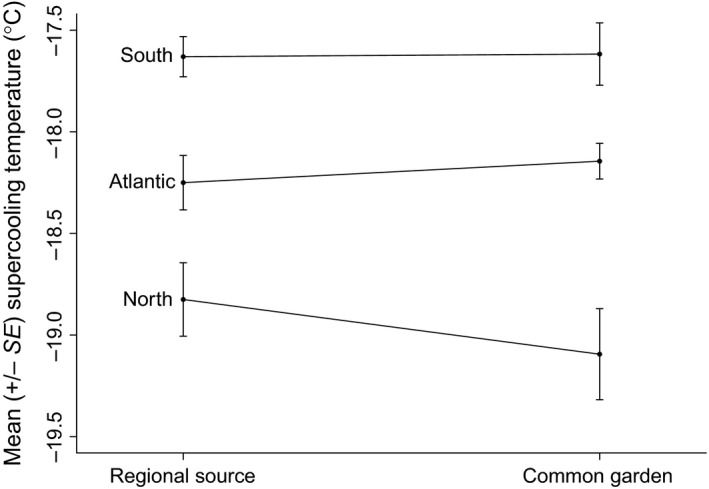
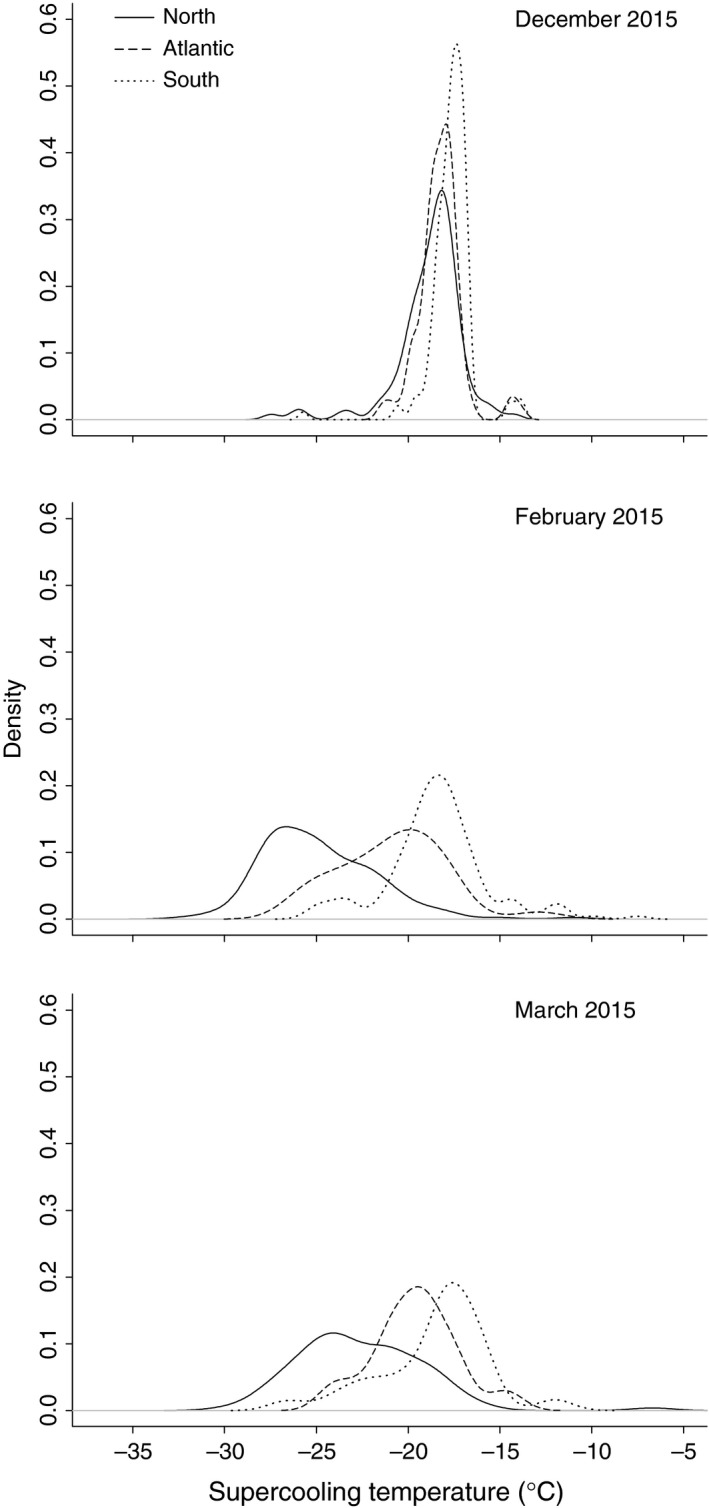
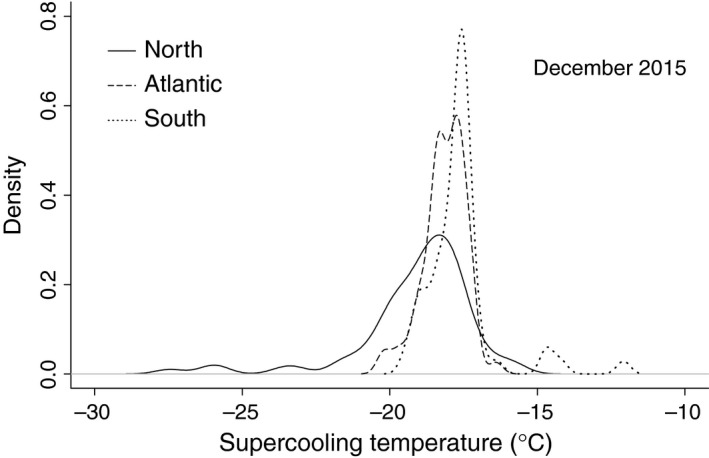
Parthenogenetic reproduction is generally associated with low genetic variance and therefore reduced ability for environmental adaptation, and this could limit the potential invasiveness of introduced species that reproduce asexually. However, the hemlock woolly adelgid is an asexual invasive insect that has spread across a large geographic temperature gradient in its introduced range. Consequently, this insect has shown significant variation in cold hardiness among populations. We hypothesized that the increased cold hardiness of northern populations represents an adaptation to the colder temperatures. To test this, we collected individual adelgid from populations spanning their invaded range and inoculated them into a common thermal environment. We then experimentally sampled the supercooling point of the progeny of these adelgids and compared these results with tests of the supercooling point of adelgid sampled directly from their source populations. The results showed that the same significant differences in supercooling that was found among geographically distinct populations existed even when the adelgid was reared in a common environment, indicating a genetic basis for the variation in cold hardiness. These findings support the hypothesis that the adelgid has adapted to the colder environment as it has expanded its distribution in its invaded range.
孤雌生殖通常与低遗传变异相关,因此环境适应能力降低,这可能会限制无性繁殖的外来物种的潜在入侵性。然而,铁杉球蚜是一种无性繁殖的入侵昆虫,在其引入范围内已跨越很大的地理温度梯度扩散。因此,这种昆虫在不同种群间表现出显著的抗寒能力差异。我们推测北方种群抗寒能力的增强是对较寒冷温度的一种适应。为了验证这一点,我们从其入侵范围内的不同种群收集了单个铁杉球蚜,并将它们接种到一个共同的热环境中。然后,我们通过实验测定这些铁杉球蚜后代的过冷却点,并将这些结果与直接从其源种群采集的铁杉球蚜的过冷却点测试结果进行比较。结果表明,即使铁杉球蚜在共同环境中饲养,在地理上不同种群间发现的过冷却点的相同显著差异依然存在,这表明抗寒能力的差异具有遗传基础。这些发现支持了这样的假设,即随着铁杉球蚜在其入侵范围内扩大分布,它已经适应了更寒冷的环境。