Baleani Massimiliano, Erani Paolo, Bordini Barbara, Zuccheri Federica, Mąkosa Mateusz Kordian, De Pasquale Dalila, Beraudi Alina, Stea Susanna
Istituto Ortopedico Rizzoli, Laboratorio di Tecnologia Medica, 40136 Bologna, Italy.
Materials (Basel). 2017 Jul 1;10(7):733. doi: 10.3390/ma10070733.
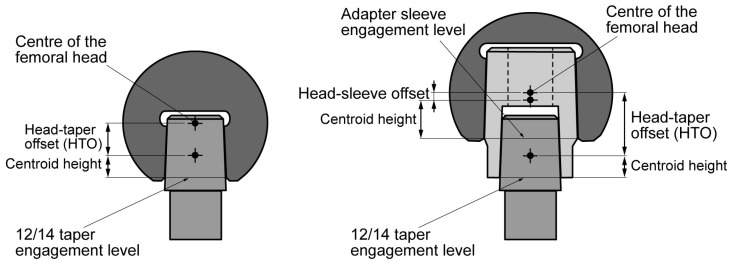
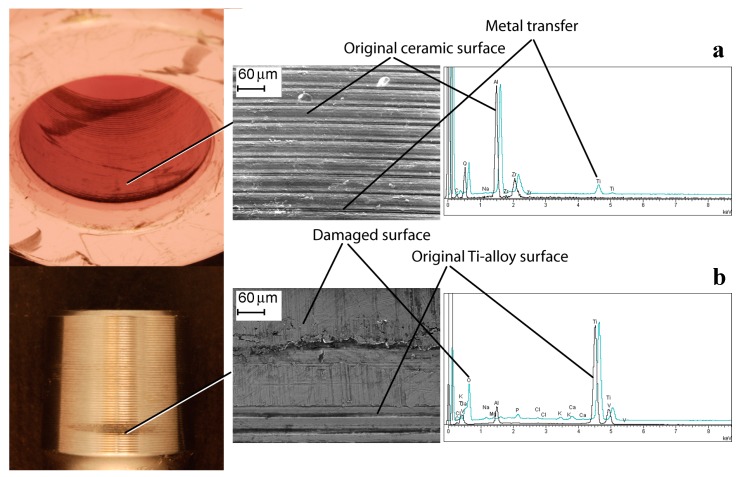
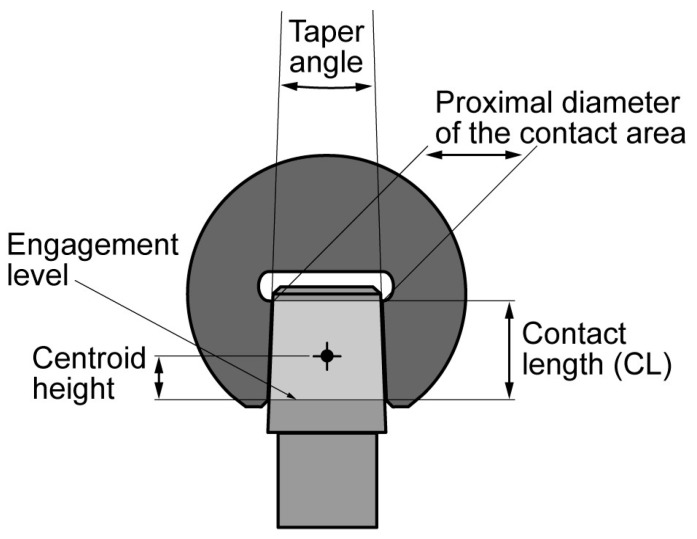
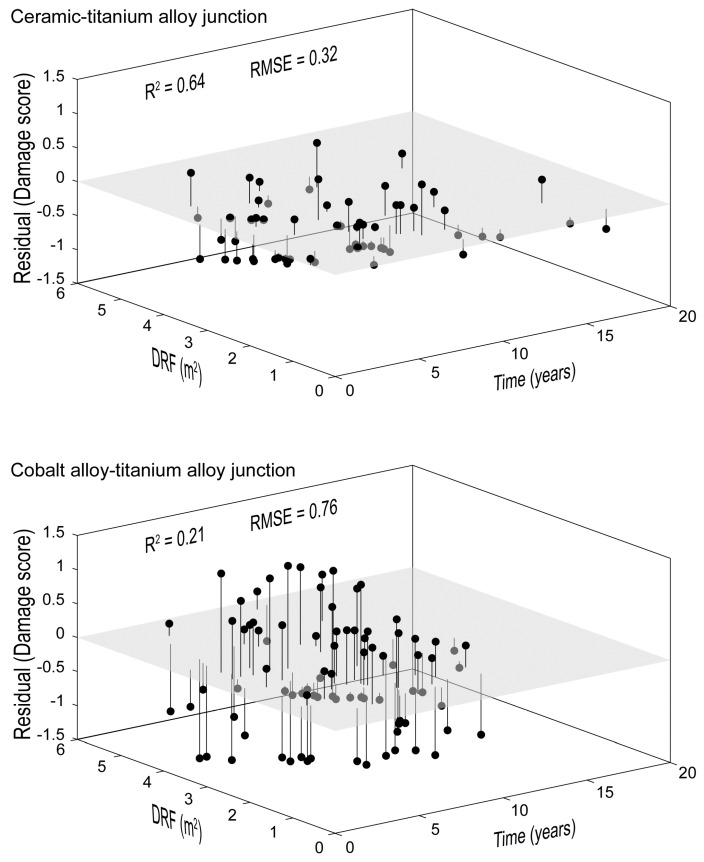
Recently, concerns have been raised about the potential effect of head-neck junction damage products at the local and systemic levels. Factors that may affect this damage process have not been fully established yet. This study investigated the possible correlations among head-neck junction damage level, implant design, material combination, and patient characteristics. Head-neck junctions of 148 retrieved implants were analysed, including both ceramic-on-ceramic (N = 61) and metal-on-metal (N = 87) bearings. In all cases, the male taper was made of titanium alloy. Damage was evaluated using a four-point scoring system based on damage morphology and extension. Patient age at implantation, implantation time, damage risk factor, and serum ion concentration were considered as independent potential predicting variables. The damage risk factor summarises head-neck design characteristics and junction loading condition. Junction damage correlated with both implantation time and damage factor risk when the head was made of ceramic. A poor correlation was found when the head was made of cobalt alloy. The fretting-corrosion phenomenon seemed mainly mechanically regulated, at least when cobalt alloy components were not involved. When a component was made of cobalt alloy, the role of chemical phenomena increased, likely becoming, over implantation time, the damage driving phenomena of highly stressed junctions.
最近,人们对头颈部交界处损伤产物在局部和全身水平的潜在影响表示关注。可能影响这一损伤过程的因素尚未完全明确。本研究调查了头颈部交界处损伤程度、植入物设计、材料组合和患者特征之间的可能相关性。对148个回收植入物的头颈部交界处进行了分析,包括陶瓷对陶瓷(N = 61)和金属对金属(N = 87)轴承。在所有情况下,阳锥由钛合金制成。根据损伤形态和范围,使用四点评分系统评估损伤。将植入时的患者年龄、植入时间、损伤风险因素和血清离子浓度视为独立的潜在预测变量。损伤风险因素总结了头颈部设计特征和交界处负荷情况。当头由陶瓷制成时,交界处损伤与植入时间和损伤因素风险均相关。当头由钴合金制成时,相关性较差。微动腐蚀现象似乎主要受机械调节,至少在不涉及钴合金部件时如此。当部件由钴合金制成时,化学现象的作用增加,可能在植入过程中成为高应力交界处损伤的驱动现象。