Department of Molecular Oncology, Cancer Institute (WIA), Chennai, India.
Sci Rep. 2017 Aug 3;7(1):7172. doi: 10.1038/s41598-017-07482-4.
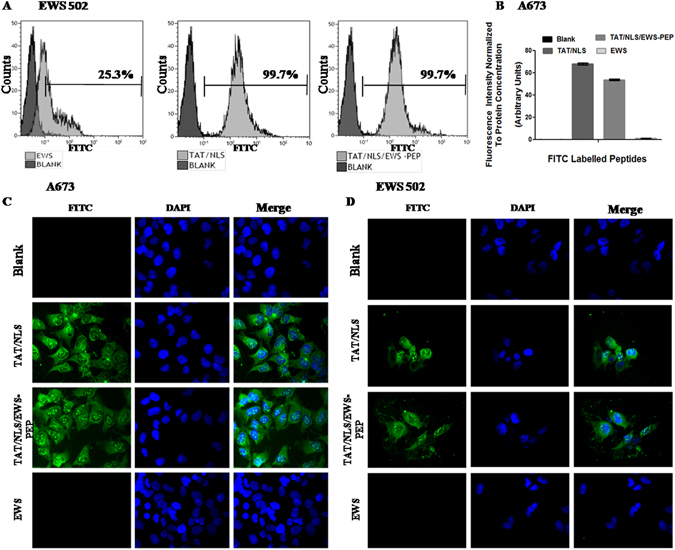
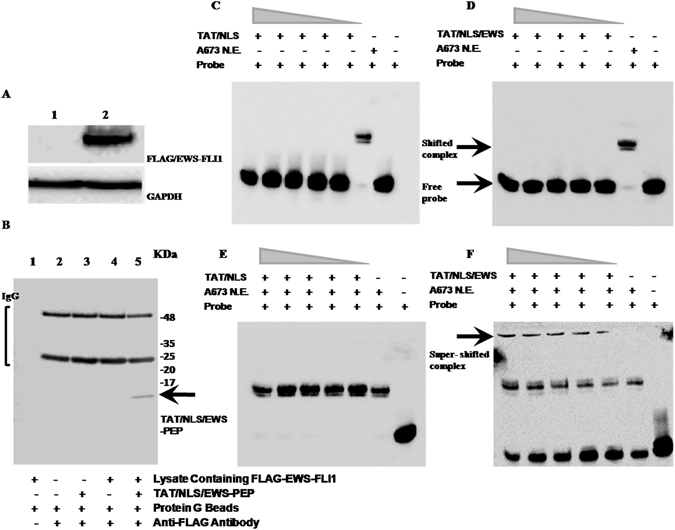
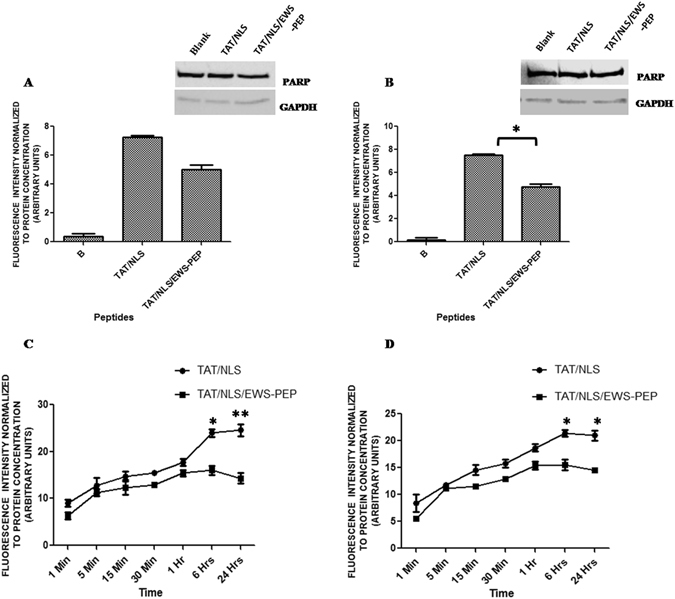
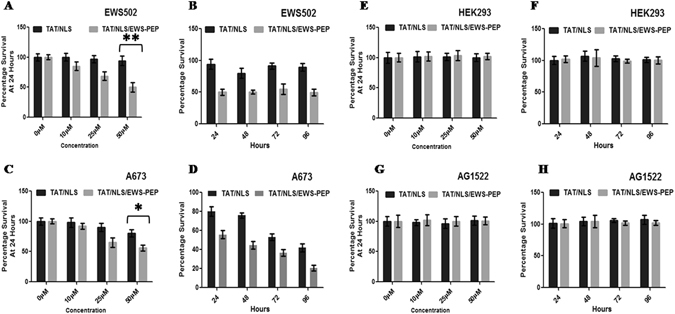
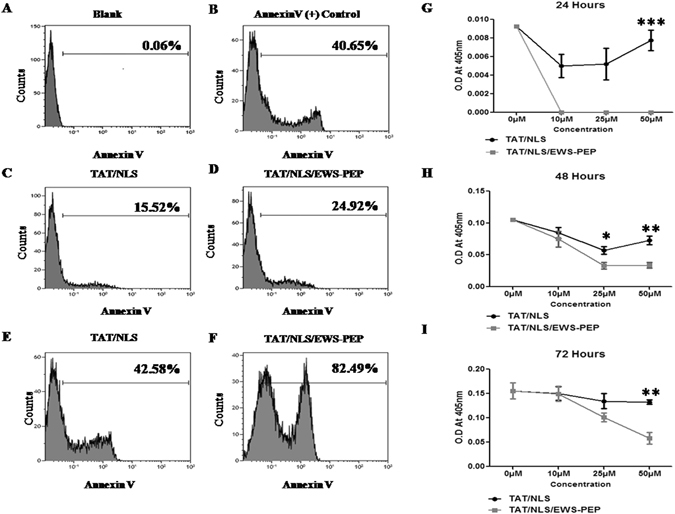
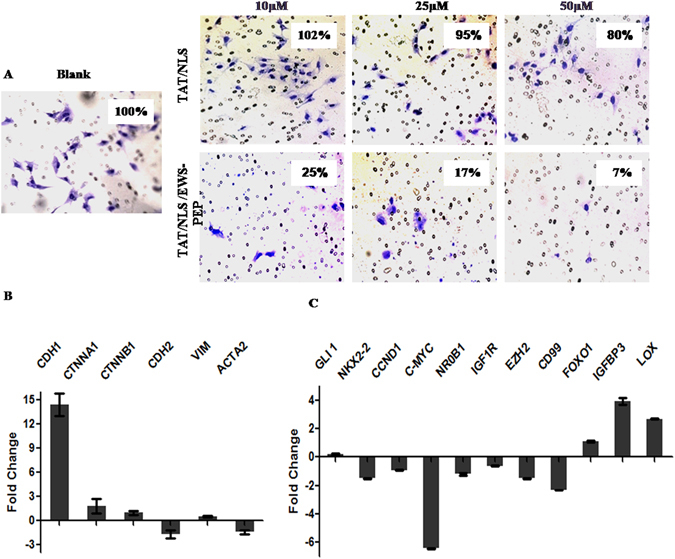
The EWS-FLI1 chimeric protein uniquely expressed in Ewing's sarcoma has an obligate role in its aetiology. In our previous report we showed that ectopic expression of the DNA sequences form the junction region (a.a 251-280) can inhibit Ewing's sarcoma cell growth. In the present report, we introduced a peptide (TAT/NLS/EWS-PEP) comprising of thirty amino acids spanning the junction in conjunction with HIV-1-trans-activating (TAT) and nuclear localization signal sequence (NLS). Peptide uptake and localization studies revealed presence of peptide in ~99% of transduced cells and in the nucleus. Peptide transfection induced cytotoxicity relative to untreated and TAT-NLS peptide treated Ewing's sarcoma cells. The peptide inhibited clonogenicity, cell cycle, bromo-deoxy uridine (BrdU) uptake and invasion capacity of treated cells. The treatment also affected epithelial to mesenchymal transition (EMT) markers and EWS-FLI1 target gene expression levels. Co-immunoprecipitation experiments involving ectopically expressed full-length EWS-FLI1 protein and the peptide revealed an interaction. Additionally, we found that peptide interaction also occurs with the protein-GGAA microsatellite sequences complex known to contain EWS-FLI1. Further, in the pull-down assay, the peptide was found to interact with proteins known to potentially interact with EWS-FLI1. Based on these results we conclude that peptide could be applied in targeting EWS-FLI1 protein.
EWS-FLI1 嵌合蛋白在尤因肉瘤中特异性表达,在其发病机制中具有强制性作用。在我们之前的报告中,我们表明,来自连接区(a.a 251-280)的 DNA 序列的异位表达可以抑制尤因肉瘤细胞的生长。在本报告中,我们引入了一种由三十个氨基酸组成的肽(TAT/NLS/EWS-PEP),跨越连接区,与 HIV-1 转激活(TAT)和核定位信号序列(NLS)结合。肽摄取和定位研究表明,肽存在于~99%的转导细胞中和细胞核中。与未经处理和 TAT-NLS 肽处理的尤因肉瘤细胞相比,肽转染诱导细胞毒性。该肽抑制了克隆形成、细胞周期、溴脱氧尿苷(BrdU)摄取和处理细胞的侵袭能力。该治疗还影响上皮到间充质转化(EMT)标志物和 EWS-FLI1 靶基因表达水平。涉及异位表达全长 EWS-FLI1 蛋白和肽的共免疫沉淀实验揭示了相互作用。此外,我们发现该肽还与已知包含 EWS-FLI1 的蛋白-GGAA 微卫星序列复合物相互作用。此外,在下拉测定中,发现该肽与已知可能与 EWS-FLI1 相互作用的蛋白质相互作用。基于这些结果,我们得出结论,肽可用于靶向 EWS-FLI1 蛋白。