Fuel Cell Research Center, Korea Institute of Science and Technology, Hwarangno 14-gil 5, Seongbuk-gu, Seoul, 02792, Republic of Korea.
Department of Environmental Engineering, Chungbuk National University, Cheongju Chungbuk, 28644, Republic of Korea.
Sci Rep. 2017 Aug 3;7(1):7186. doi: 10.1038/s41598-017-06812-w.
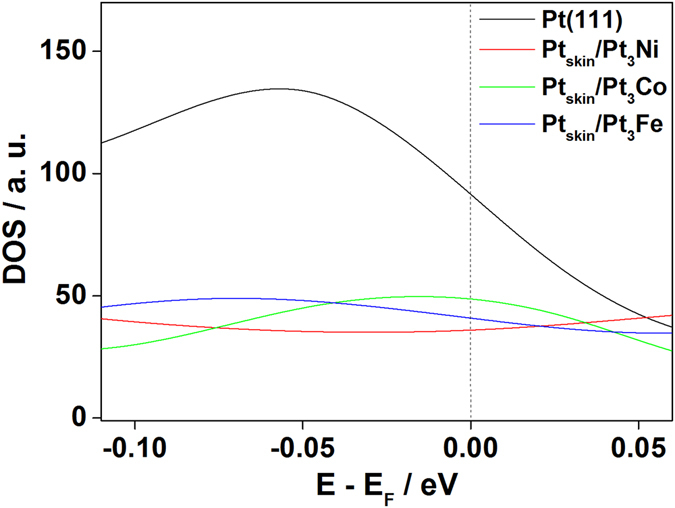
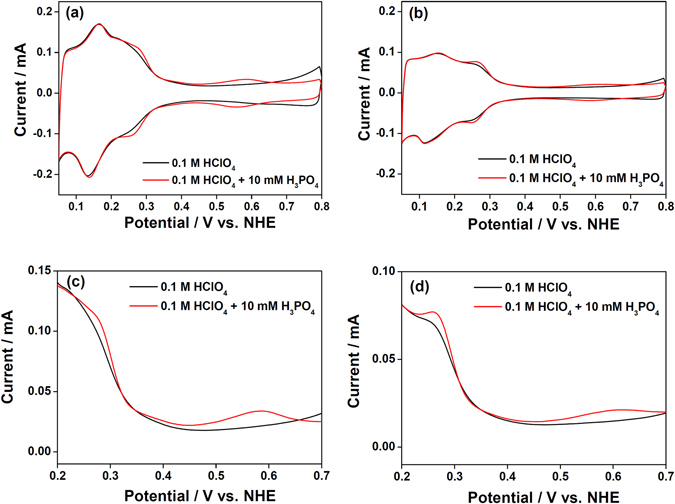
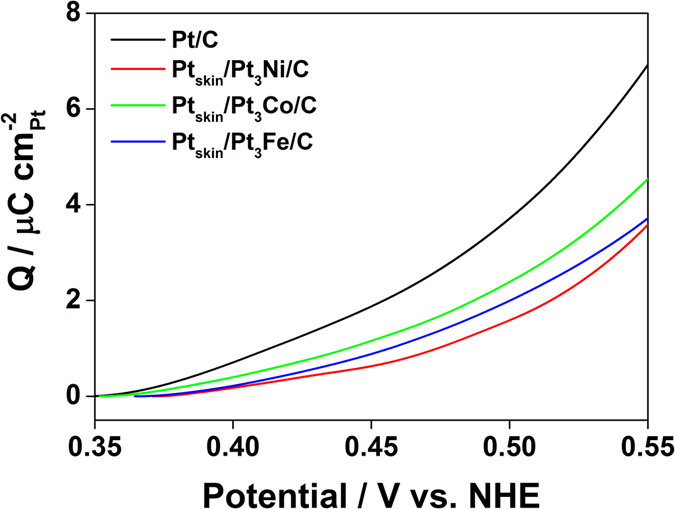
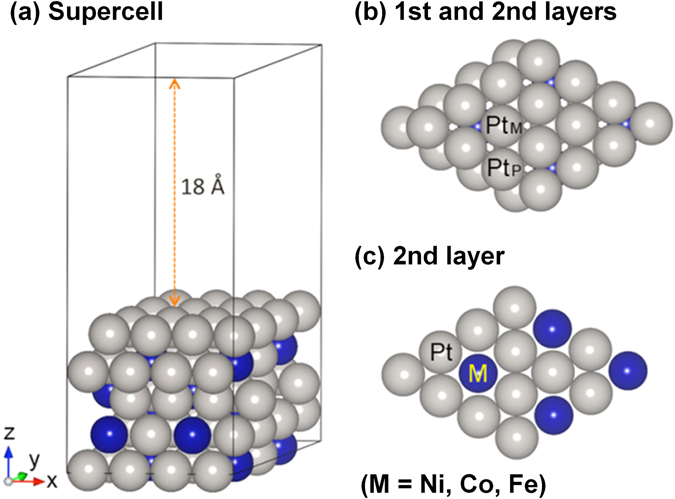
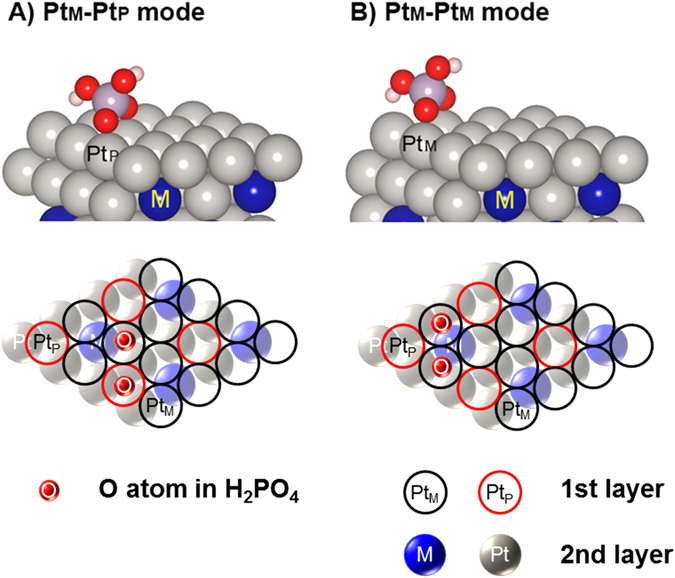
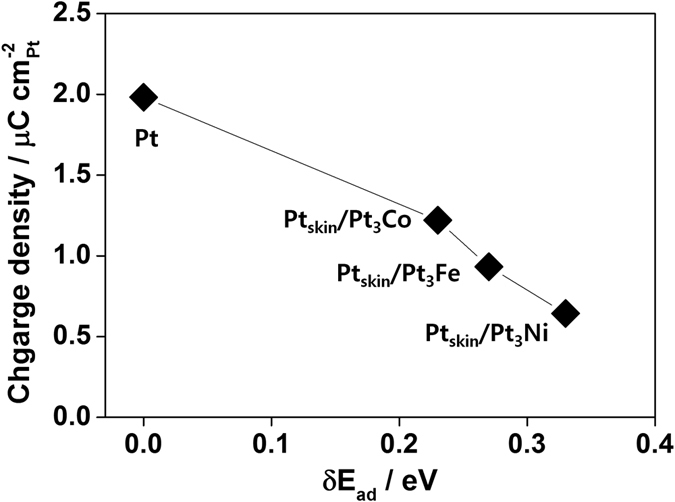
The effect of alloying with transition metals (Ni, Co, Fe) on the adsorption strength of phosphoric acid on Pt alloy surfaces was investigated using electrochemical analysis and first-principles calculations. Cyclic voltammograms of carbon-supported PtM/C (M = Ni, Co, and Fe) electrocatalysts in 0.1 M HClO with and without 0.01 M HPO revealed that the phosphoric acid adsorption charge density near the onset potential on the nanoparticle surfaces was decreased by alloying with transition metals in the order Co, Fe, Ni. First-principles calculations based on density functional theory confirmed that the adsorption strength of phosphoric acid was weakened by alloying with transition metals, in the same order as that observed in the electrochemical analysis. The simulation suggested that the weaker phosphoric acid adsorption can be attributed to a lowered density of states near the Fermi level due to alloying with transition metals.
采用电化学分析和第一性原理计算研究了过渡金属(Ni、Co、Fe)合金化对 Pt 合金表面吸附磷酸强度的影响。在含有和不含有 0.01 M HPO 的 0.1 M HClO 中,负载在碳上的 PtM/C(M=Ni、Co 和 Fe)电催化剂的循环伏安曲线表明,纳米颗粒表面起始电位附近磷酸吸附电荷密度按 Co、Fe、Ni 的顺序降低。基于密度泛函理论的第一性原理计算证实,磷酸的吸附强度通过与过渡金属合金化而减弱,与电化学分析观察到的顺序一致。模拟表明,由于与过渡金属合金化,费米能级附近的态密度降低,导致磷酸吸附减弱。