Hajj Carla, Russell James, Hart Charles P, Goodman Karyn A, Lowery Maeve A, Haimovitz-Friedman Adriana, Deasy Joseph O, Humm John L
Department of Radiation Oncology, MSKCC, 1275 York Avenue, New York, NY, 10065.
Department of Medical Physics, MSKCC, 1275 York Avenue, New York, NY, 10065.
Transl Oncol. 2017 Oct;10(5):760-765. doi: 10.1016/j.tranon.2017.06.010. Epub 2017 Jul 31.
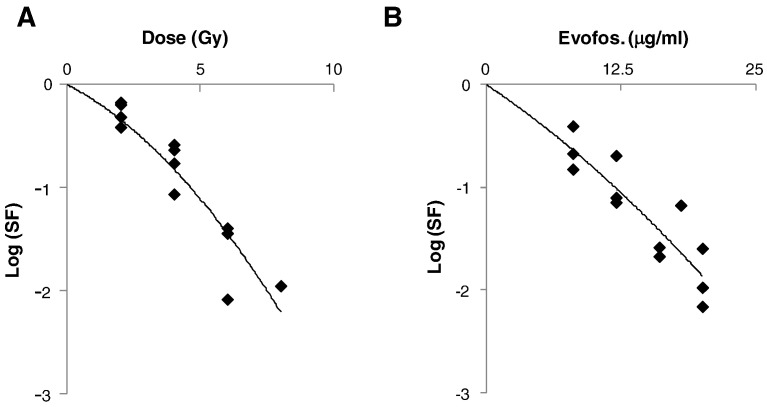
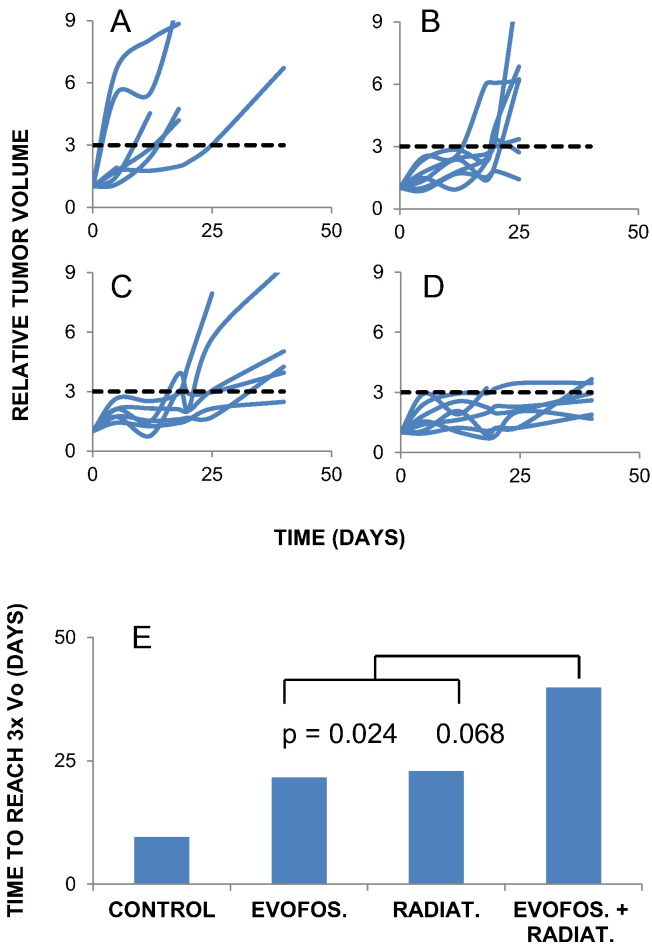
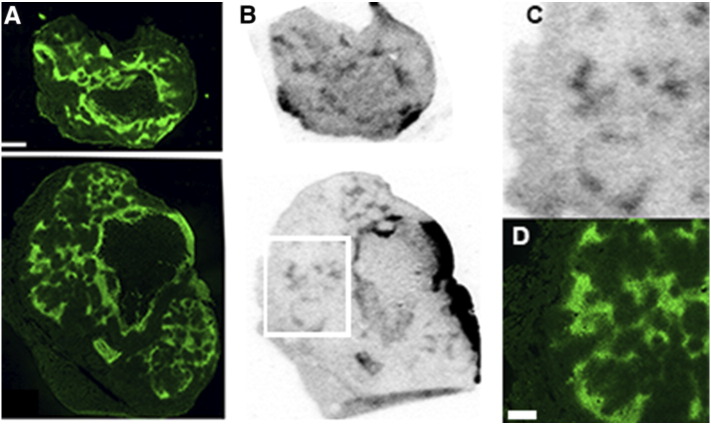
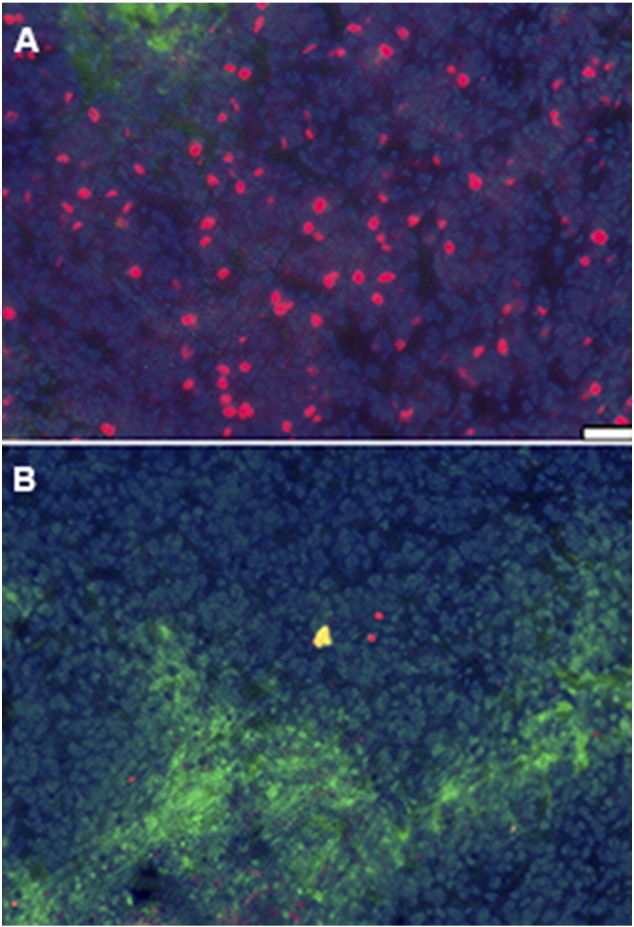
This study was designed to investigate the effect of single-dose radiation therapy (RT) in combination with evofosfamide (TH-302), a hypoxia-activated prodrug, in a pre-clinical model of pancreatic cancer. AsPC1 tumors were implanted orthotopically in the pancreas of nude mice. Tumors were treated with 15 Gy of RT, using a 1 cm diameter field, and delivered as a continuous arc. Image-guidance to center the field on the tumor was based on CT imaging with intraperitoneal contrast. Evofosfamide (100 mg/kg, i.p.) was administered 3 hours before RT. Tumor volumes were measured using ultrasound, and regrowth curves were plotted. Tumor hypoxia and cell proliferation were measured using pimonidazole and the thymidine analog EdU, respectively. In vitro clonogenic assays were performed. Tumors were shown to contain substantial areas of hypoxia, as calculated by percent pimonidazole staining. Evofosfamide was active in these tumors, as demonstrated by a significant reduction in uptake of the thymidine analog EdU. This effect was visible in oxygenated tissue, consistent with the previously reported bystander effects of evofosfamide. RT produced significant regrowth delay, as did evofosfamide. The combination of both agents produced a growth delay that was at least equal to the sum of the two treatments given separately. The improvement in tumor response when evofosfamide is combined with RT supports the hypothesis that hypoxia is a cause of radioresistance in high dose RT for pancreatic cancer. Assessing the efficacy and safety of stereotactic radiation treatment and evofosfamide is warranted in patients with locally advanced pancreatic cancer.
本研究旨在探讨单剂量放射治疗(RT)联合缺氧激活前药依沃福酰胺(TH-302)在胰腺癌临床前模型中的效果。将AsPC1肿瘤原位植入裸鼠胰腺。使用直径1 cm的照射野,以连续弧形方式给予15 Gy的放射治疗。基于腹腔内造影剂的CT成像进行图像引导,使照射野对准肿瘤中心。在放射治疗前3小时腹腔注射依沃福酰胺(100 mg/kg)。使用超声测量肿瘤体积,并绘制再生长曲线。分别使用匹莫硝唑和胸腺嘧啶类似物EdU测量肿瘤缺氧和细胞增殖情况。进行体外克隆形成试验。通过匹莫硝唑染色百分比计算显示,肿瘤含有大量缺氧区域。胸腺嘧啶类似物EdU摄取量显著降低,表明依沃福酰胺在这些肿瘤中具有活性。这种效应在含氧组织中可见,与先前报道的依沃福酰胺旁观者效应一致。放射治疗和依沃福酰胺均产生了显著的再生长延迟。两种药物联合使用产生的生长延迟至少等于单独给予两种治疗的总和。依沃福酰胺与放射治疗联合使用时肿瘤反应的改善支持了以下假设:缺氧是胰腺癌高剂量放射治疗中放射抵抗的一个原因。对于局部晚期胰腺癌患者,有必要评估立体定向放射治疗和依沃福酰胺的疗效和安全性。