Chintalapati Manjusha, Dannemann Michael, Prüfer Kay
Max Planck Institute for Evolutionary Anthropology, 04103, Leipzig, Germany.
BMC Evol Biol. 2017 Aug 4;17(1):179. doi: 10.1186/s12862-017-1018-8.
Small insertions and deletions occur in humans at a lower rate compared to nucleotide changes, but evolve under more constraint than nucleotide changes. While the evolution of insertions and deletions have been investigated using ape outgroups, the now available genome of a Neandertal can shed light on the evolution of indels in more recent times.
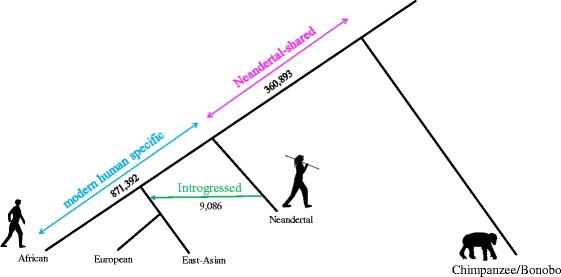
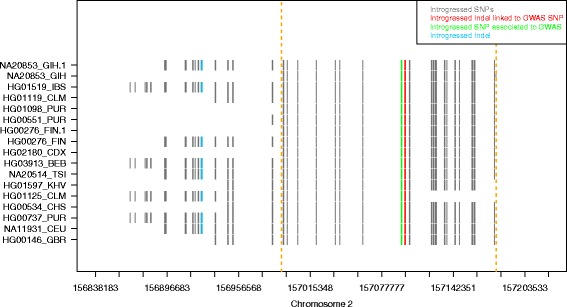
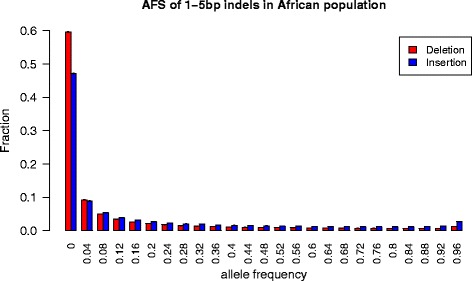
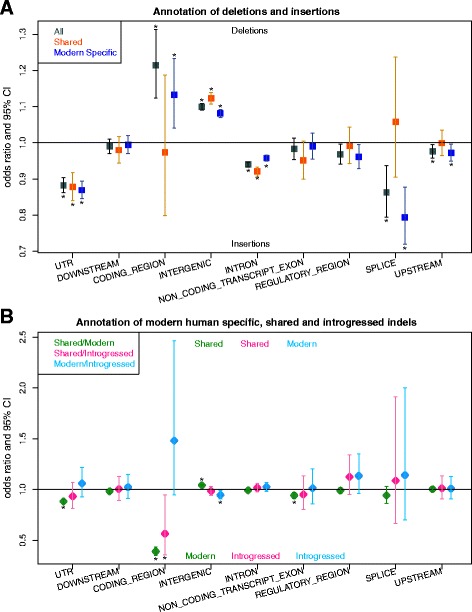
We used the Neandertal genome together with several primate outgroup genomes to differentiate between human insertion/deletion changes that likely occurred before the split from Neandertals and those that likely arose later. Changes that pre-date the split from Neandertals show a smaller proportion of deletions than those that occurred later. The presence of a Neandertal-shared allele in Europeans or Asians but the absence in Africans was used to detect putatively introgressed indels in Europeans and Asians. A larger proportion of these variants reside in intergenic regions compared to other modern human variants, and some variants are linked to SNPs that have been associated with traits in modern humans.
Our results are in agreement with earlier results that suggested that deletions evolve under more constraint than insertions. When considering Neandertal introgressed variants, we find some evidence that negative selection affected these variants more than other variants segregating in modern humans. Among introgressed variants we also identify indels that may influence the phenotype of their carriers. In particular an introgressed deletion associated with a decrease in the time to menarche may constitute an example of a former Neandertal-specific trait contributing to modern human phenotypic diversity.
与核苷酸变化相比,人类中发生的小插入和缺失频率较低,但比核苷酸变化受到更多的进化限制。虽然已经利用猿类外群研究了插入和缺失的进化,但现在可用的尼安德特人基因组能够揭示近期插入缺失的进化情况。
我们将尼安德特人基因组与几个灵长类外群基因组一起使用,以区分可能在与尼安德特人分化之前发生的人类插入/缺失变化和可能在之后出现的变化。与尼安德特人分化之前发生的变化相比,在与尼安德特人分化之后发生的变化中,缺失的比例更小。利用欧洲人或亚洲人中存在尼安德特人共享等位基因而非洲人中不存在这一情况,来检测欧洲人和亚洲人中可能渗入的插入缺失。与其他现代人类变体相比,这些变体中更大比例位于基因间区域,并且一些变体与已与现代人类性状相关的单核苷酸多态性(SNP)连锁。
我们的结果与早期结果一致,即缺失比插入受到更多的进化限制。在考虑尼安德特人渗入变体时,我们发现一些证据表明,负选择对这些变体的影响比对现代人类中分离的其他变体的影响更大。在渗入变体中,我们还鉴定出可能影响其携带者表型的插入缺失。特别是一个与初潮时间缩短相关的渗入缺失,可能是一个以前尼安德特人特有的性状对现代人类表型多样性有贡献的例子。