Tang Tiantian, Lang Xueting, Xu Congfei, Wang Xiaqiong, Gong Tao, Yang Yanqing, Cui Jun, Bai Li, Wang Jun, Jiang Wei, Zhou Rongbin
Institute of Immunology and the CAS Key Laboratory of Innate Immunity and Chronic Disease, CAS center for Excellence in Molecular Cell Sciences, School of Life Sciences and Medical Center, University of Science and Technology of China, Hefei, 230027, China.
Innovation Center for Cell Signalling Network, University of Science and Technology of China, Hefei, 230027, China.
Nat Commun. 2017 Aug 4;8(1):202. doi: 10.1038/s41467-017-00227-x.
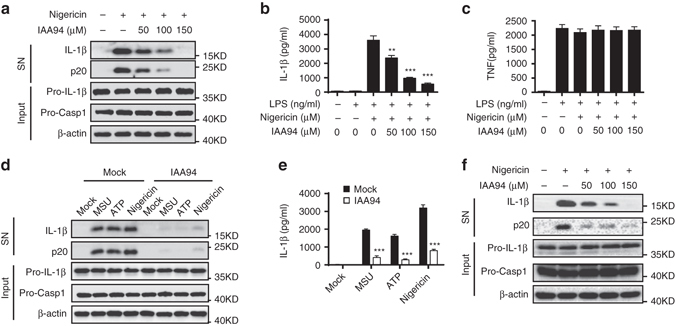
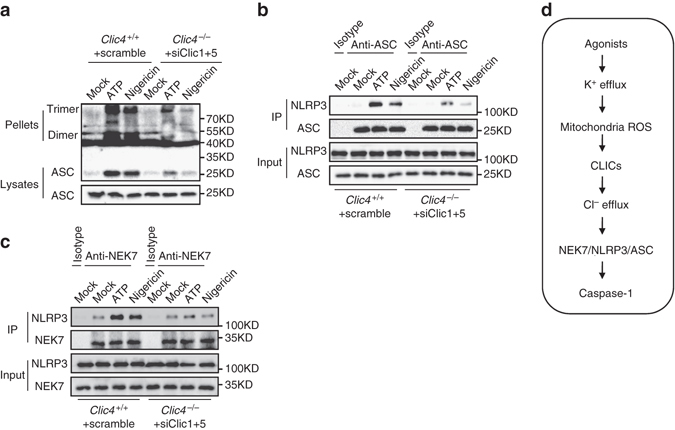
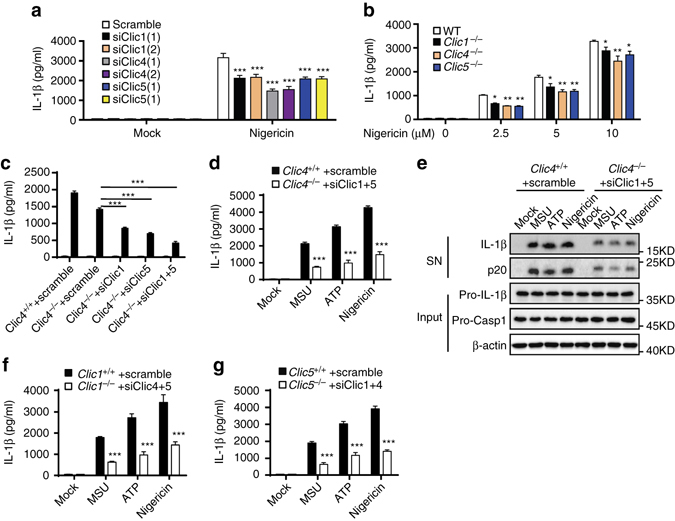
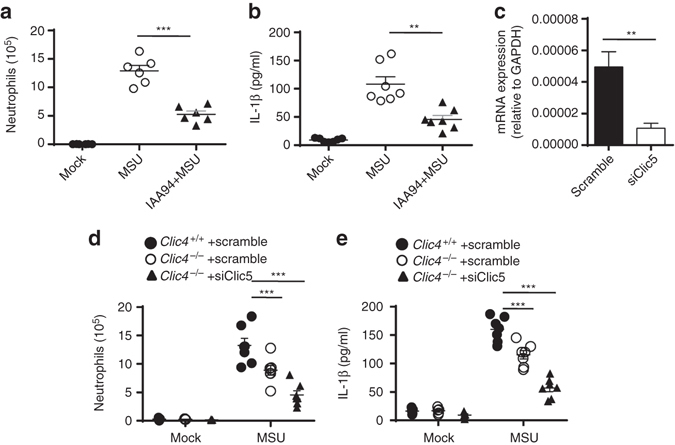
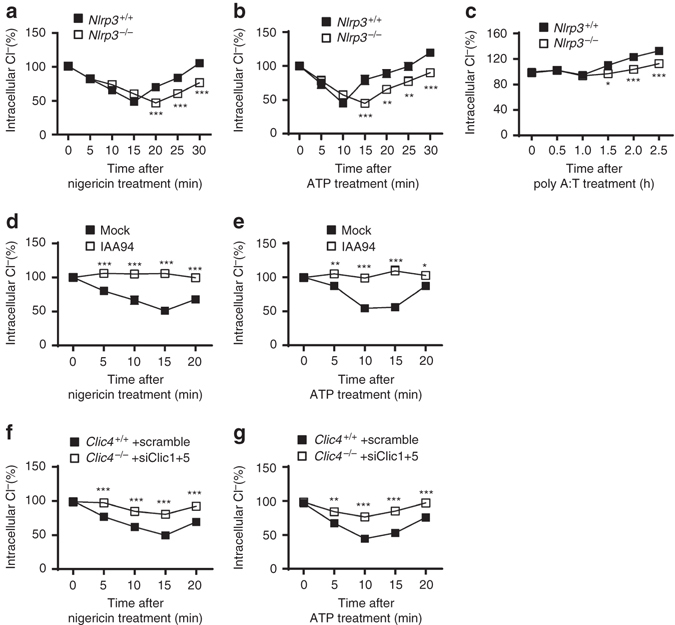
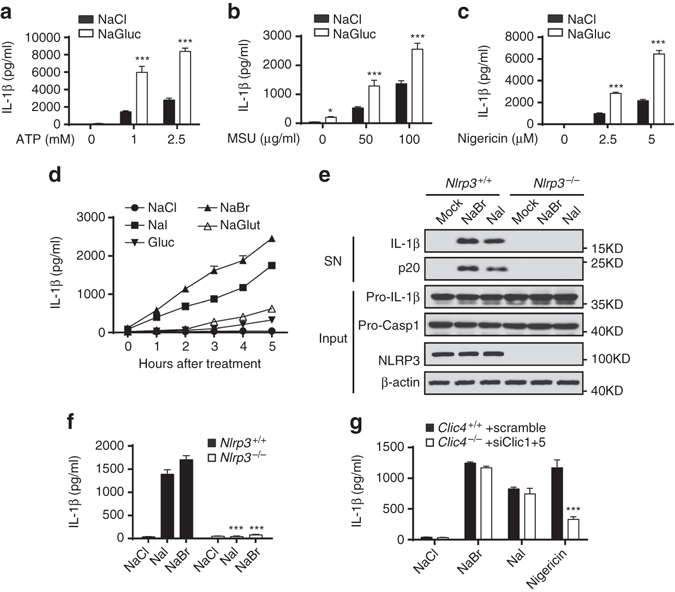
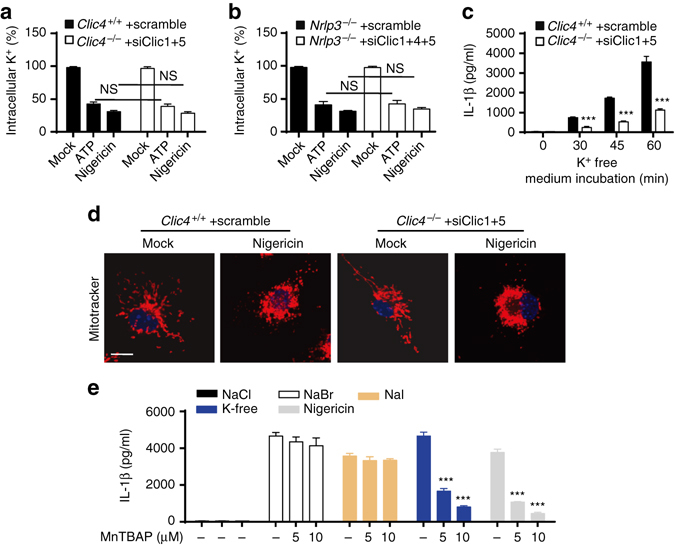
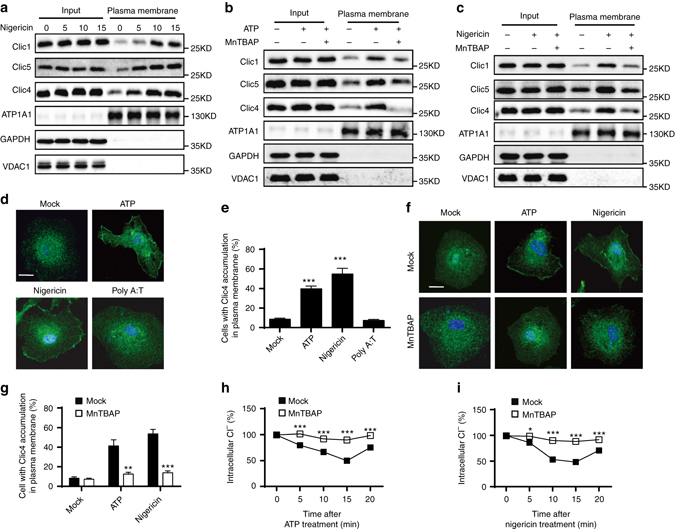
The NLRP3 inflammasome can sense different pathogens or danger signals, and has been reported to be involved in the development of many human diseases. Potassium efflux and mitochondrial damage are both reported to mediate NLRP3 inflammasome activation, but the underlying, orchestrating signaling events are still unclear. Here we show that chloride intracellular channels (CLIC) act downstream of the potassium efflux-mitochondrial reactive oxygen species (ROS) axis to promote NLRP3 inflammasome activation. NLRP3 agonists induce potassium efflux, which causes mitochondrial damage and ROS production. Mitochondrial ROS then induces the translocation of CLICs to the plasma membrane for the induction of chloride efflux to promote NEK7-NLRP3 interaction, inflammasome assembly, caspase-1 activation, and IL-1β secretion. Thus, our results identify CLICs-dependent chloride efflux as an essential and proximal upstream event for NLRP3 activation.The NLRP3 inflammasome is key to the regulation of innate immunity against pathogens or stress, but the underlying signaling regulation is still unclear. Here the authors show that chloride intracellular channels (CLIC) interface between mitochondria stress and inflammasome activation to modulate inflammatory responses.
NLRP3炎性小体能够感知不同的病原体或危险信号,并且据报道其参与了多种人类疾病的发生发展。钾离子外流和线粒体损伤均被报道可介导NLRP3炎性小体的激活,但其潜在的、协调的信号事件仍不清楚。在此我们表明,氯离子细胞内通道(CLIC)在钾离子外流-线粒体活性氧(ROS)轴的下游发挥作用,以促进NLRP3炎性小体的激活。NLRP3激动剂诱导钾离子外流,这会导致线粒体损伤和ROS产生。线粒体ROS随后诱导CLICs转位至质膜以诱导氯离子外流,从而促进NEK7-NLRP3相互作用、炎性小体组装、半胱天冬酶-1激活及白细胞介素-1β分泌。因此,我们的结果确定了依赖CLICs的氯离子外流是NLRP3激活的一个必不可少的近端上游事件。NLRP3炎性小体是调节针对病原体或应激的固有免疫的关键,但潜在的信号调节仍不清楚。在此,作者表明氯离子细胞内通道(CLIC)在线粒体应激和炎性小体激活之间起界面作用,以调节炎症反应。