Centre for Gene Regulation & Expression, School of Life Sciences, University of Dundee, Dundee DD1 5EH, UK.
Drug Discovery Unit, School of Life Sciences, University of Dundee, Dundee DD1 5EH, UK.
Cell Chem Biol. 2017 Aug 17;24(8):981-992.e4. doi: 10.1016/j.chembiol.2017.06.019. Epub 2017 Aug 3.
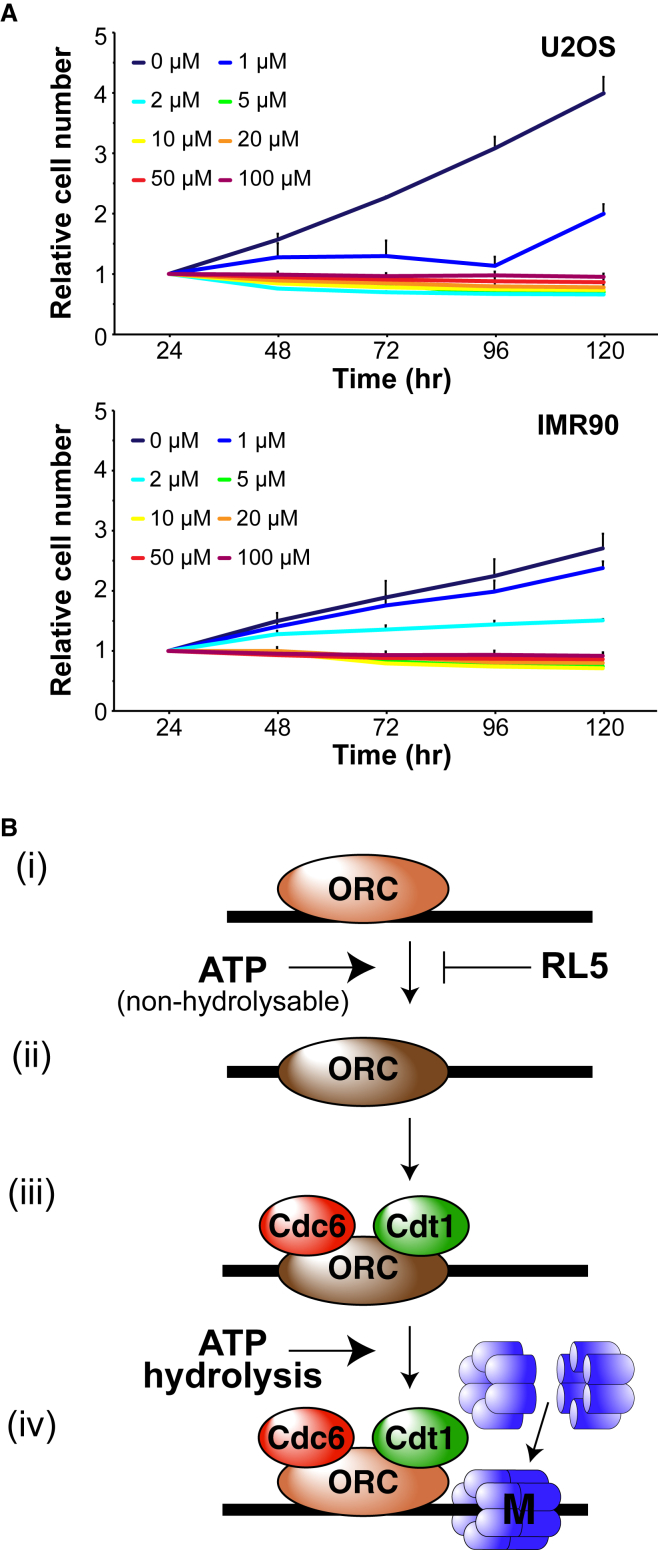
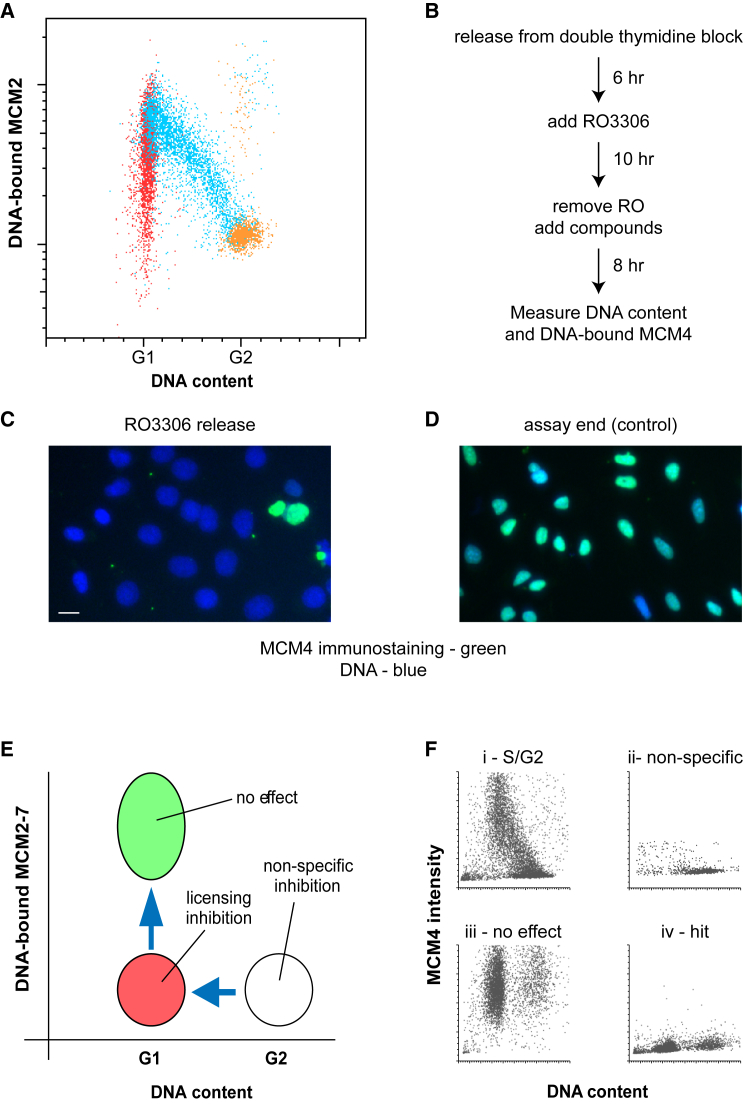
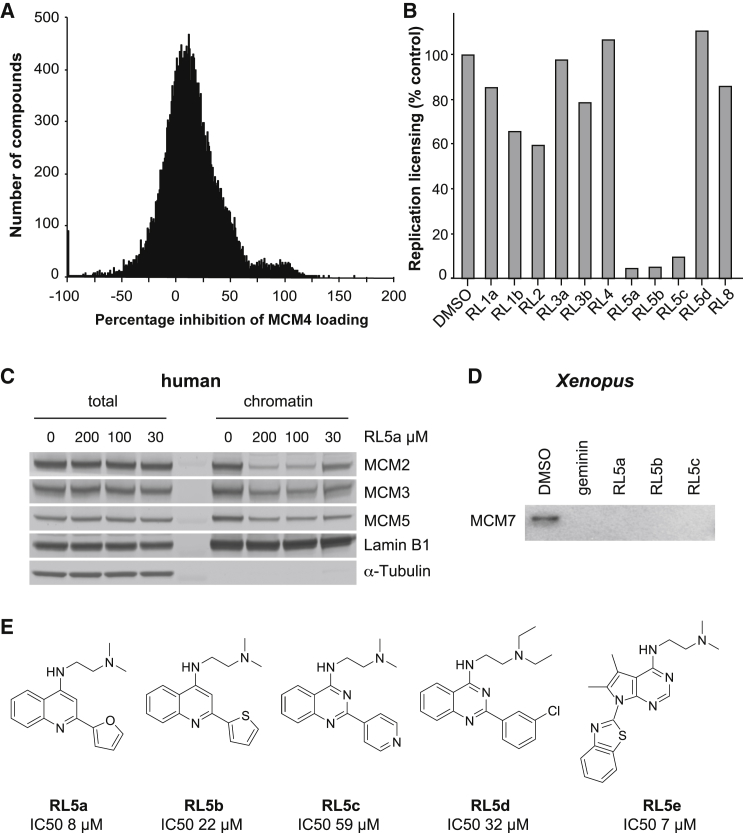
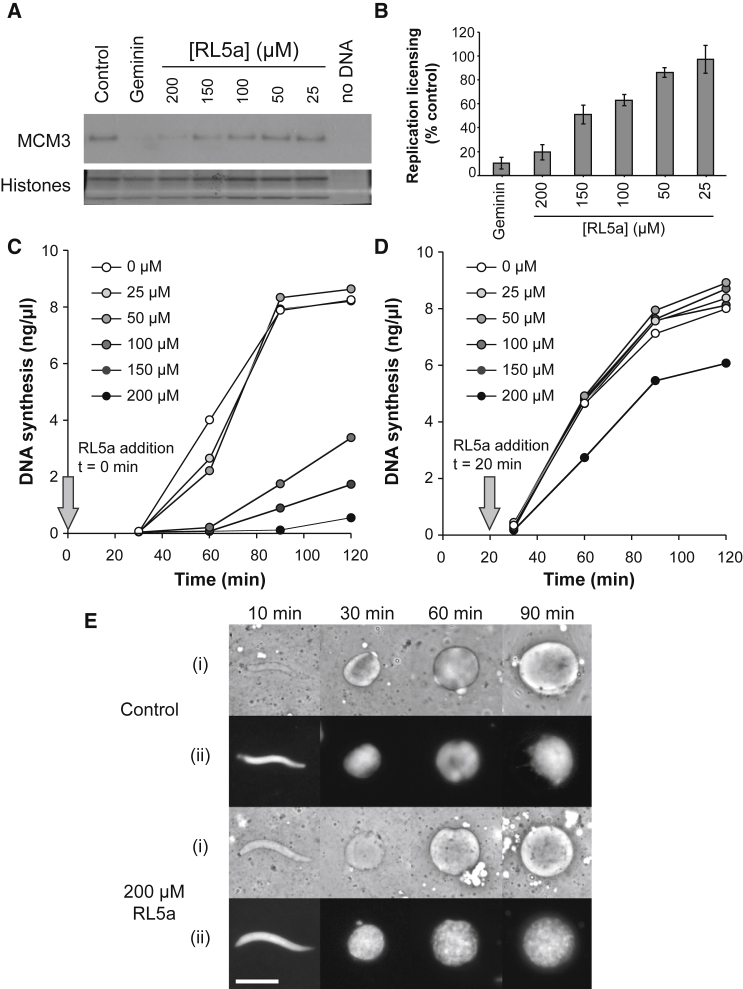
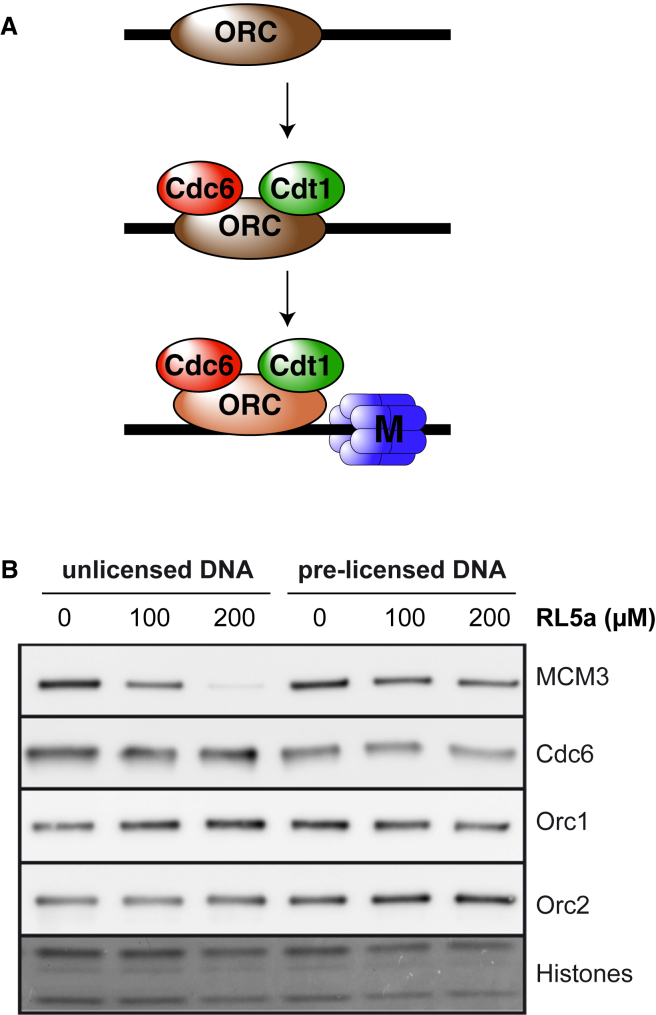
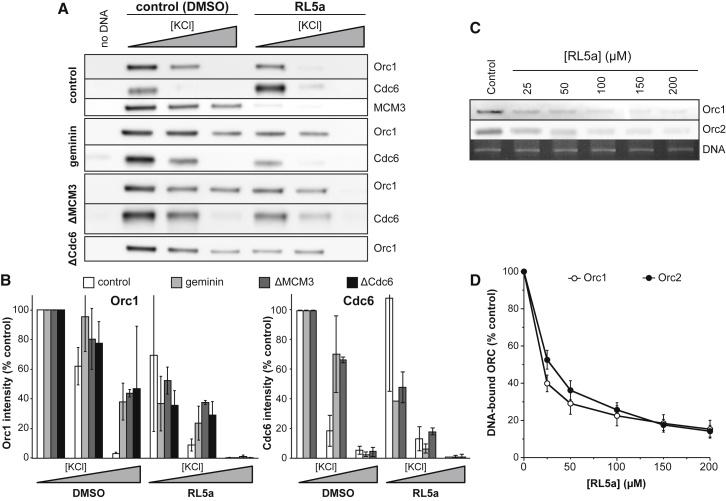
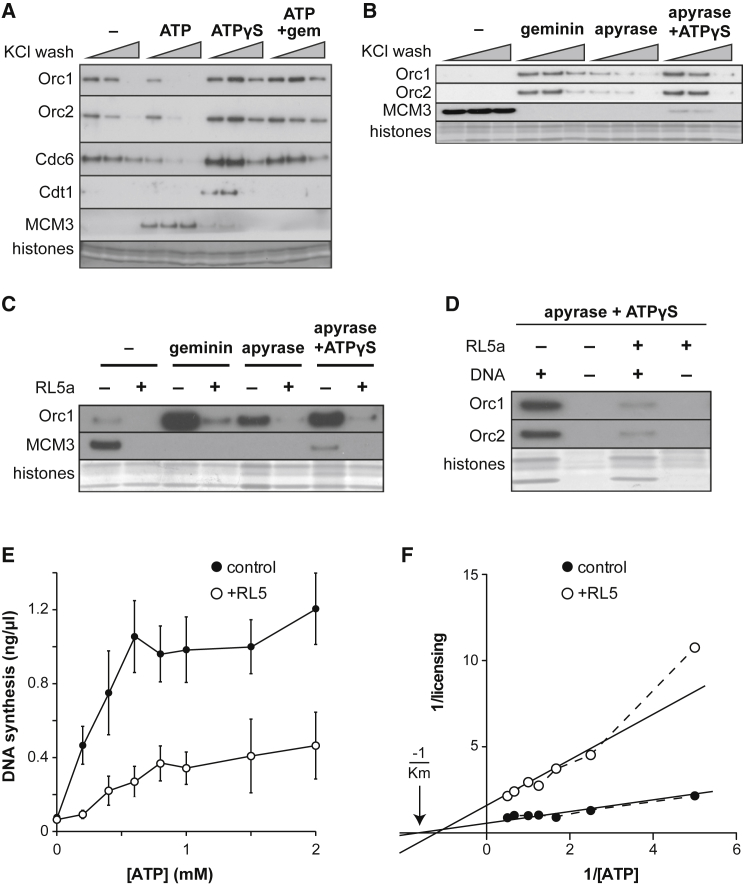
In late mitosis and G, origins of DNA replication must be "licensed" for use in the upcoming S phase by being encircled by double hexamers of the minichromosome maintenance proteins MCM2-7. A "licensing checkpoint" delays cells in G until sufficient origins have been licensed, but this checkpoint is lost in cancer cells. Inhibition of licensing can therefore kill cancer cells while only delaying normal cells in G. In a high-throughput cell-based screen for licensing inhibitors we identified a family of 2-arylquinolin-4-amines, the most potent of which we call RL5a. The binding of the origin recognition complex (ORC) to origin DNA is the first step of the licensing reaction. We show that RL5a prevents ORC forming a tight complex with DNA that is required for MCM2-7 loading. Formation of this ORC-DNA complex requires ATP, and we show that RL5a inhibits ORC allosterically to mimic a lack of ATP.
在有丝分裂后期和 G1 期,DNA 复制的起点必须通过被微染色体维持蛋白 MCM2-7 的双六聚体环绕而被“许可”,才能在即将到来的 S 期使用。一个“许可检查点”会延迟 G1 期的细胞,直到有足够的起点被许可,但这个检查点在癌细胞中丢失。因此,抑制许可可以杀死癌细胞,而只延迟 G1 期的正常细胞。在针对许可抑制剂的高通量细胞筛选中,我们鉴定出了一组 2-芳基喹啉-4-胺,其中最有效的一种我们称之为 RL5a。起始识别复合物(ORC)与起始 DNA 的结合是许可反应的第一步。我们表明,RL5a 阻止 ORC 与 DNA 形成紧密复合物,而这种复合物是 MCM2-7 加载所必需的。这种 ORC-DNA 复合物的形成需要 ATP,我们表明 RL5a 通过变构抑制 ORC,模拟缺乏 ATP 的情况。