Nakano Tomoyuki, Kanai Yoshihiko, Amano Yusuke, Yoshimoto Taichiro, Matsubara Daisuke, Shibano Tomoki, Tamura Tomoko, Oguni Sachiko, Katashiba Shizuka, Ito Takeshi, Murakami Yoshinori, Fukayama Masashi, Murakami Takashi, Endo Shunsuke, Niki Toshiro
Division of General Thoracic Surgery, Jichi Medical University, Shimotsuke, Tochigi, Japan.
Division of Integrative Pathology, Jichi Medical University, Shimotsuke, Tochigi, Japan.
PLoS One. 2017 Aug 7;12(8):e0181342. doi: 10.1371/journal.pone.0181342. eCollection 2017.
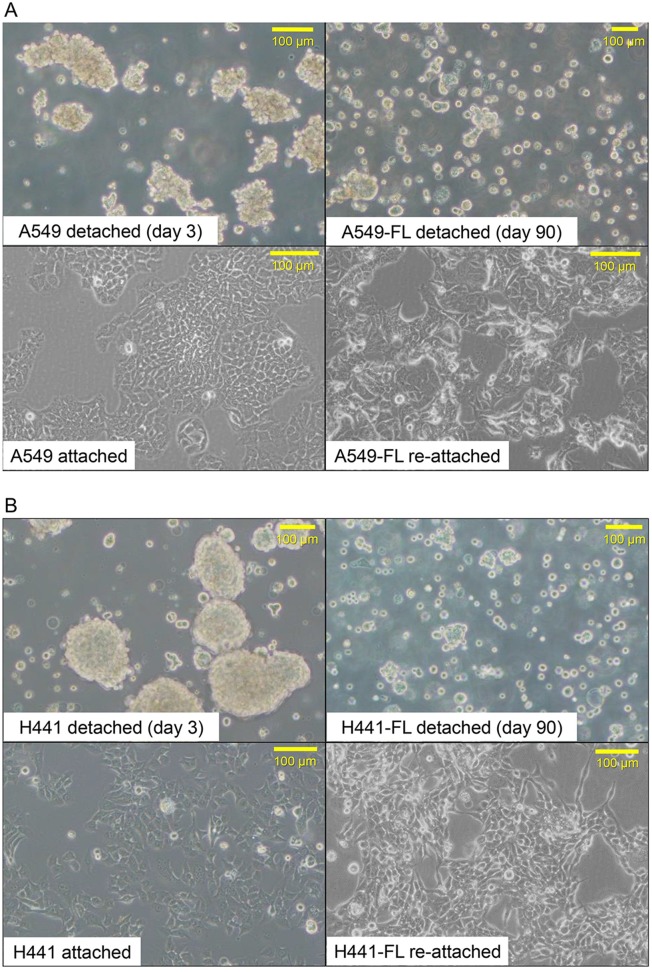
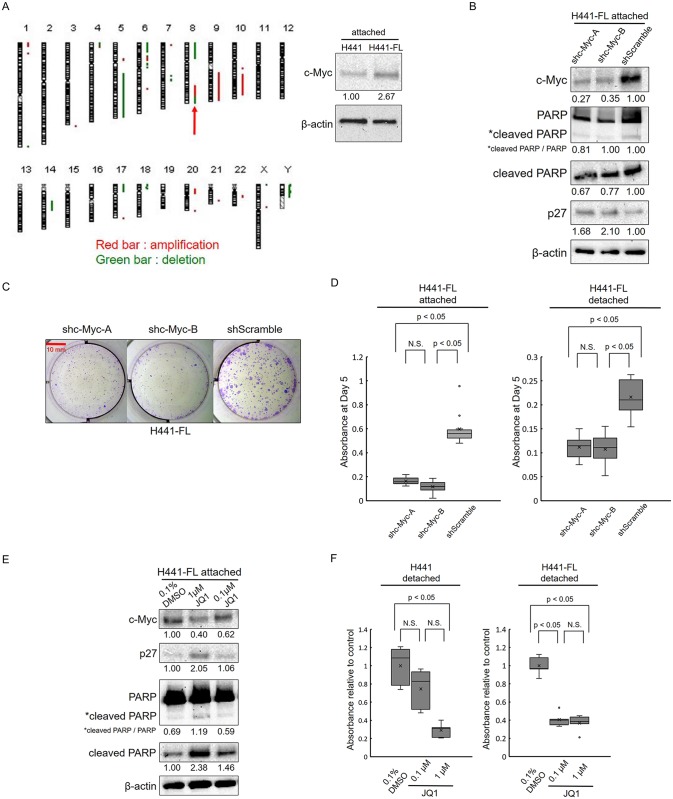
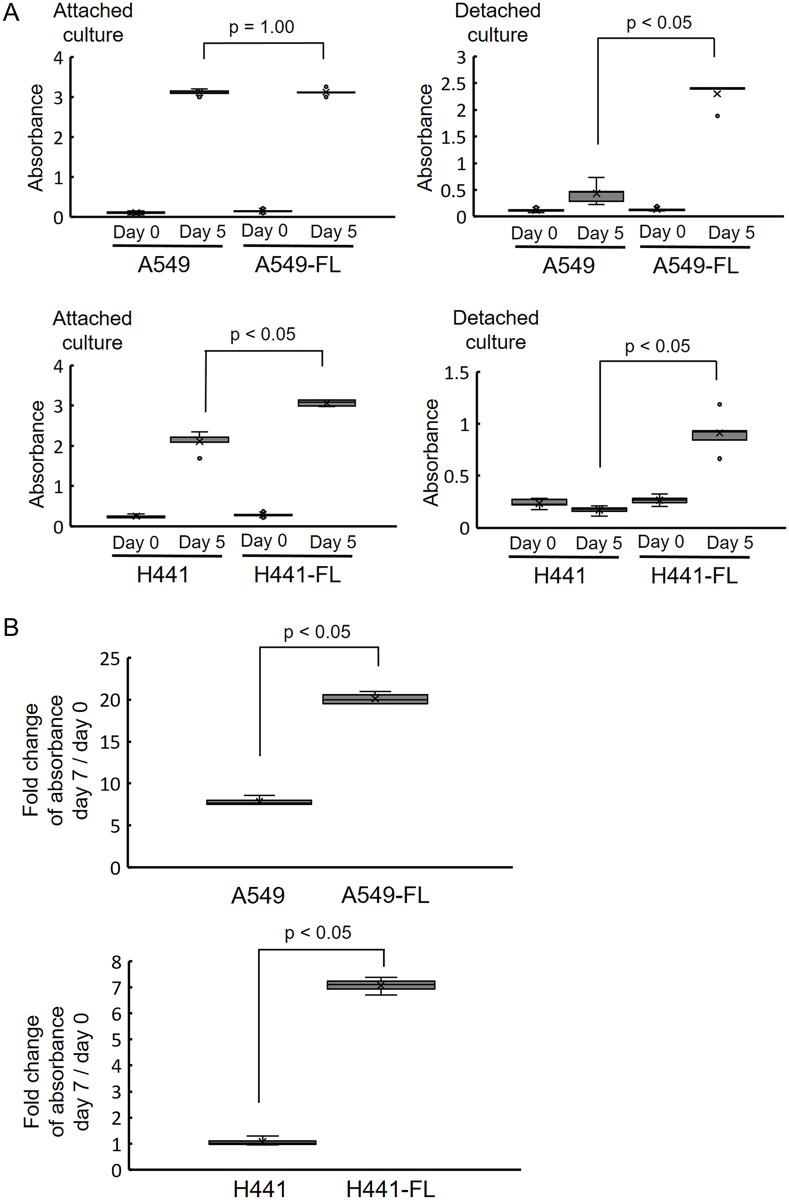
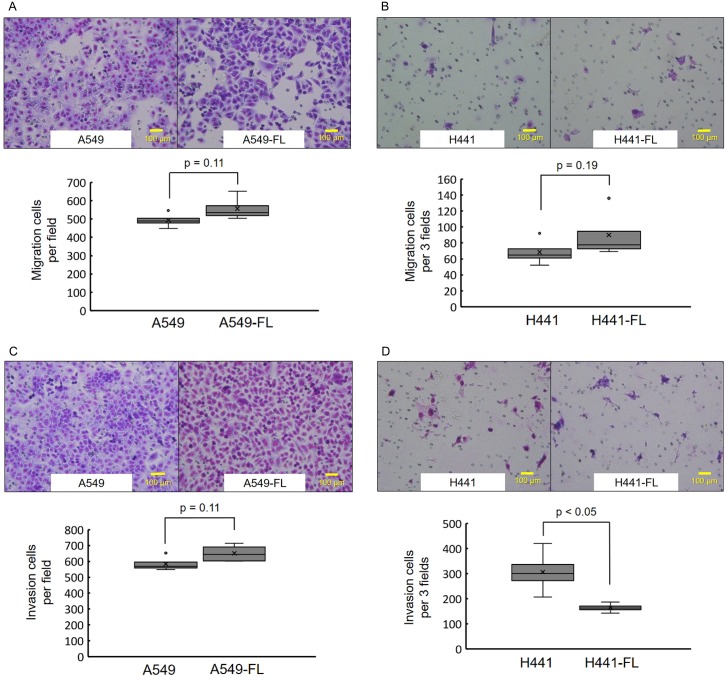
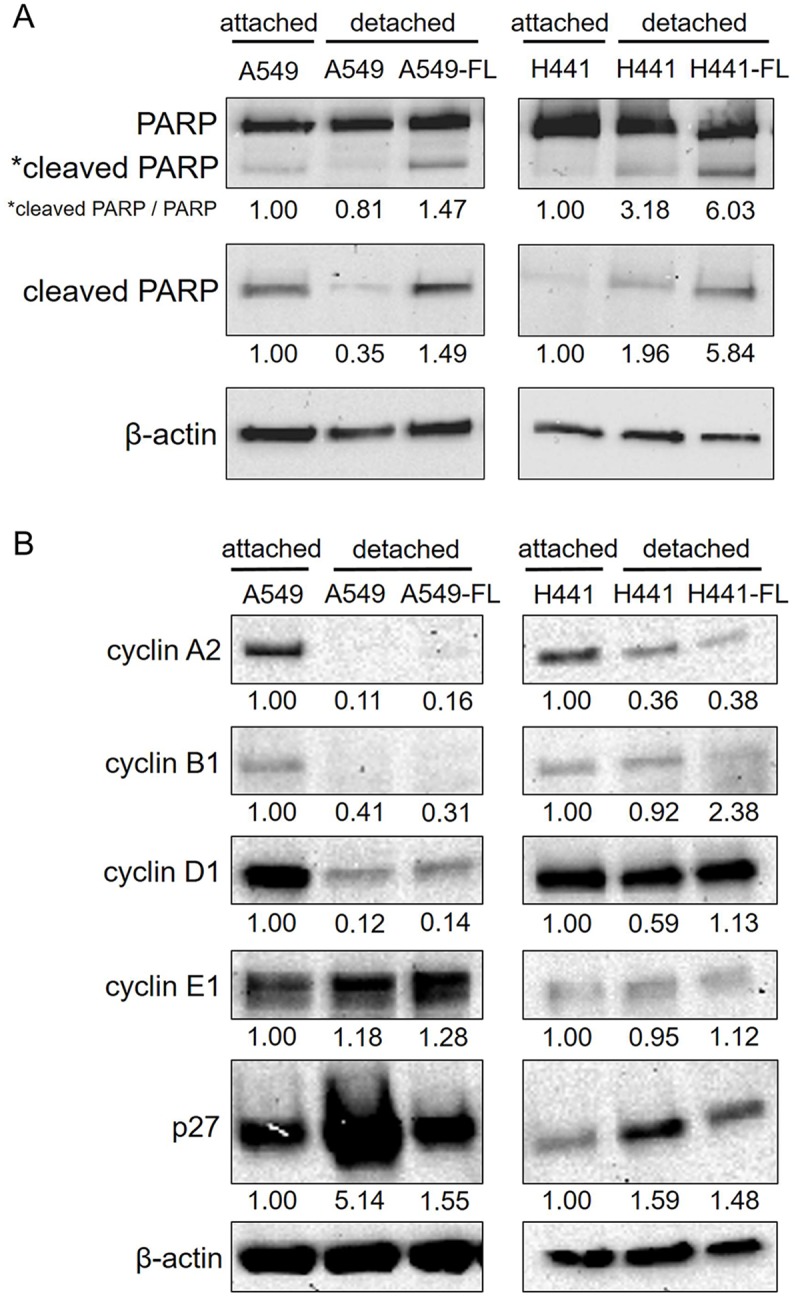
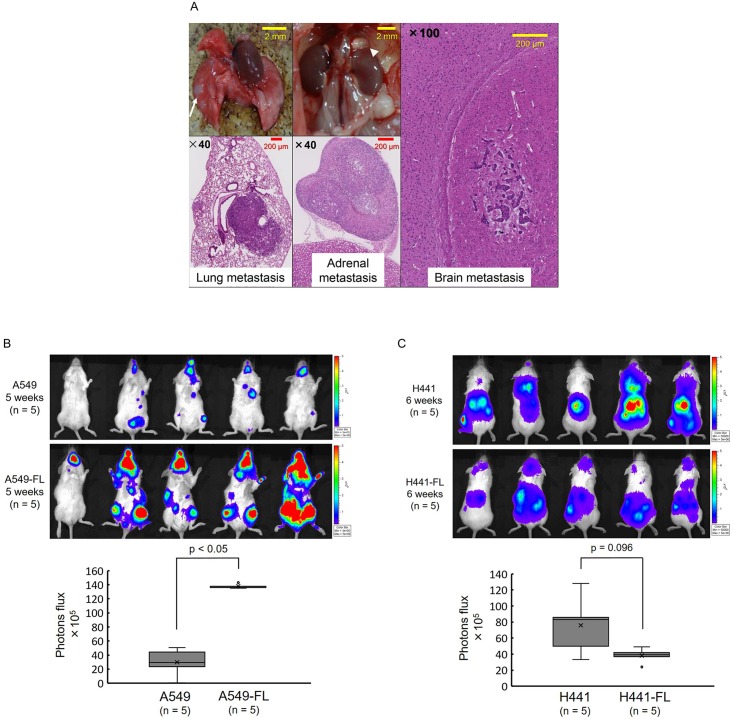
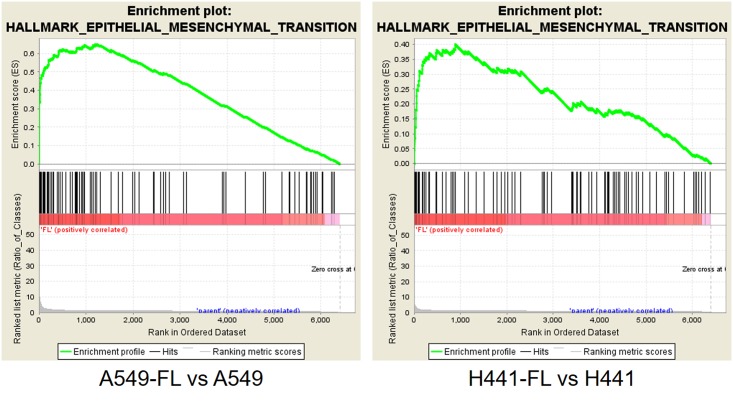
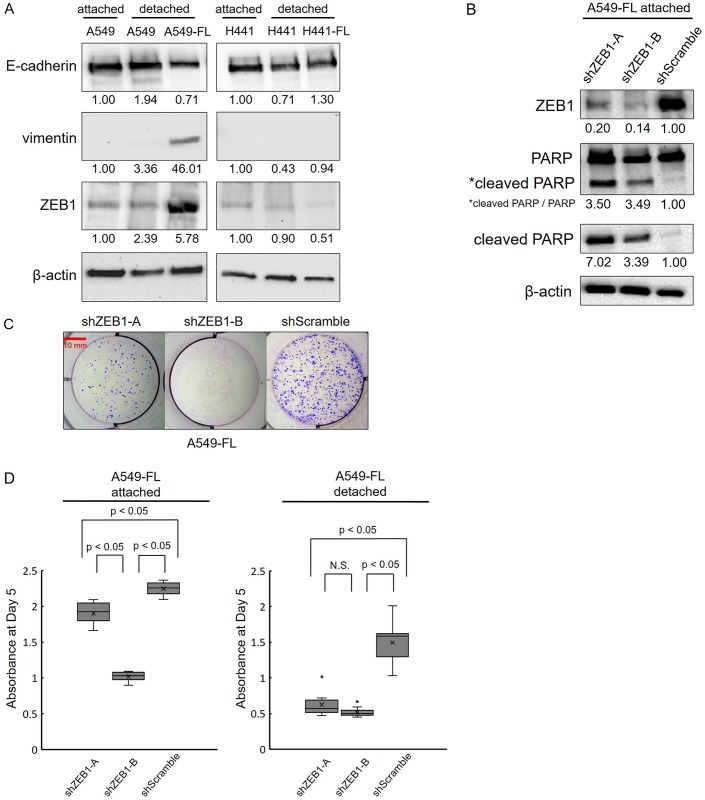
Decreased cell-substratum adhesion is crucially involved in metastasis. Previous studies demonstrated that lung cancer with floating cell clusters in histology is more likely to develop metastasis. In the present study, we investigated whether cancer cells in long-term, three-dimensional low attachment cultures acquire high metastatic potential; these cells were then used to examine the mechanisms underlying metastasis. Two KRAS-mutated adenocarcinoma cell lines (A549 and H441) were cultured and selected on ultra-low attachment culture dishes, and the resulting cells were defined as FL (for floating) sublines. Cancer cells were inoculated into NOD/SCID mice via an intracardiac injection, and metastasis was evaluated using luciferase-based imaging and histopathology. In vitro cell growth (in attachment or suspension cultures), migration, and invasion were assayed. A whole genomic analysis was performed to identify key molecular alterations in FL sublines. Upon detachment on low-binding dishes, parental cells initially formed rounded spheroids with limited growth activity. However, over time in cultures, cells gradually formed smaller spheroids that grew slowly, and, after 3-4 months, we obtained FL sublines that regained prominent growth potential in suspension cultures. On ordinary dishes, FL cells reattached and exhibited a more spindle-shaped morphology than parental cells. No marked differences were observed in cell growth with attachment, migration, or invasion between FL sublines and parental cell lines; however, FL cells exhibited markedly increased growth potential under suspended conditions in vitro and stronger metastatic abilities in vivo. A genomic analysis identified epithelial-mesenchymal transition (EMT) and c-Myc amplification in A549-FL and H441-FL cells, respectively, as candidate mechanisms for metastasis. The growth potential of FL cells was markedly inhibited by lentiviral ZEB1 knockdown in A549-FL cells and by the inhibition of c-Myc through lentiviral knockdown or the pharmacological inhibitor JQ1 in H441-FL cells. Long-term three-dimensional low attachment cultures may become a useful method for investigating the mechanisms underlying metastasis mediated by decreased cell-substratum adhesion.
细胞与基质粘附的降低在转移过程中起着至关重要的作用。先前的研究表明,组织学上具有漂浮细胞簇的肺癌更有可能发生转移。在本研究中,我们调查了长期三维低附着培养的癌细胞是否获得了高转移潜能;然后使用这些细胞来研究转移的潜在机制。将两种KRAS突变的腺癌细胞系(A549和H441)在超低附着培养皿中培养和筛选,所得细胞被定义为FL(漂浮)亚系。通过心内注射将癌细胞接种到NOD/SCID小鼠体内,并使用基于荧光素酶的成像和组织病理学评估转移情况。检测体外细胞生长(贴壁或悬浮培养)、迁移和侵袭情况。进行全基因组分析以确定FL亚系中的关键分子改变。在低结合培养皿上脱离后,亲代细胞最初形成生长活性有限的圆形球体。然而,随着培养时间的延长,细胞逐渐形成较小的球体,生长缓慢,3-4个月后,我们获得了在悬浮培养中恢复显著生长潜能的FL亚系。在普通培养皿上,FL细胞重新附着并呈现出比亲代细胞更呈纺锤形的形态。FL亚系和亲代细胞系在细胞贴壁生长、迁移或侵袭方面未观察到明显差异;然而,FL细胞在体外悬浮条件下表现出明显增加的生长潜能,在体内具有更强的转移能力。基因组分析分别确定A549-FL和H441-FL细胞中的上皮-间质转化(EMT)和c-Myc扩增为转移的候选机制。在A549-FL细胞中,慢病毒介导的ZEB1敲低以及在H441-FL细胞中通过慢病毒敲低或药物抑制剂JQ1抑制c-Myc,可显著抑制FL细胞的生长潜能。长期三维低附着培养可能成为研究细胞与基质粘附降低介导的转移机制的有用方法。