Lin Eric W, Karakasheva Tatiana A, Lee Dong-Jin, Lee Ju-Seog, Long Qi, Bass Adam J, Wong Kwok K, Rustgi Anil K
Department of Medicine, Division of Gastroenterology, University of Pennsylvania, Philadelphia, Pennsylvania, United States of America.
Abramson Cancer Center, University of Pennsylvania, Philadelphia, Pennsylvania, United States of America.
PLoS Genet. 2017 Aug 7;13(8):e1006938. doi: 10.1371/journal.pgen.1006938. eCollection 2017 Aug.
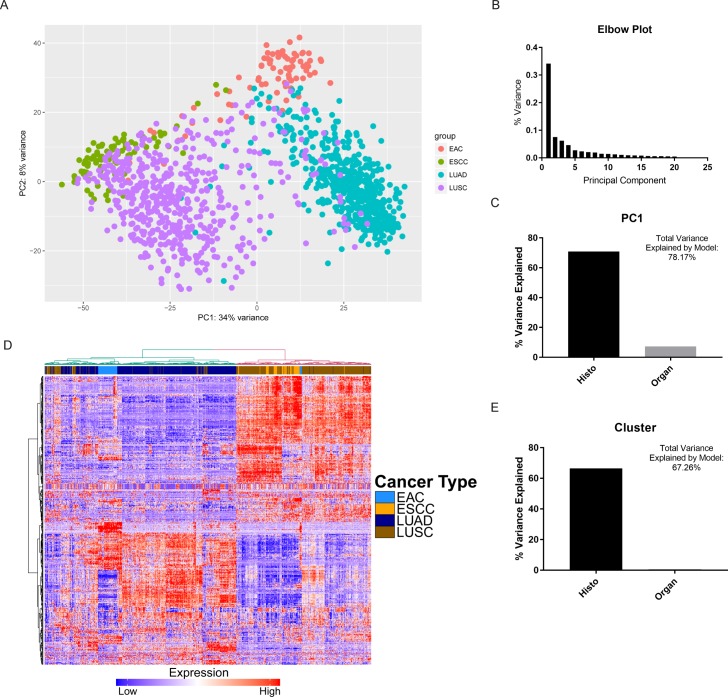
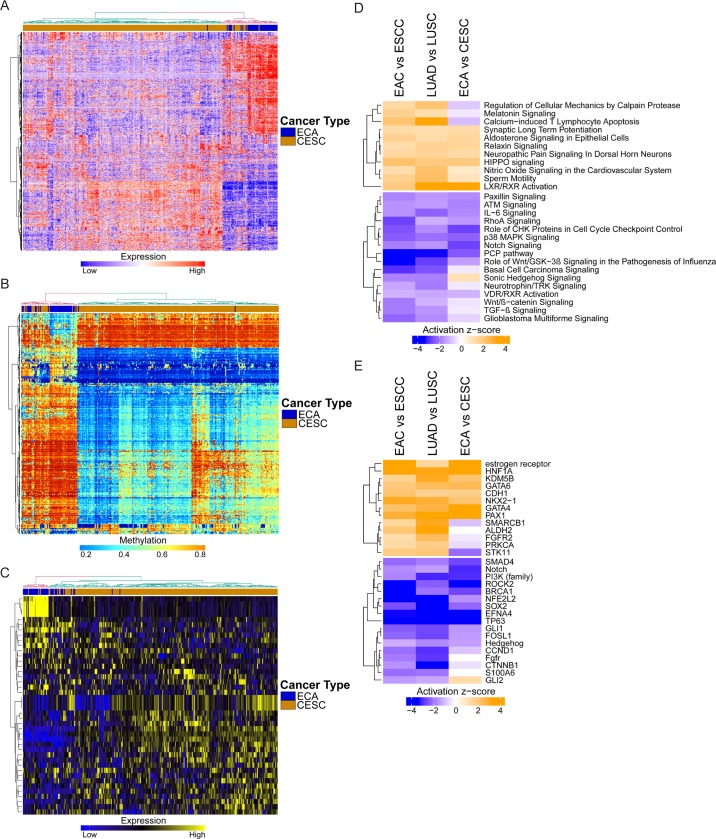
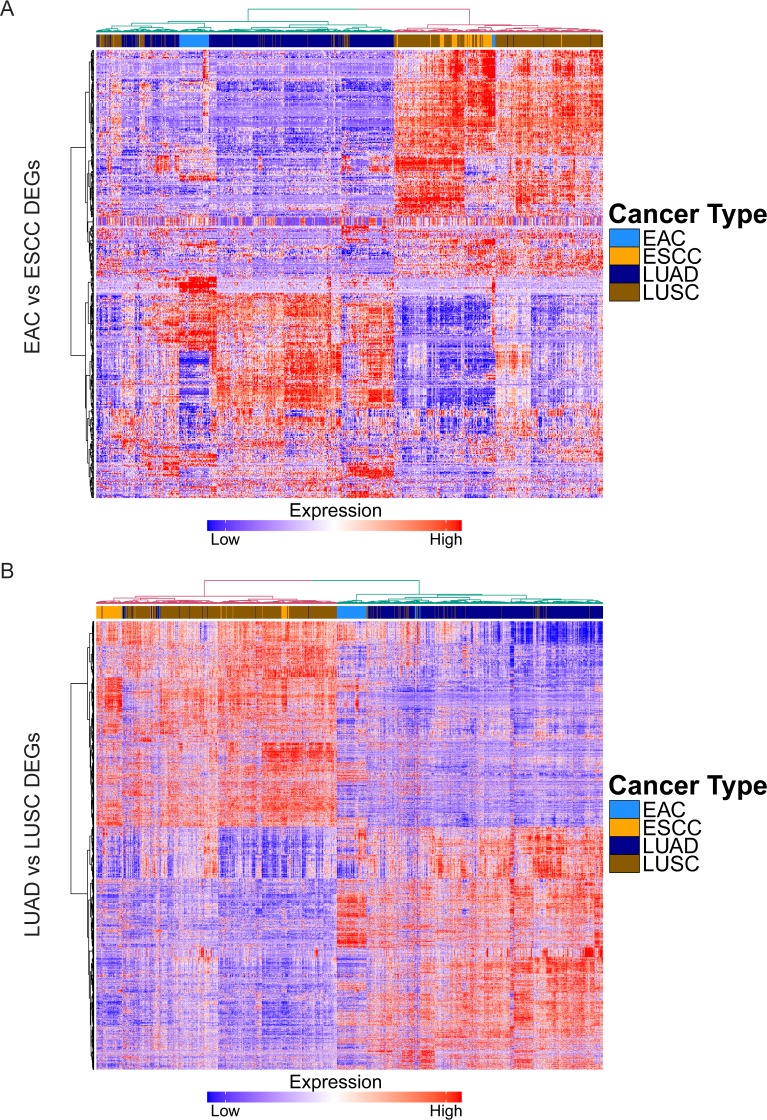
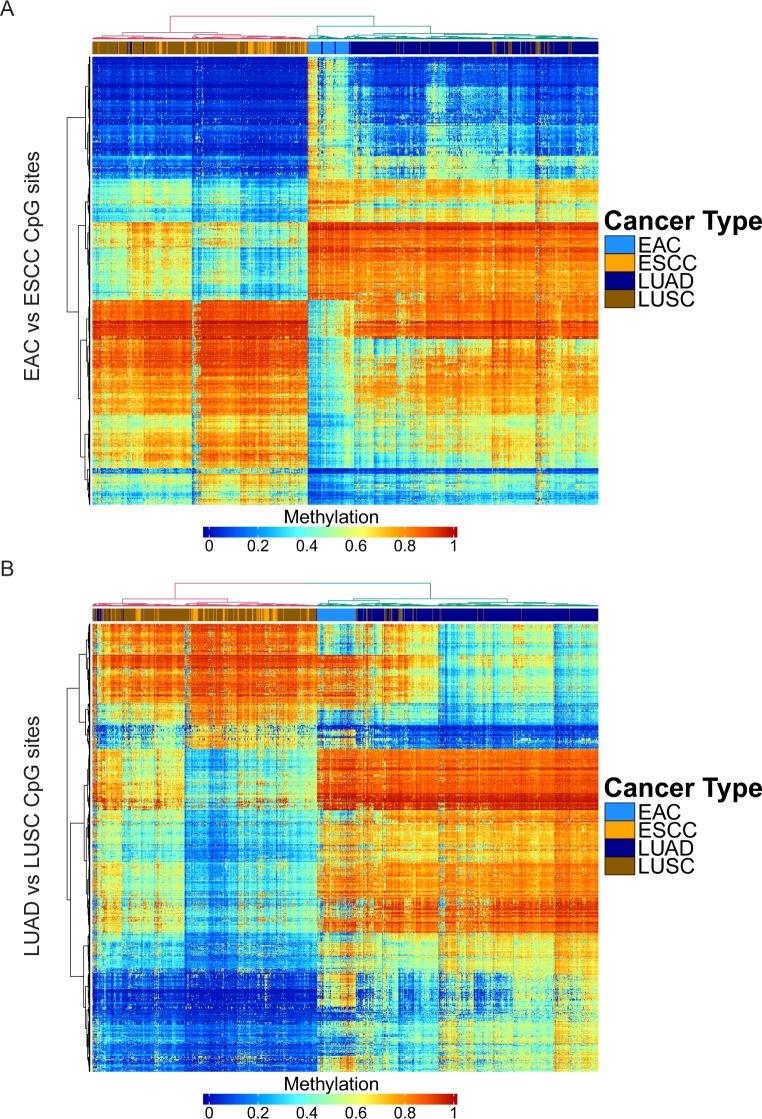
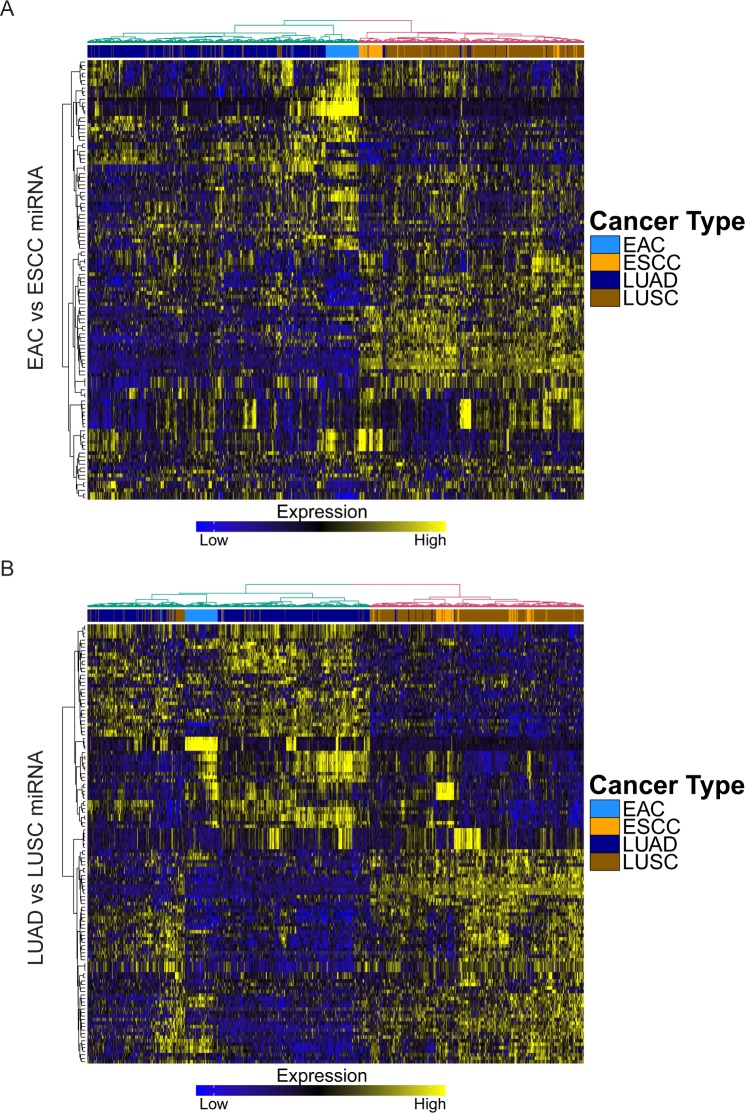
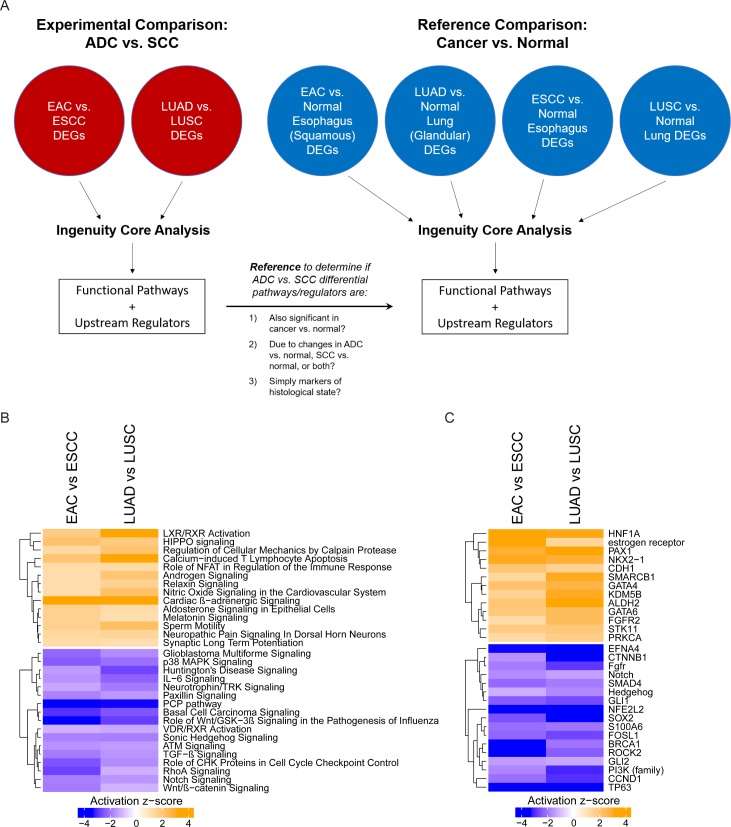
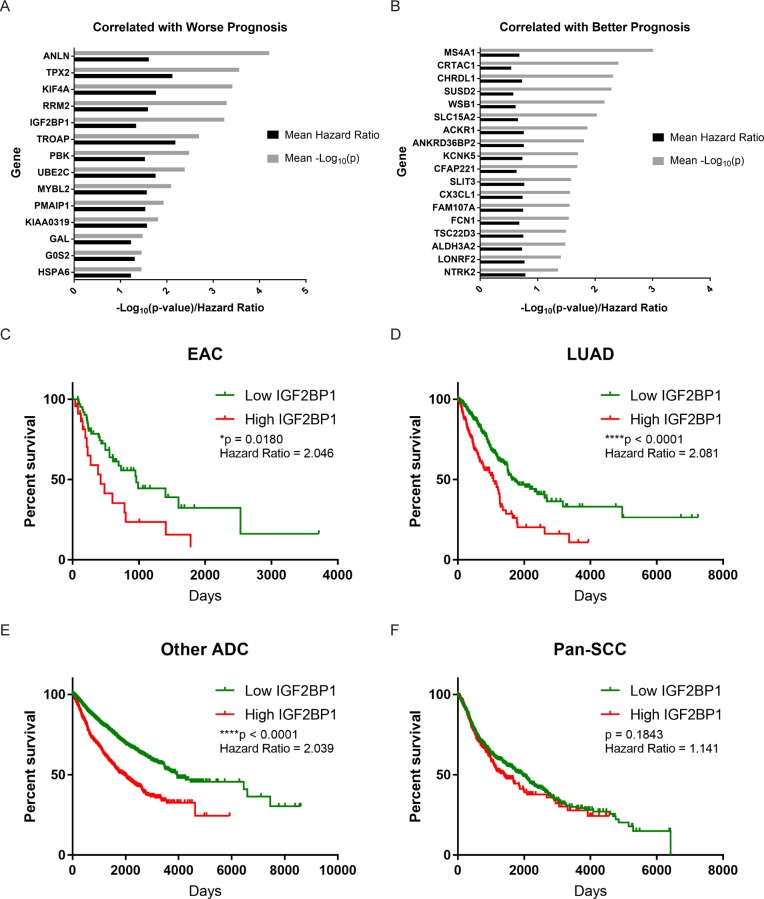
Advances in genomics in recent years have provided key insights into defining cancer subtypes "within-a-tissue"-that is, respecting traditional anatomically driven divisions of medicine. However, there remains a dearth of data regarding molecular profiles that are shared across tissues, an understanding of which could lead to the development of highly versatile, broadly applicable therapies. Using data acquired from The Cancer Genome Atlas (TCGA), we performed a transcriptomics-centered analysis on 1494 patient samples, comparing the two major histological subtypes of solid tumors (adenocarcinomas and squamous cell carcinomas) across organs, with a focus on tissues in which both subtypes arise: esophagus, lung, and uterine cervix. Via principal component and hierarchical clustering analysis, we discovered that histology-driven differences accounted for a greater degree of inherent molecular variation in the tumors than did tissue of origin. We then analyzed differential gene expression, DNA methylation, and non-coding RNA expression between adenocarcinomas and squamous cell carcinomas and found 1733 genes, 346 CpG sites, and 42 microRNAs in common between organ sites, indicating specific adenocarcinoma-associated and squamous cell carcinoma-associated molecular patterns that were conserved across tissues. We then identified specific pathways that may be critical to the development of adenocarcinomas and squamous cell carcinomas, including Liver X receptor activation, which was upregulated in adenocarcinomas but downregulated in squamous cell carcinomas, possibly indicating important differences in cancer cell metabolism between these two histological subtypes of cancer. In addition, we highlighted genes that may be common drivers of adenocarcinomas specifically, such as IGF2BP1, which suggests a possible link between embryonic development and tumor subtype. Altogether, we demonstrate the need to consider biological similarities that transcend anatomical boundaries to inform the development of novel therapeutic strategies. All data sets from our analysis are available as a resource for further investigation.
近年来,基因组学的进展为在组织内定义癌症亚型提供了关键见解,即尊重传统的解剖学驱动的医学划分。然而,关于跨组织共享的分子图谱的数据仍然匮乏,了解这些图谱可能会促成高度通用、广泛适用的疗法的开发。利用从癌症基因组图谱(TCGA)获取的数据,我们对1494例患者样本进行了以转录组学为中心的分析,比较了实体瘤的两种主要组织学亚型(腺癌和鳞状细胞癌)在不同器官中的情况,重点关注两种亚型均会出现的组织:食管、肺和子宫颈。通过主成分分析和层次聚类分析,我们发现组织学驱动的差异比肿瘤的起源组织在肿瘤中造成的固有分子变异程度更大。然后,我们分析了腺癌和鳞状细胞癌之间的差异基因表达、DNA甲基化和非编码RNA表达,发现在器官部位之间有1733个基因、346个CpG位点和42个微小RNA是共有的,这表明在不同组织中存在特定的腺癌相关和鳞状细胞癌相关的分子模式。然后,我们确定了可能对腺癌和鳞状细胞癌的发展至关重要的特定通路,包括肝X受体激活,它在腺癌中上调但在鳞状细胞癌中下调,这可能表明这两种组织学亚型的癌细胞代谢存在重要差异。此外,我们特别强调了可能是腺癌特异性常见驱动因素的基因,如IGF2BP1,这表明胚胎发育与肿瘤亚型之间可能存在联系。总之,我们证明有必要考虑超越解剖学界限的生物学相似性,以为新型治疗策略的开发提供信息。我们分析的所有数据集都可作为进一步研究的资源。