Cao Wenjuan, Tian Junqiang, Li Chong, Gao Yanjun, Liu Xingchen, Lu Jianzhong, Wang Yuhan, Wang Zhiping, Svatek Robert S, Rodriguez Ronald
Institute of Urology, The Second Hospital of Lanzhou University, Key Laboratory of Urological Diseases in Gansu Province, Gansu Nephro-Urological Clinical Center, Cui Yingmen 82, Lanzhou, 730030, China.
Department of Urology, University of Texas Health Science Center San Antonio 7703 Floyd Curl Drive, San Antonio, TX, 78229-3900, USA.
Virol J. 2017 Aug 8;14(1):149. doi: 10.1186/s12985-017-0818-1.
Conditionally replicative oncolytic adenoviruses (CRAds) display significant anti-tumor effects. However, the traditional adenovirus of serotype 5 (Ad5) entering cancer cells via coxsackie virus and adenovirus receptor (CAR) can't be utilized for bladder cancer with low expression of CAR, which limits the application of Ad5.
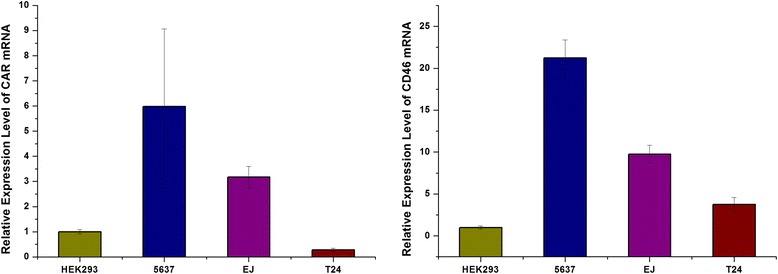
We utilized Ad5/F11p containing the chimeric fiber gene encoding the Ad5 fiber tail domain and Ad11p fiber shaft and knob domains to construct bladder cancer-specific chimeric type viruses Ad5/F11p-PSCAE-UPII-E1A, which can infect bladder cancer cells mediated by CD46 molecule. We carried out series of experiments in vitro to research anti-tumor effect of Ad5/F11p-PSCAE-UPII-E1A and the interaction in combination with cisplatin.
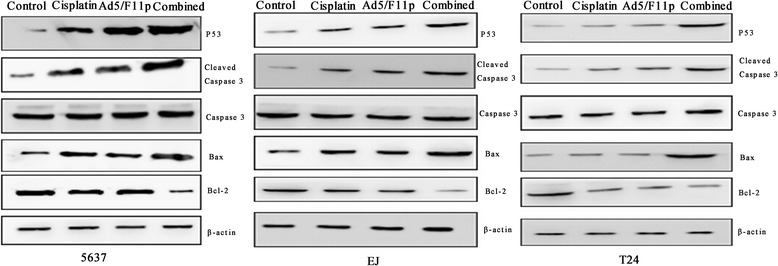
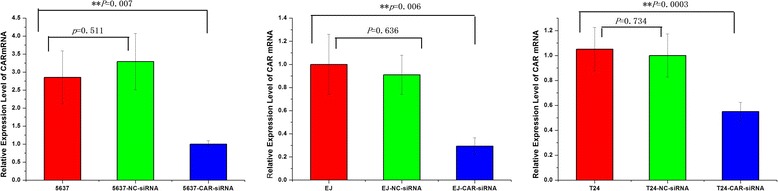
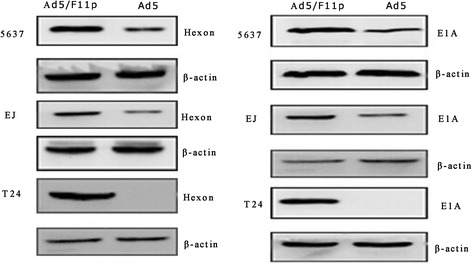
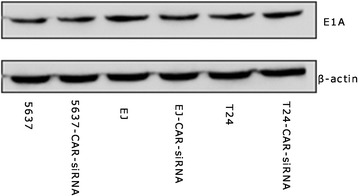
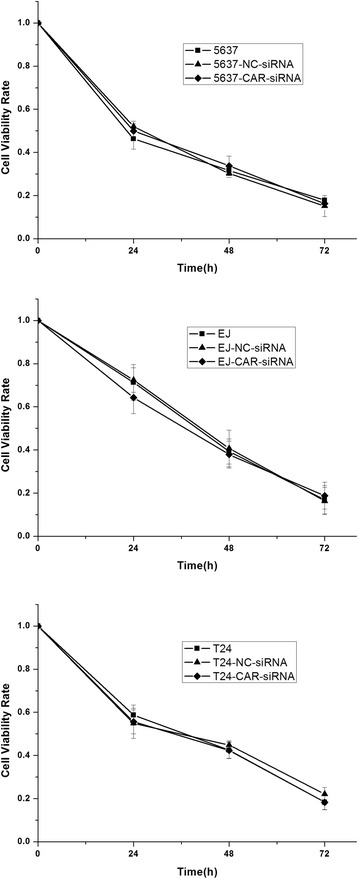
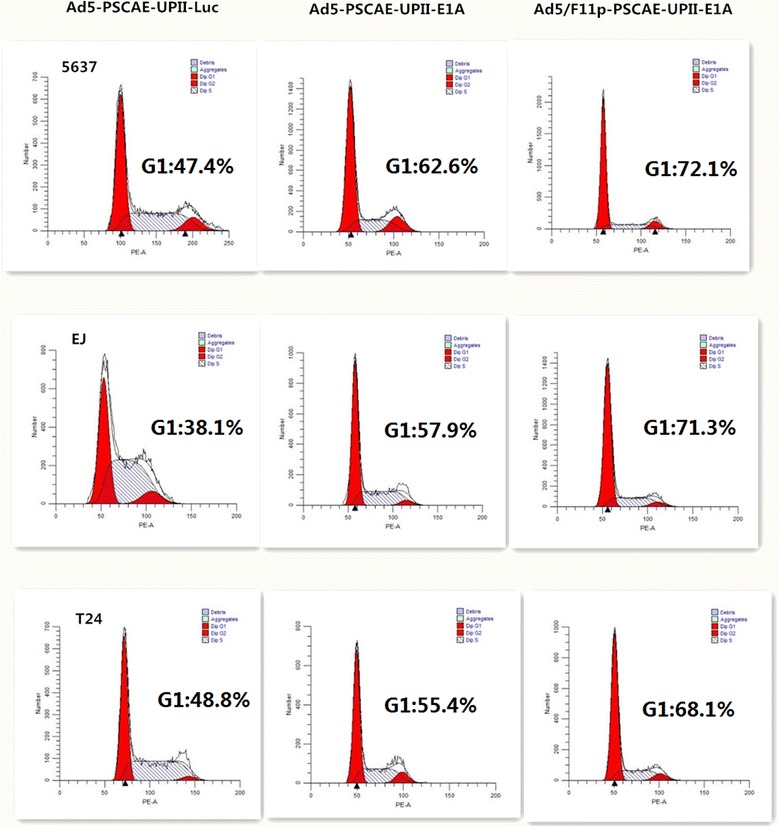
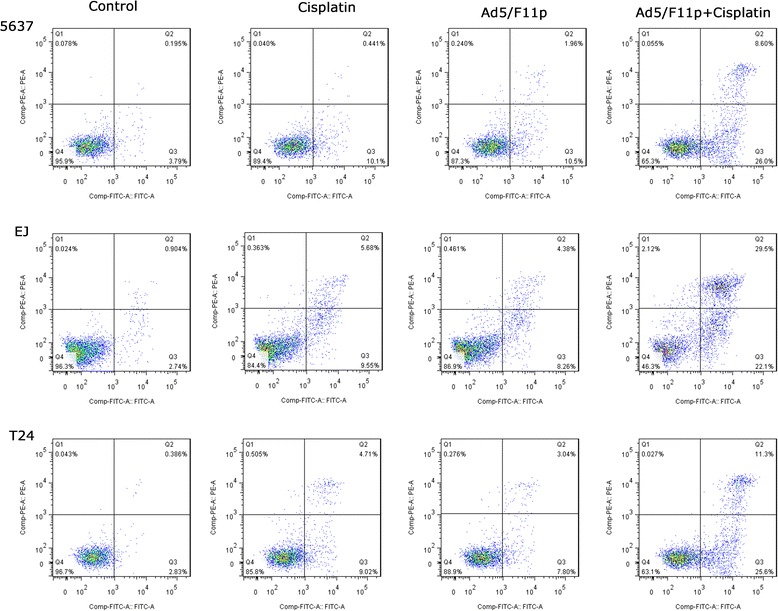
The results demonstrated Ad5/F11p-PSCAE-UPII-E1A could infect bladder cancer cells (T24, EJ and 5637) in a CAR-independent way, and exert anti-tumor effect by blocking the cancer cells in G1 phase and inducing apoptosis. Ad5/F11p-PSCAE-UPII-E1A plus cisplatin enhanced the anti-proliferative effect and increased the number of apoptotic cells compared with viruses or cisplatin alone. Ad5/F11p-PSCAE-UPII-E1A plus cisplatin could upregulate the proteins expression of p53, Bax, and cleaved caspase-3, and downregulated Bcl-2 protein expression in T24, EJ and 5637 cells.
We constructed a bladder cancer-specific oncolytic adenovirus and provided new combination treatment strategies for bladder cancer.
条件性复制溶瘤腺病毒(CRAds)具有显著的抗肿瘤作用。然而,传统的5型腺病毒(Ad5)通过柯萨奇病毒和腺病毒受体(CAR)进入癌细胞,对于CAR低表达的膀胱癌无法利用,这限制了Ad5的应用。
我们利用含有编码Ad5纤维尾结构域以及Ad11p纤维杆和纤维结结构域的嵌合纤维基因的Ad5/F11p构建膀胱癌特异性嵌合型病毒Ad5/F11p-PSCAE-UPII-E1A,其可通过CD46分子介导感染膀胱癌细胞。我们在体外进行了一系列实验,研究Ad5/F11p-PSCAE-UPII-E1A的抗肿瘤作用以及与顺铂联合使用时的相互作用。
结果表明,Ad5/F11p-PSCAE-UPII-E1A能够以不依赖CAR的方式感染膀胱癌细胞(T24、EJ和5637),并通过将癌细胞阻滞在G1期和诱导凋亡发挥抗肿瘤作用。与单独使用病毒或顺铂相比,Ad5/F11p-PSCAE-UPII-E1A联合顺铂增强了抗增殖作用并增加了凋亡细胞数量。Ad5/F11p-PSCAE-UPII-E1A联合顺铂可上调T24、EJ和5637细胞中p53、Bax和裂解的caspase-3的蛋白表达,并下调Bcl-2蛋白表达。
我们构建了一种膀胱癌特异性溶瘤腺病毒,并为膀胱癌提供了新的联合治疗策略。