Luo Jiaoyang, Han Xu, Dou Xiaowen, Zhang Lei, Yang Shihai, Yang Meihua
Institute of Medicinal Plant Development, Chinese Academy of Medical Sciences and Peking Union Medical CollegeBeijing, China.
College of Traditional Chinese Medicine, Jilin Agricultural UniversityChangchun, China.
Front Pharmacol. 2017 Jul 25;8:491. doi: 10.3389/fphar.2017.00491. eCollection 2017.
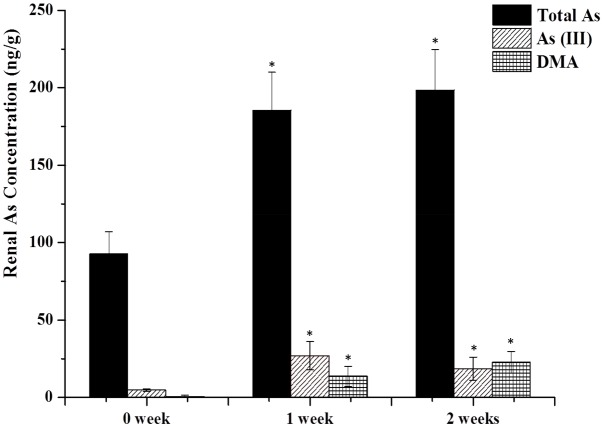
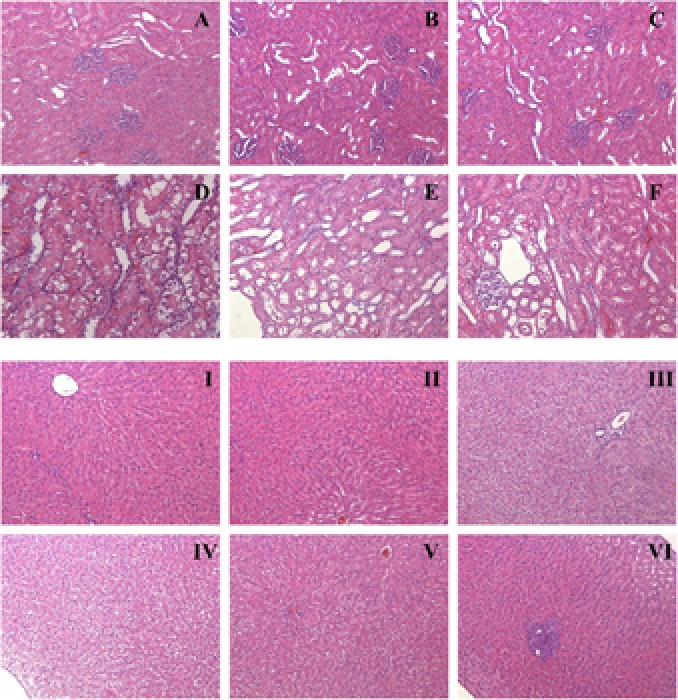
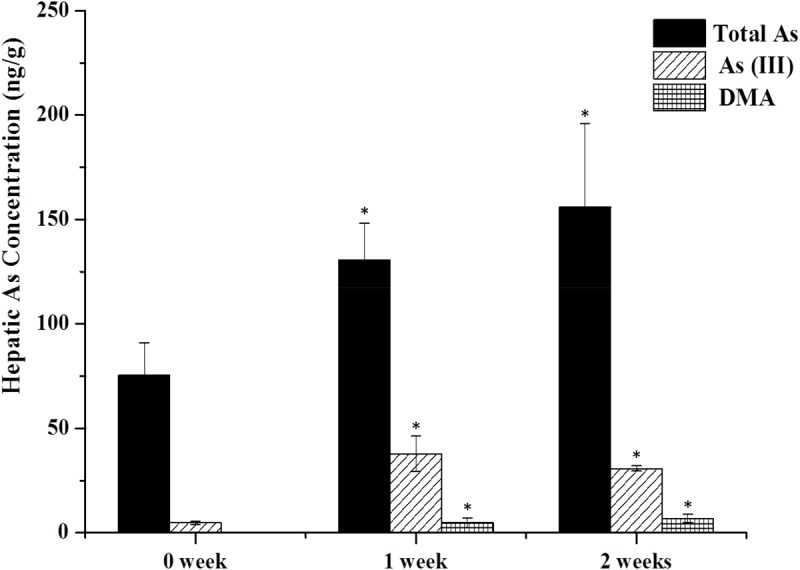
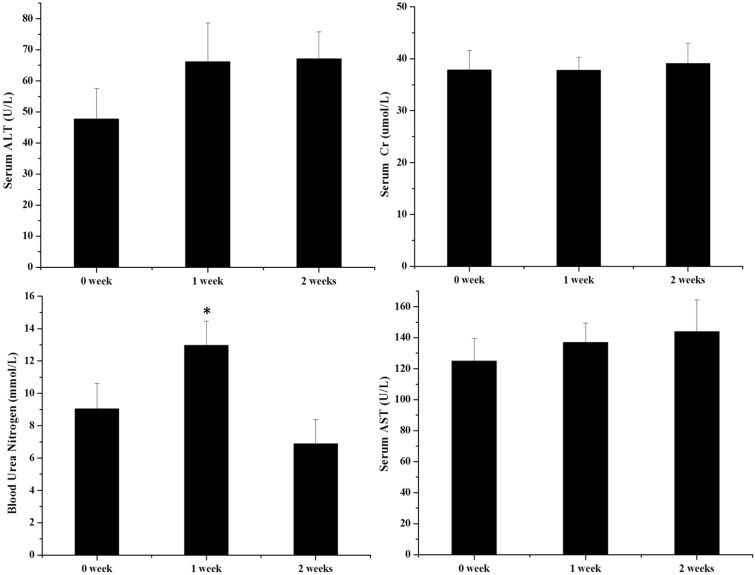
Realgar-containing traditional Chinese medicines such as Xiao-Er-Zhi-Bao-Wan (XEZBW), have been widely used for thousands of years. However, events associated with arsenic-induced ailments have increasingly become a public concern. To address the toxicity of XEZBW, we studied the histopathology and blood biochemistry of rats exposed to XEZBW using technology like high-performance liquid chromatography-inductively coupled mass spectrometry to determine arsenic speciation. Our results demonstrated that dimethylarsinic acid (DMA) increased from 18.57 ± 7.45 to 22.74 ± 7.45 ng/g in rat kidney after oral administration for 7 and 14 days, which was 10-fold higher than the levels observed in controls. Trivalent arsenite As(III) showed a large increase on day 7 (26.99 ± 1.98 ng/g), followed by a slight decrease on day 14 (13.67 ± 6.48 ng/g). Total arsenic levels on day 7 (185.52 ± 24.56 ng/g) and day 14 (198.57 ± 26.26 ng/g) were nearly twofold higher than that in the control group (92.77 ± 14.98 ng/g). Histopathological analysis showed mild injury in the liver and kidney of rats subjected to oral administration of realgar for 14 days. As in the XEZBW groups, a mild injury in these organs was observed after administration for 14 days. This study inferred that the toxicity of arsenic was concentration- and time-dependent. The accumulation of DMA, a byproduct of choline metabolism, was responsible for inducing higher toxicity. Therefore, we concluded that measuring the levels of DMA, instead of total arsenic, might be more suitable for evaluating the toxicity of realgar-containing traditional Chinese medicines.
含雄黄的中药,如小儿至宝丸(XEZBW),已被广泛使用了数千年。然而,与砷中毒相关的事件日益成为公众关注的问题。为了解决XEZBW的毒性问题,我们利用高效液相色谱 - 电感耦合质谱等技术研究了暴露于XEZBW的大鼠的组织病理学和血液生化指标,以确定砷的形态。我们的结果表明,口服7天和14天后,大鼠肾脏中的二甲基砷酸(DMA)从18.57±7.45 ng/g增加到22.74±7.45 ng/g,比对照组观察到的水平高10倍。三价亚砷酸盐As(III)在第7天大幅增加(26.99±1.98 ng/g),随后在第14天略有下降(13.67±6.48 ng/g)。第7天(185.52±24.56 ng/g)和第14天(198.57±26.26 ng/g)的总砷水平比对照组(92.77±14.98 ng/g)高出近两倍。组织病理学分析显示,口服雄黄14天的大鼠肝脏和肾脏有轻度损伤。与XEZBW组一样,给药14天后这些器官出现轻度损伤。本研究推断,砷的毒性具有浓度和时间依赖性。胆碱代谢副产物DMA的积累是导致更高毒性的原因。因此我们得出结论,测量DMA水平而非总砷水平可能更适合评估含雄黄中药的毒性。