Metherell Alexander J, Ward Michael D
Department of Chemistry , University of Sheffield , Sheffield S3 7HF , UK . Email:
Chem Sci. 2016 Feb 1;7(2):910-915. doi: 10.1039/c5sc03526k. Epub 2015 Oct 14.
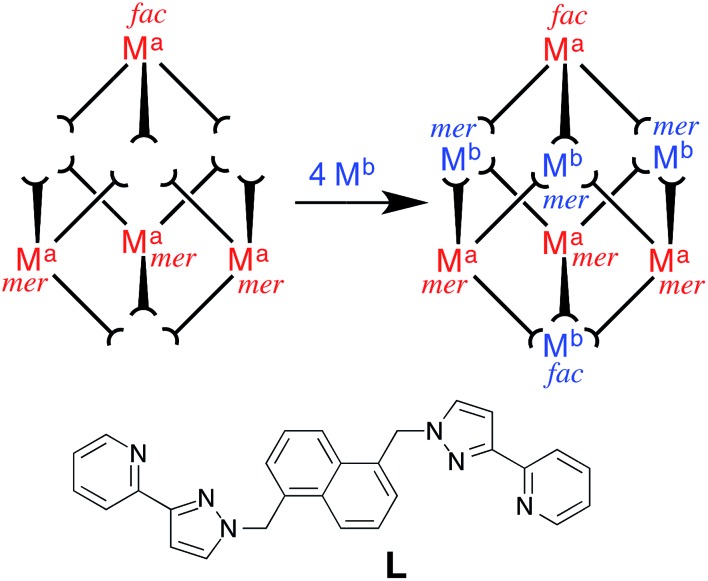
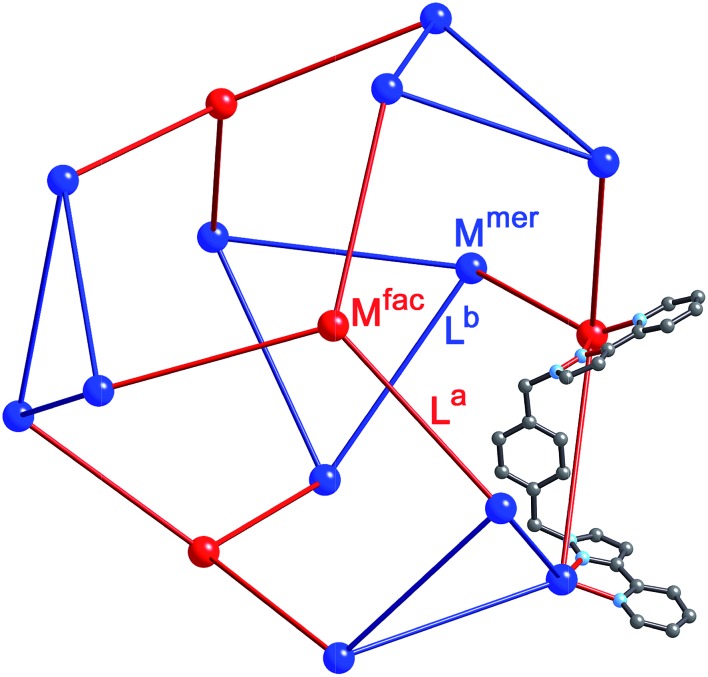
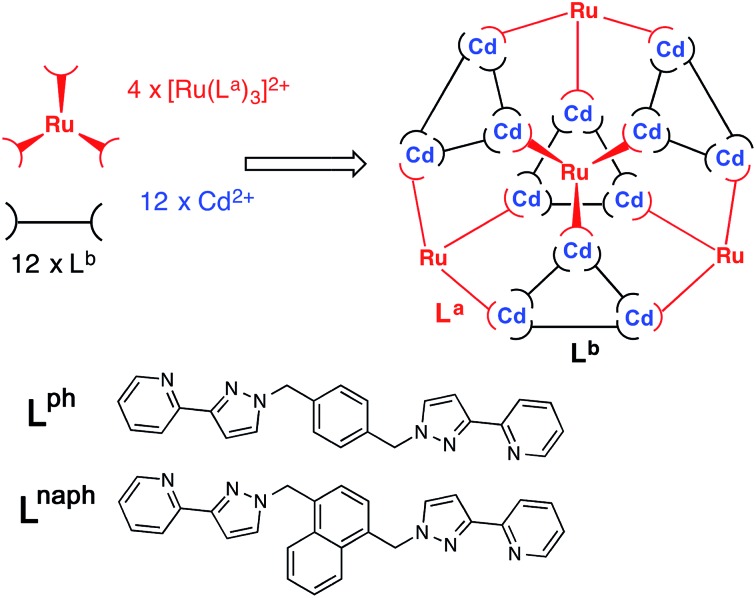
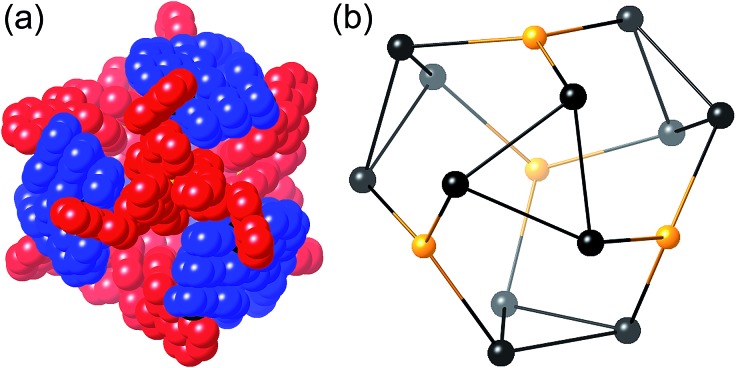
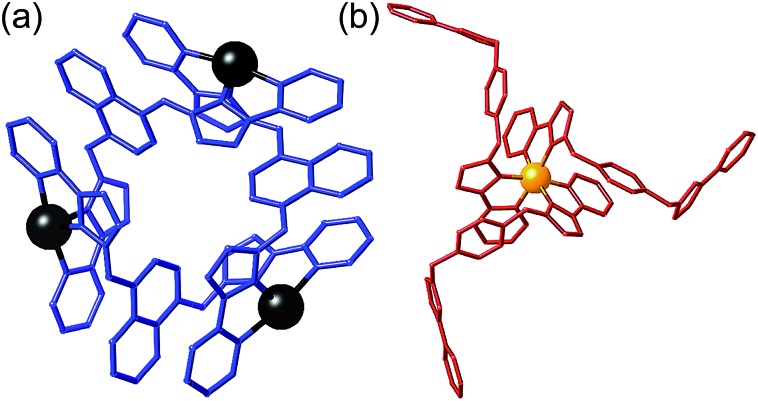
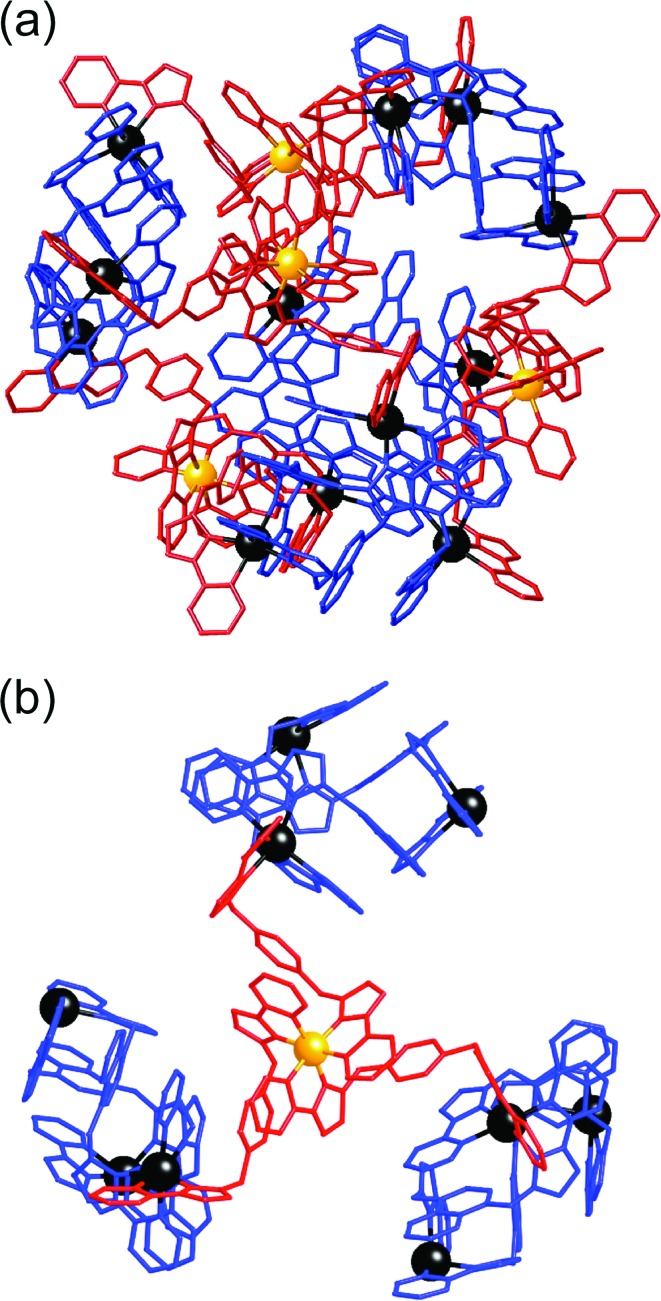
Retrosynthetic analysis of a [ML] coordination cage shows how it can be assembled rationally, in a stepwise manner, using a combination of kinetically inert and kinetically labile components. Combination of the components of -Ru(L), Cd(BF) and L in the necessary 4 : 12 : 12 stoichiometry afforded crystals of [RuCd(L)(L)]X (X = a mono-anion) in which the location of the two types of metal ion [Ru(ii) or Cd(ii)] at specific vertices in the metal-ion array, and the two types of bridging ligand (L and L) along specific edges, is completely controlled by the synthetic strategy. The incorporation of four different types of component at pre-determined positions in a coordination cage superstructure represents a substantial advance in imposing control on the self-assembly of complex metallosupramolecular entities.
对一种[ML]配位笼的逆合成分析表明了如何以逐步的方式,通过结合动力学惰性和动力学不稳定的组分来合理地组装它。以4∶12∶12的化学计量比将Ru(L)、Cd(BF)和L的组分相结合,得到了[RuCd(L)(L)]X(X为单阴离子)晶体,其中两种类型的金属离子[Ru(ii)或Cd(ii)]在金属离子阵列中特定顶点的位置,以及沿着特定边的两种类型的桥连配体(L和L),完全由合成策略控制。在配位笼超结构的预定位置引入四种不同类型的组分,代表了在对复杂金属超分子实体的自组装施加控制方面取得的重大进展。