Relhan Vineet, Mahajan Khushbu, Agarwal Pooja, Garg Vijay Kumar
Department of Dermatology, Maulana Azad Medical College, New Delhi, India.
Department of Dermatology, NDMC Medical College and Hindu Rao Hospital, New Delhi, India.
Indian J Dermatol. 2017 Jul-Aug;62(4):332-340. doi: 10.4103/ijd.IJD_476_16.
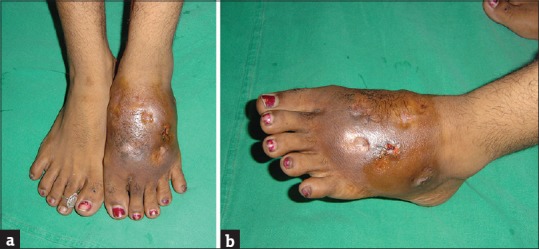
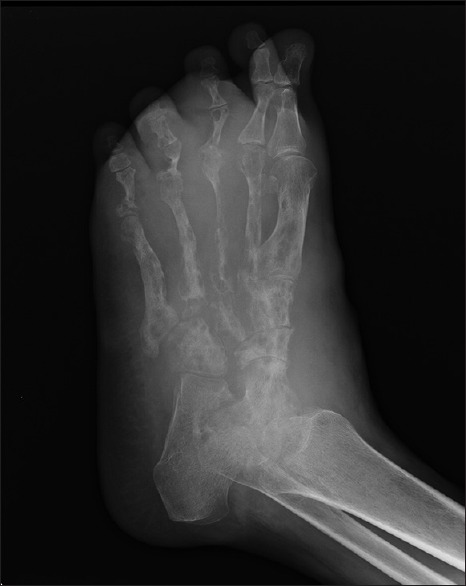
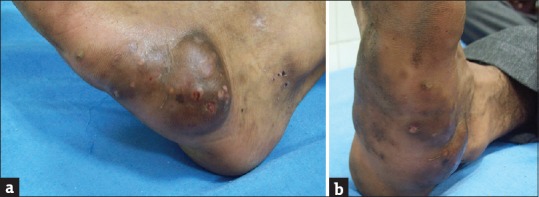
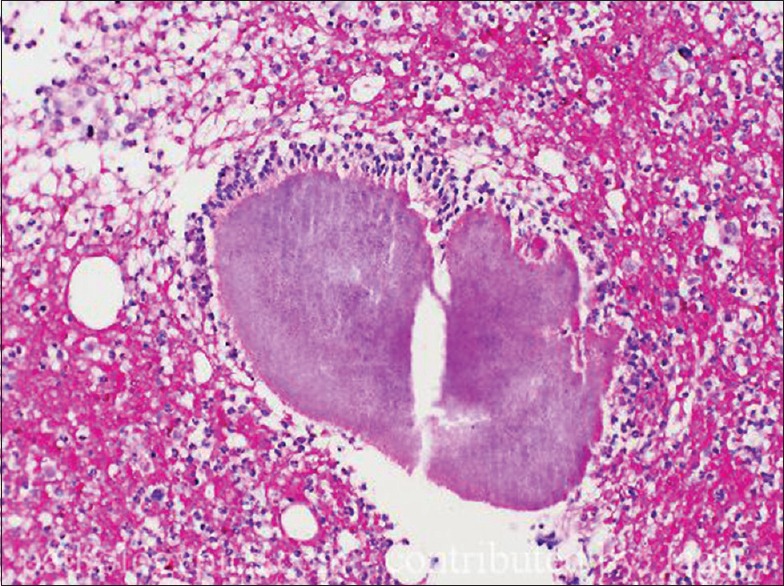
Mycetoma is a localized chronic, suppurative, and deforming granulomatous infection seen in tropical and subtropical areas. It is a disorder of subcutaneous tissue, skin and bones, mainly of feet, characterized by a triad of localized swelling, underlying sinus tracts, and production of grains or granules. Etiological classification divides it into eumycetoma caused by fungus, and actinomycetoma caused by bacteria. Since the treatment of these two etiologies is entirely different, a definite diagnosis after histopathological and microbiological examination is mandatory, though difficult. Serological test exists but is not so reliable; however, molecular techniques to identify relevant antigens have shown promise. The disease is notoriously difficult to treat. Eumycetoma may be unresponsive to standard antifungal therapy. Actinomycetoma responds to antibiotic therapy, but prolonged treatment is necessary. This review focuses on the etiopathogenesis, clinical features, laboratory diagnosis, and treatment of mycetoma.
足菌肿是一种发生于热带和亚热带地区的局限性慢性化脓性肉芽肿性感染。它是一种皮下组织、皮肤和骨骼的疾病,主要累及足部,其特征为局部肿胀、深部窦道以及颗粒或微粒的产生三联征。病因分类将其分为由真菌引起的真菌性足菌肿和由细菌引起的放线菌性足菌肿。由于这两种病因的治疗方法完全不同,尽管困难,但组织病理学和微生物学检查后进行明确诊断是必不可少的。血清学检测存在但不太可靠;然而,鉴定相关抗原的分子技术已显示出前景。该疾病治疗 notoriously 困难。真菌性足菌肿可能对标准抗真菌治疗无反应。放线菌性足菌肿对抗生素治疗有反应,但需要长期治疗。本综述重点关注足菌肿的病因发病机制、临床特征、实验室诊断和治疗。