Loree Jonathan M, Kopetz Scott
Division of Gastrointestinal Medical Oncology, The University of Texas, MD Anderson Cancer Center, Houston, TX, USA.
Division of Gastrointestinal Medical Oncology, The University of Texas, MD Anderson Cancer Center, Unit 426, 1515 Holcombe Blvd, Houston, TX 77030, USA.
Ther Adv Med Oncol. 2017 Aug;9(8):551-564. doi: 10.1177/1758834017714997. Epub 2017 Jun 29.
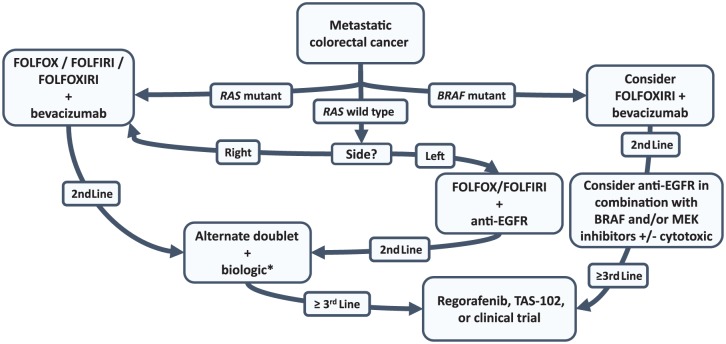
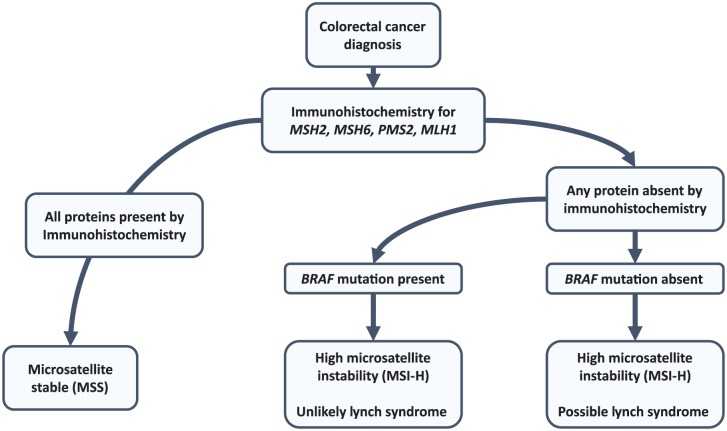
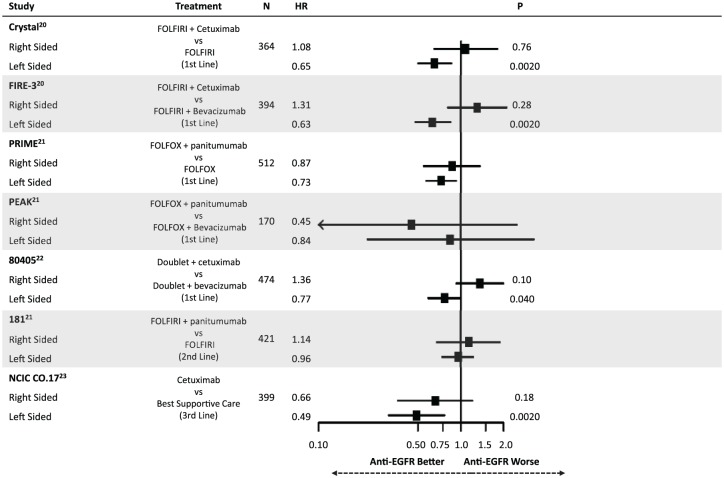
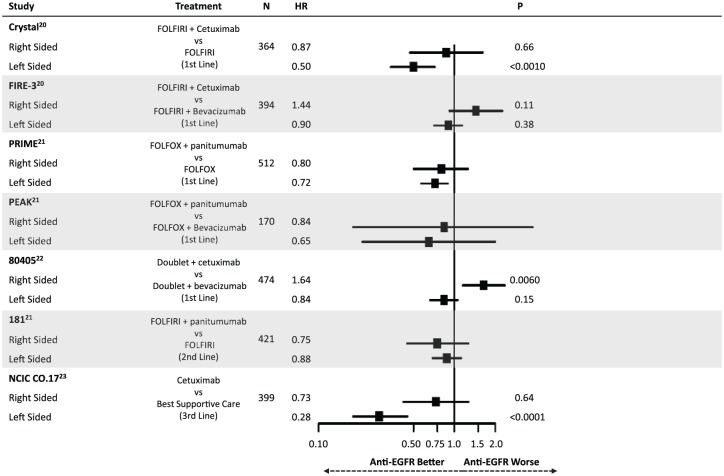
Over the past decade there have been significant advances in the molecular characterization of colorectal cancer (CRC) that are driving treatment decisions. Expanded testing beyond exon 2 was established as crucial for identifying patients who will respond to anti-epidermal growth factor receptor (EGFR) therapies and low-frequency mutations in /tumor heterogeneity are gaining recognition as potential mechanisms of resistance. Despite this progress, the fact that we do not understand why left-sided but not right-sided tumors have improved outcomes following anti-EGFR therapy highlights our superficial understanding of this disease. Even with few new targeted agents receiving approval in CRC, the incorporation of next-generation sequencing into clinical decision making represents an important step forward. Biomarkers such as mutations, microsatellite instability, and amplification represent promising molecular aberrations with therapies in various stages of development, and highlight the importance of companion diagnostics in supporting targeted agents. In this review, we will discuss the importance of incorporating biomarkers into clinical decision making and regimen selection in CRC. We will particularly focus on the recent evidence suggesting an important role for tumor location in selecting first-line therapy, the importance of recent advances in biomarker development and molecular subtyping, as well as recently approved agents (regorafenib and TAS-102) and promising targeted agents that have the potential to change the standard of care.
在过去十年中,结直肠癌(CRC)的分子特征研究取得了重大进展,这些进展正在推动治疗决策。已确定在2号外显子之外进行扩展检测对于识别将对抗表皮生长因子受体(EGFR)疗法产生反应的患者至关重要,并且肿瘤异质性中的低频突变作为潜在的耐药机制正逐渐得到认可。尽管取得了这一进展,但我们不明白为什么左侧而非右侧肿瘤在接受抗EGFR治疗后预后会改善,这一事实凸显了我们对这种疾病的肤浅理解。即使在CRC中获批的新型靶向药物很少,将下一代测序纳入临床决策仍是向前迈出的重要一步。诸如突变、微卫星不稳定性和扩增等生物标志物代表了在不同开发阶段有相应疗法的有前景的分子异常情况,并凸显了伴随诊断在支持靶向药物方面的重要性。在本综述中,我们将讨论在CRC中将生物标志物纳入临床决策和治疗方案选择的重要性。我们将特别关注近期证据,这些证据表明肿瘤位置在一线治疗选择中起着重要作用、生物标志物开发和分子亚型分类的最新进展的重要性,以及近期获批的药物(瑞戈非尼和TAS - 102)和有潜力改变治疗标准的有前景的靶向药物。